
FROM THE ALLERGY DRAWER
Wheat
Get to know the grain behind the name.
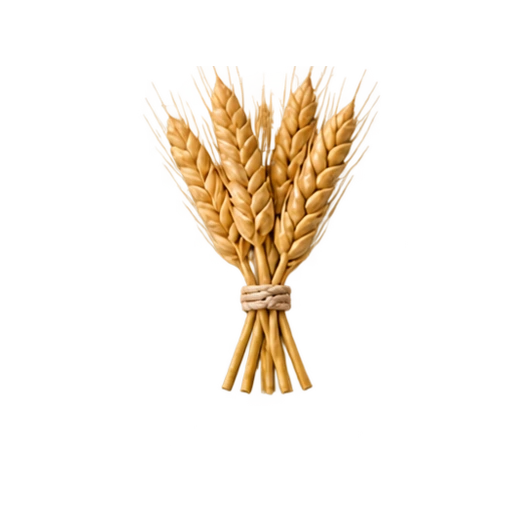
START WITH THE SOURCE
Understanding wheat allergy.
Wheat allergy concerns wheat proteins. Wheat flour can be used in bread, batter or a sauce; semolina is milled wheat, not a different grain.
Coeliac disease and wheat allergy are different conditions. A gluten-free product may use specially processed wheat starch, so a gluten-free claim alone is not enough for wheat allergy. Equally, wheat-free food may contain barley or rye.
Follow advice for your wheat allergy rather than adopting a different condition’s diet. Learning the grain names helps, but a finished product still needs its own ingredients and preparation check.
Anaphylaxis UK: wheat guidance ↗01 / RECOGNISE THE INGREDIENT
Recognise the source in the finished food.
Follow the ingredient through the complete recipe. Whole foods, flour and concentrated ingredients can look very different while sharing the same source. These examples help you ask specific questions.
Flours and varieties
Wheat flour · semolina · spelt · durum
Check the complete flour blend, including dusting flour used on a work surface.
Grain preparations
Bulgur · couscous · wheat berries
The grain may appear as a side dish rather than bread. Ask about the actual base and any added stock or sauce.
Proteins and derivatives
Wheat gluten · seitan · wheat starch
Check the source and product information. A gluten-free claim does not by itself establish suitability for wheat allergy.
Anaphylaxis UK: wheat guidance ↗
Explore wheat ingredient names →02 / READ THE WHOLE LABEL
Check the ingredients, not just the product name.
Check every time you buy
Identify the source of every relevant flour or protein ingredient. Read the full recipe rather than judging a product by its main ingredient. Check again when you buy, because formulations can change.
Keep the product label available when asking a manufacturer or kitchen for clarification. If staff cannot identify a component, an assumed match is not enough.
Anaphylaxis UK: wheat guidance ↗Labels change across borders
Use the labelling guidance for the country where the food is sold. The foods covered, wording and presentation of allergen information can differ. Do not assume a familiar brand has the same recipe everywhere.
For unpackaged food, ask for ingredient information from the person preparing it. If a name or translation is unclear, keep the original wording available rather than guessing from a partial translation.
Allergy & Anaphylaxis Australia: labelling by country ↗What can I eat instead?
Choose a replacement for the part of the recipe you are changing. Check its complete ingredients and preparation, including other foods you personally avoid. The options below are recipe ideas to assess, not a guarantee for an individual product.
| In place of | Options to consider | What to check |
|---|---|---|
| Wheat as a grain side | Options to considerA checked rice, potato or other tolerated base | What to checkCheck sauces, stocks and handling. Other grain allergies need separate consideration. |
| Wheat in a coating or thickener | Options to considerA recipe using a confirmed non-wheat ingredient | What to checkCheck the complete blend, and any dusting flour used during preparation. |
| Wheat bread or pasta | Options to considerA product confirmed suitable for your wheat-allergy needs | What to checkRead wheat declarations even on products carrying a gluten-free claim. |
03 / FOLLOW THE PREPARATION
Explain the allergy, then ask about the kitchen.
Ingredients and handling need separate checks. Ask about bought-in mixtures, sauces and garnishes, then shared utensils and preparation surfaces. Explain your exact avoidance needs before food is prepared.
A replacement should be made with checked ingredients and clean equipment. Removing a visible ingredient after serving does not address a paste, flour or residue already mixed into the food.
Get a clear answer about both ingredients and preparation before ordering. If the kitchen cannot confirm them, choose another option. A translated card can support this conversation when you do not share a language.
FARE: avoiding cross-contact ↗
Read more about avoiding cross-contact →COMMON QUESTIONS
The details that often need a closer look.
Is wheat allergy the same as coeliac disease?
No. The conditions involve different immune responses and avoidance needs. Your clinician can explain your diagnosis. Do not use the words interchangeably when describing your requirements to a kitchen.
Anaphylaxis UK: wheat guidance ↗Can spelt replace wheat?
Spelt is a type of wheat, as are durum, einkorn and emmer. An ancient-grain or artisan description does not make it an alternative for wheat allergy.
Anaphylaxis UK: wheat guidance ↗Is gluten-free wheat starch suitable?
A gluten-free claim addresses gluten requirements, not every wheat protein. A wheat-derived ingredient needs assessment under your wheat-allergy advice. Check the declaration and ask your allergy team when unsure.
Anaphylaxis UK: wheat guidance ↗Do I also need to avoid barley and rye?
Not automatically because of a wheat-allergy diagnosis. Additional reactions need their own assessment. Your specialist should define the grains you avoid rather than assuming every cereal is interchangeable.
Anaphylaxis UK: wheat guidance ↗Where else should I check for wheat?
Include coatings, gravy thickeners, soy sauce and flour blends in your questions. A dish based on rice or vegetables can still use wheat in its sauce or preparation. Ask about dusting flour and shared equipment too.
Anaphylaxis UK: wheat guidance ↗Overview expanded 21 September 2026 using the linked references. Independent clinical review remains pending.
A browsing guide, not a safety assessment. Always check the specific food and preparation with the food provider.