A little grain knowledge.Hover or tap to watch the flour fall
START WITH THE SOURCE
Understanding gluten and coeliac disease.
Gluten is found in wheat, barley and rye, and related grains such as triticale. Wheat flour gives bread dough its stretch; barley and rye flour bring gluten into other grain dishes and breads.
Look beyond bread and pasta. Flour can thicken soup or gravy and coat food before frying. Its starch does most of the thickening, but the gluten comes with it. Semolina is wheat too, even when the name on a menu is different.
A useful check follows the base, sauce and preparation. A rice dish may include soy sauce containing wheat; a gluten-free coating can pick up crumbs in shared frying oil.
Learn the grain source before the product name. Gluten can be in flour, coatings and seasonings as well as bread and pasta. The Ingredients tab keeps named sources separate from products that need further checks.
01
Wheat and its forms
Wheat flour · spelt · durum · semolina · bulgur · couscous
Wheat has many names and preparations. Milling, sprouting or an ancient-grain description does not establish gluten-free status.
Oats, malt extract and wheat starch need more context than the ingredient name alone. Processing, gluten-free labelling and local rules matter; oats also need advice specific to coeliac disease and the country you are in.
For stock, sauce and batter mixes, check the whole blend. A familiar recipe can change between products, so use the label on the item you are buying.
Use the labelling guidance for the country where the food is sold. The foods covered, wording and presentation of allergen information can differ. Do not assume a familiar brand has the same recipe everywhere.
For unpackaged food, ask for ingredient information from the person preparing it. If a name or translation is unclear, keep the original wording available rather than guessing from a partial translation.
Replace the ingredient and check what goes with it. Plain rice or quinoa can replace a grain side, but stock and dressing still matter. For baking, choose a blend designed for the recipe rather than assuming every flour works the same way.
In place of
Options to consider
What to check
Bulgur, couscous or barley
Options to considerPlain rice, quinoa or potatoes
What to checkAdded stock, dressings and seasonings can change the answer.
Wheat bread & wraps
Options to considerBread or wraps labelled gluten-free
What to checkCheck the product label, fillings and spreads, plus crumbs in a shared toaster.
Wheat pasta & noodles
Options to considerGluten-free rice- or corn-based pasta and noodles
What to checkCheck blends for added wheat, along with sauces and shared cooking water.
Wheat flour in baking
Options to considerA gluten-free flour blend suited to the recipe
What to checkFollow the blend’s instructions. Not every blend replaces wheat flour in equal amounts or works in bread.
Wheat flour for thickening
Options to considerCorn starch or potato starch
What to checkConfirm the starch source on the packet and check the stock or sauce ingredients too.
Wheat breadcrumbs & batter
Options to considerGluten-free breadcrumbs or batter mix
What to checkA different coating does not resolve shared fryer oil or crumbs on preparation surfaces.
03 / FOLLOW THE PREPARATION
Explain the allergy, then ask about the kitchen.
A gluten-free recipe also needs appropriate preparation. Shared fryer oil, noodle water, crumbs and utensils can introduce gluten. Ask how each part of your order will be handled.
Explain whether you have coeliac disease or a different diagnosed need. Asking only for no wheat may leave barley, rye or other relevant ingredients unchecked.
Get a clear answer about both ingredients and preparation before ordering. If the kitchen cannot confirm them, choose another option. A translated card can support this conversation when you do not share a language.
No. Coeliac disease is an autoimmune condition triggered by gluten. Wheat allergy concerns an allergic reaction to wheat proteins. The foods and precautions needed are not identical; follow the advice for your diagnosis.
Spelt is wheat. Ordinary sourdough made from wheat or rye is not made gluten-free by fermentation. Check the actual flour and gluten-free status rather than relying on descriptions such as ancient grain or long fermented.
Oats need a separate discussion with your clinician or dietitian. Cross-contact with other grains and individual tolerance matter. Labelling rules differ: products containing oats cannot carry a gluten-free claim in Australia, while other countries permit qualifying gluten-free oats.
No. A wheat-free product can contain barley or rye. Conversely, certain gluten-free products contain specially processed wheat starch, which still needs a separate wheat-allergy assessment. Read the claim that matches your medical need.
Can gluten be removed by reheating or picking off crumbs?
Reheating does not make a gluten-containing meal gluten-free. Check ingredients and preparation together: shared water, oil, crumbs and utensils can introduce gluten. A replacement needs a checked recipe and an appropriate preparation process.
Often made from barley; identify the grain and check the finished product.
The source grain and amount in a finished product matter. Check its gluten-free claim against the rules where it is sold; the word “malt” alone is not enough.
Wheat-derived, but different from wheat flour or vital wheat gluten.
Some starch is specially processed to remove gluten. Check the finished product’s gluten-free claim. Removing gluten does not establish suitability for someone with wheat allergy.
Read the ingredients and gluten-free claim on the specific bottle. A gluten-free soy sauce exists; the name “soy sauce” alone does not answer the question.
A food can start with gluten-free ingredients and pick up gluten during storage, cooking or serving. These six situations explain how cross-contact happens and what addresses it, at home or when eating out.
Heat does not remove gluten. Frying, boiling or reheating is not a substitute for preventing transfer or cleaning away residue.
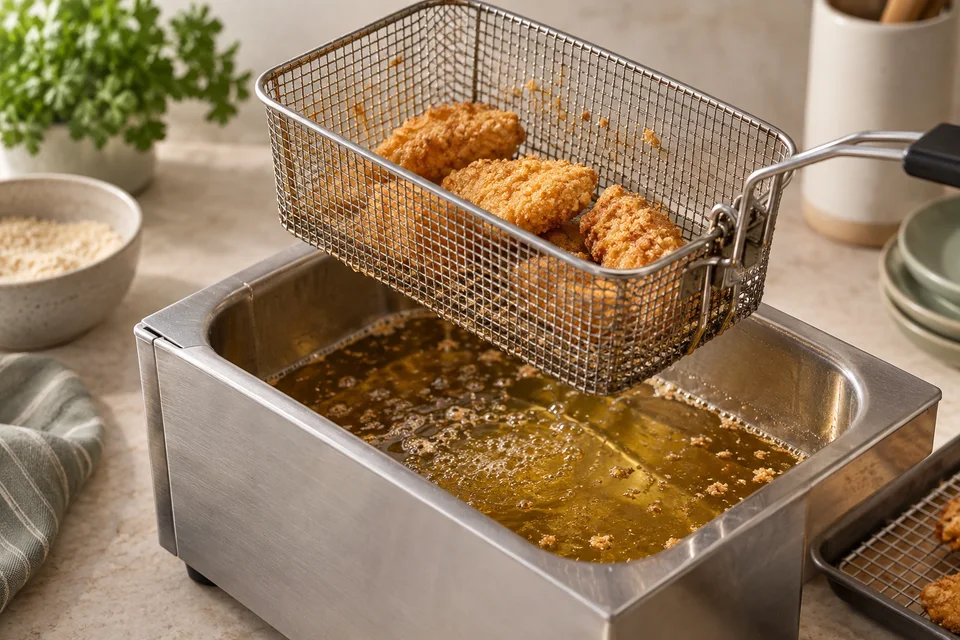
01 / Fryers
Fryers & shared oil
The oil is part of the preparation.
How gluten can transfer
Batter and breading can leave gluten-containing particles in oil. Food with no gluten ingredients can pick these up when it is fried in the same oil.
Picture this: Plain potato chips cooked after battered food share the oil, even if they use a different basket.
What addresses it
Use a dedicated clean fryer and clean oil for gluten-free food.
Keep baskets and handling utensils separate from breaded foods.
A hotter fryer does not make shared oil gluten-free.
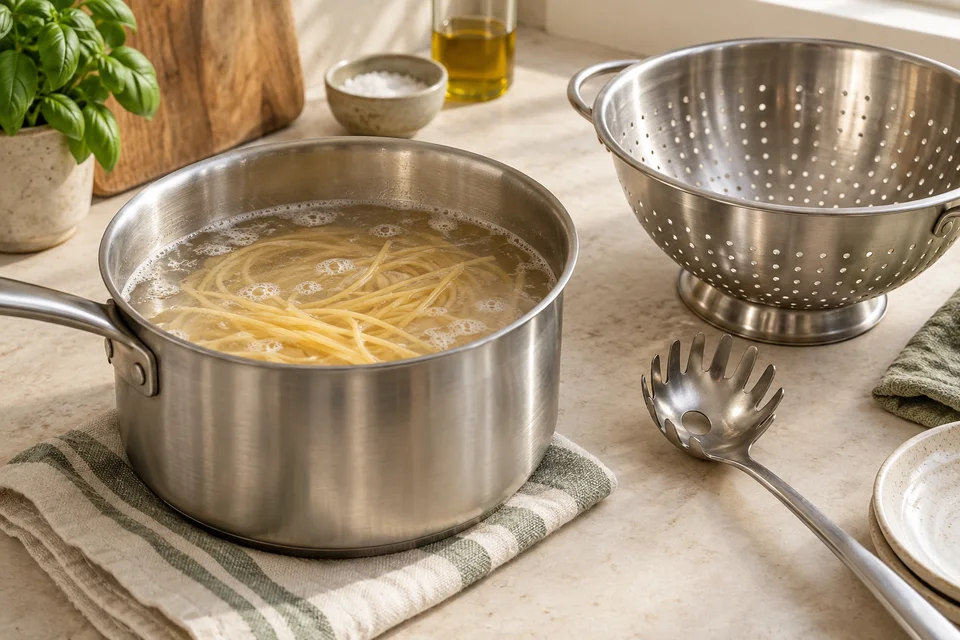
02 / Water & utensils
Cooking water & utensils
Follow the water, spoon and strainer.
How gluten can transfer
Water used for wheat pasta can carry gluten into another food. A spoon, tongs or colander can transfer residue too.
Picture this: Gluten-free noodles lowered into a pot of used wheat-pasta water still share that water.
What addresses it
Start with fresh water in a clean pan.
Use clean utensils and a dedicated or thoroughly cleaned strainer; small holes can retain pasta residue.
Boiling used pasta water again does not remove gluten.
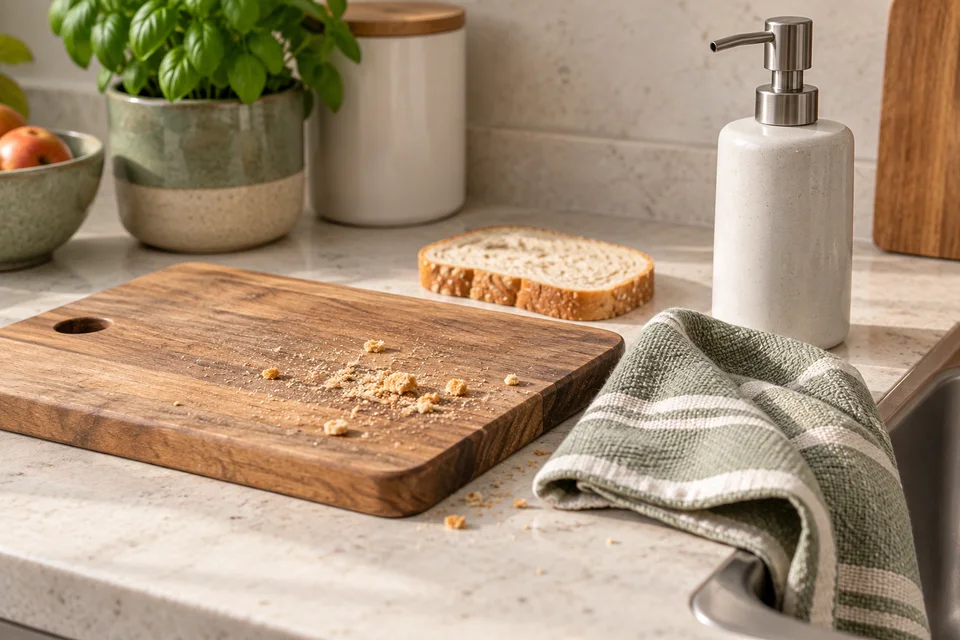
03 / Work surfaces
Worktops, benches & boards
A clear-looking bench may still carry residue.
How gluten can transfer
Bread crumbs and dough can move from a board or bench onto food, hands and utensils. Moving the bread away leaves the preparation surface to deal with.
Picture this: A gluten-free sandwich assembled where ordinary bread was just sliced can pick up crumbs.
What addresses it
Clean the work surface and board before preparing the food.
Wash hands and clean utensils; keep cleaned items away from used ones.
Use a separate board where grooves or damage make reliable cleaning difficult.
Cleaning removes residue; simply clearing the bench does not.
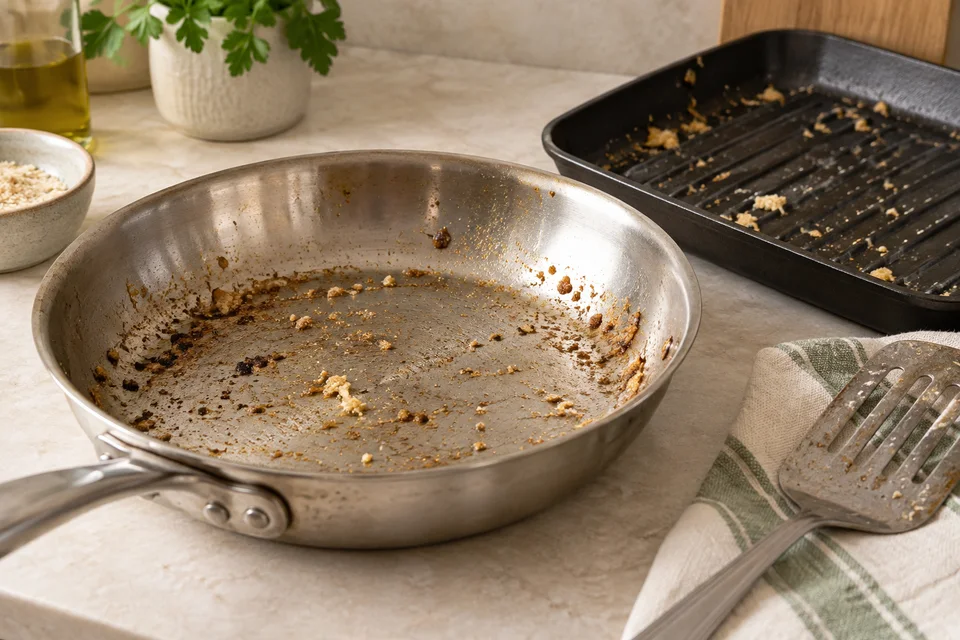
04 / Pans & equipment
Pans, griddles & cooking equipment
Cleaning matters more than whether a pan has ever held gluten.
How gluten can transfer
Residue can remain on a cooking surface, in seams or around a utensil. Pancake batter on a griddle or a crumb-filled sandwich press can reach the next food.
Picture this: Food placed directly on a used griddle touches the same surface as the previous batter or bread.
What addresses it
Wash cleanable pans and utensils thoroughly with detergent and water.
Use dedicated equipment when it is porous or too difficult to clean reliably.
Use clean baking trays rather than placing food directly on an oven rack.
A shared washable pan is different from equipment that traps crumbs.
05 / Crumbs & spreads
Toasters, crumbs & spreads
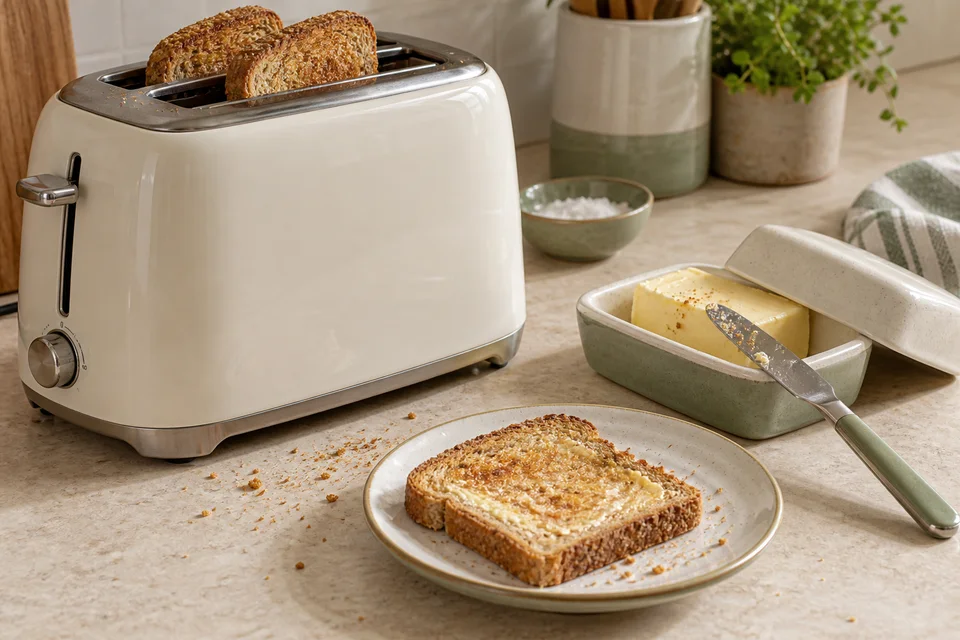
Crumbs can travel further than the bread.
How gluten can transfer
A knife can carry bread crumbs back into butter, jam or another spread. Toaster slots and crumb trays are another route onto gluten-free bread.
Picture this: A clean slice of gluten-free bread picks up crumbs from a shared toaster or a previously used butter knife.
What addresses it
Use a separate toaster or a suitable toaster bag, keeping crumbs off the food.
Keep separate spreads, or use clean cutlery each time so crumbs do not enter the container.
Check both the toast and everything spread onto it.
06 / Flour & storage
Flour dust & ingredient storage
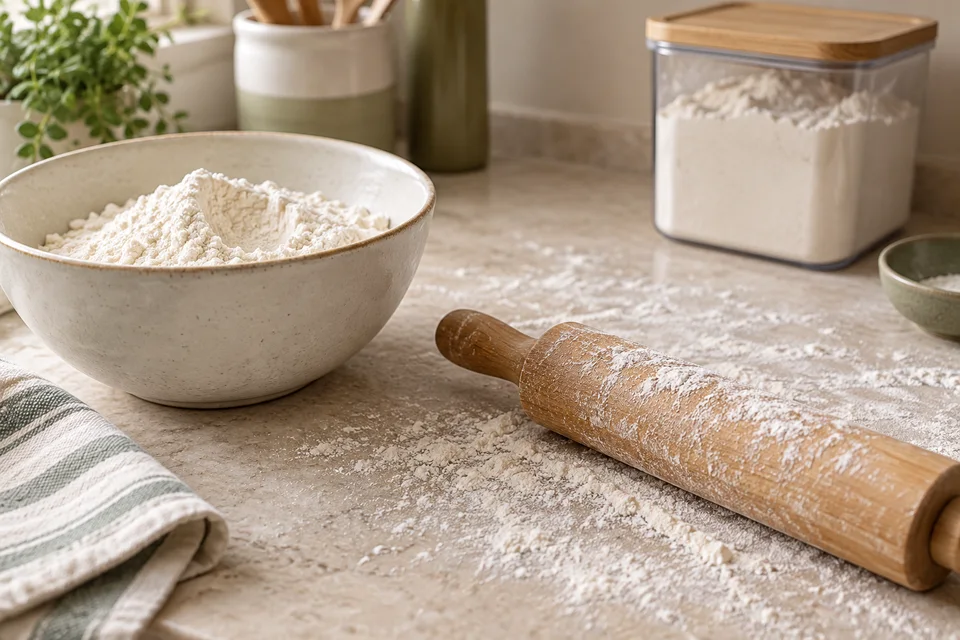
Flour can spread beyond the mixing bowl.
How gluten can transfer
Handling wheat flour can spread dust onto nearby work areas, equipment and uncovered food. Shared scoops and spills create another route between ingredients.
Picture this: An open gluten-free flour container sits beside a bench where wheat dough is being rolled.
What addresses it
Separate gluten-free preparation from flour handling by time, space and equipment.
Clean the area and equipment before starting; keep prepared food covered.
Store ingredients in closed, identifiable containers, with gluten-free ingredients above gluten-containing ones.
A gluten-free ingredient needs protection during storage and preparation.
Local ingredients, labelling and country-specific eating-out guidance belong in the destination guide.