A little ingredient knowledge.Hover or tap to open the peanut
START WITH THE SOURCE
Understanding peanut allergy.
Peanuts are legumes, and peanut allergy concerns their proteins. Whole peanuts are easy to spot; peanut butter, flour and paste can disappear into a smooth sauce or filling.
Removing a peanut garnish does not remove peanut mixed into the food. Ask about the sauce itself, particularly when the menu describes only the meat, vegetables or noodles.
Use these ingredient and preparation checks alongside your personal allergy plan. Knowing the name is the first step; the complete recipe and handling matter too. If your avoidance needs are unclear, ask your allergy team before changing what you eat.
Groundnut and monkey nut are other names for peanut. Peanut flour and peanut protein are concentrated ingredients, not alternatives. These are selected examples, not an exhaustive list. Follow the ingredient into powders, mixtures and finishing additions.
01
Whole peanuts
Groundnuts · monkey nuts · goober nuts
Different names for the same ingredient. Learn alternate names so that a change in wording does not hide the ingredient.
Check confectionery fillings, sauces and mixed nut products. Peanut oil needs a processing check: highly refined oil and cold-pressed oil are different; follow individual clinical advice.
Read the full ingredients list each time, including the ingredients inside a mix or sauce. Keep the packet available if staff need to check it. A product name or front-of-pack claim cannot answer every ingredient question.
Use the labelling guidance for the country where the food is sold. The foods covered, wording and presentation of allergen information can differ. Do not assume a familiar brand has the same recipe everywhere.
For unpackaged food, ask for ingredient information from the person preparing it. If a name or translation is unclear, keep the original wording available rather than guessing from a partial translation.
A seed spread may fill the same role as peanut butter, but check its ingredients and production. Almond butter introduces a tree nut and is not an automatic substitute. Check the replacement as carefully as the original. If you regularly replace a major food group, discuss nutritional needs with a dietitian.
In place of
Options to consider
What to check
Peanut butter
Options to considerSunflower-seed butter, if tolerated
What to checkCheck your other allergies and shared production; “seed” is not a guarantee.
Peanut flour in baking
Options to considerA rice-flour baking recipe, if tolerated
What to checkUse a recipe designed for that flour; texture and quantities differ.
Peanut sauce
Options to considerA sunflower-seed or coconut-based sauce, if tolerated
What to checkCheck blended pastes, oil and the equipment used to make it.
03 / FOLLOW THE PREPARATION
Explain the allergy, then ask about the kitchen.
Ask about shared grinders, blenders and serving spoons. Changing the sauce is only useful when the replacement is prepared and served without peanut residue.
Ask staff to check the recipe and any bought-in ingredients with the kitchen. Include the sauce, garnish and finishing step in the conversation, and explain which ingredients you need to avoid.
Get a clear answer about both ingredients and preparation before ordering. If the kitchen cannot confirm them, choose another option. A translated card can support this conversation when you do not share a language.
Groundnut and monkey nut are names for peanut. A change of name, a smooth paste or a fine flour does not change the source. Add useful alternate names to the terms you check on packets and menus.
Does peanut allergy mean all legumes are off limits?
Not automatically. Beans, peas, lentils, soy and lupin are separate foods. Additional allergies can occur, but your specialist should guide any wider avoidance rather than excluding the whole family yourself.
Highly refined peanut oil differs from cold-pressed or unrefined oil, which can retain allergenic protein. Ask which type is used and follow your individual advice. A restaurant saying only “vegetable oil” has not identified the source or processing.
A peanut is a legume, not a tree nut. However, a person may have both allergies, and products may share equipment. Check your agreed avoidance list before choosing almond, cashew or another nut as a replacement.
A fresh meal is needed when peanut has already contacted the food. Ask for the sauce and utensils to be checked too. Removing visible pieces cannot account for peanut powder, paste or residue mixed into the dish.
Some people with peanut allergy also react to lupin. It is not a peanut ingredient; discuss its suitability individually.
Ingredient links search the wider ingredient catalogue. Sources for this guide are listed below.
Peanut & shared preparation.
Follow the routes an allergen can take through a kitchen—from storage to the finished plate. These examples apply at home and when eating out.
Ordinary cooking does not reliably remove food allergens. Preventing transfer and removing residue are separate from choosing ingredients.
01 / PREPARATION
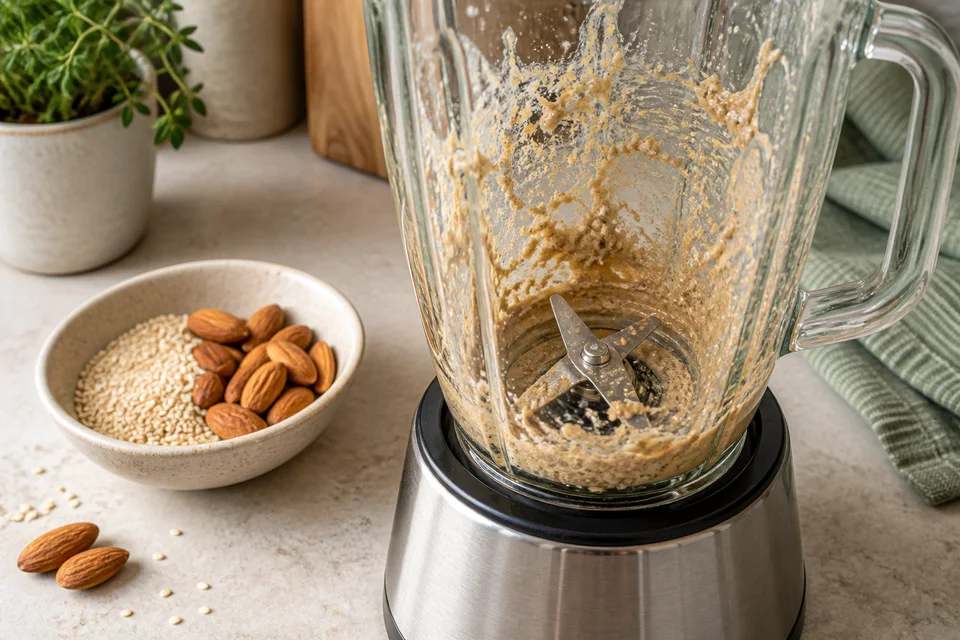
Blenders, grinders & paste
Thick peanut paste can remain around blades, seals and lids. An apparently empty jar can still hold residue.
An everyday example
A blender makes a peanut smoothie before another drink.
What addresses it
Include the lid, seals and blade assembly in cleaning, following equipment instructions.
Use separate equipment when those parts cannot be thoroughly cleaned.
02 / PREPARATION
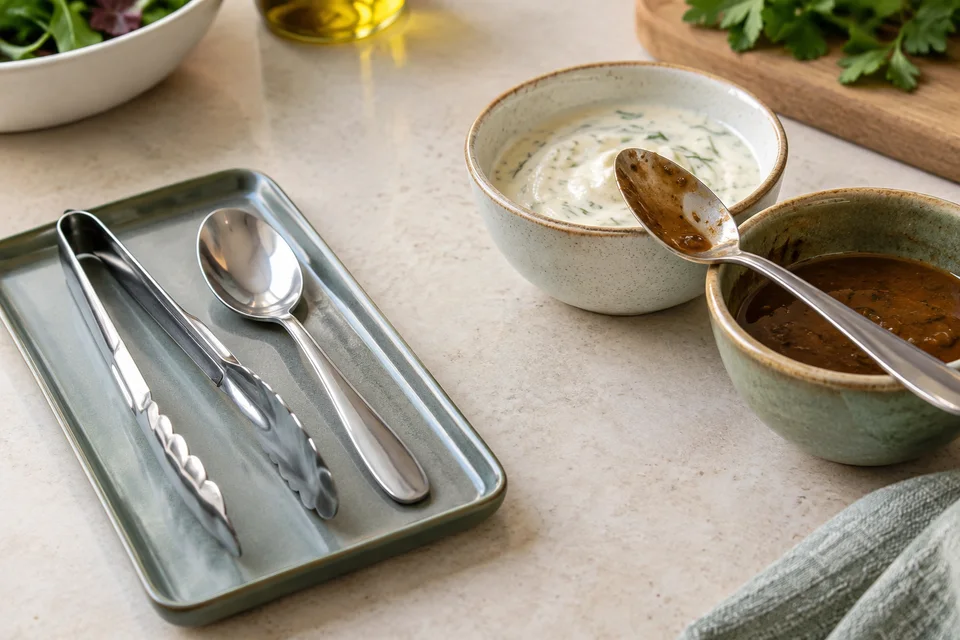
Knives, spoons & spread jars
A utensil can carry peanut butter into another jar or sauce. Removing the visible smear does not make the shared food suitable.
An everyday example
A peanut-butter knife is dipped into jam.
What addresses it
Use clean utensils and separate uncontaminated portions.
Do not reuse the affected jar for an allergy-managed meal.
03 / PREPARATION
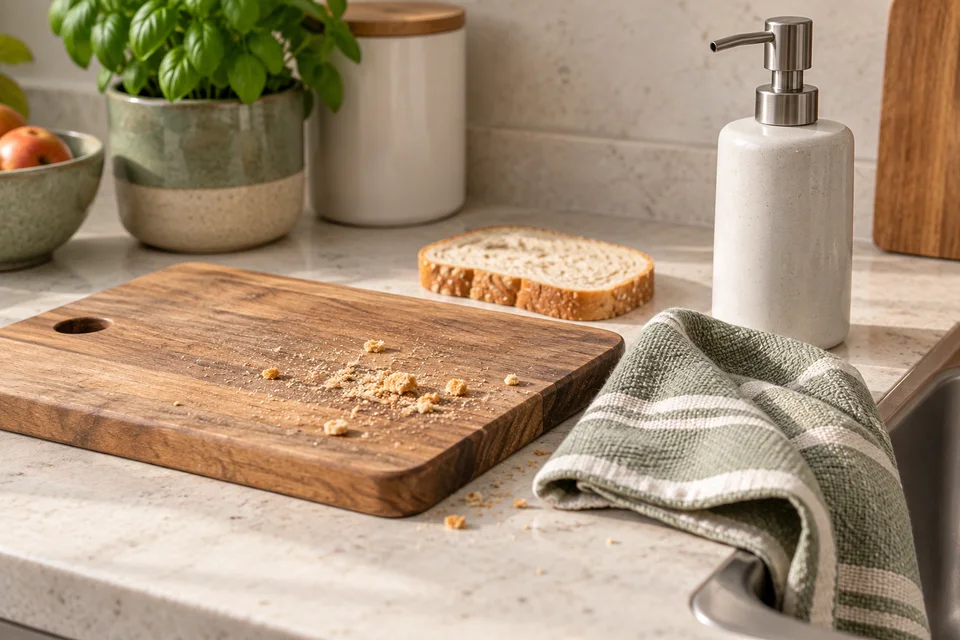
Powders, benches & hands
Peanut flour and crushed peanuts can scatter on a preparation surface. Hands and cloths can move the residue to other foods.
An everyday example
A peanut topping is crushed beside a chopping board.
What addresses it
Keep powder and crushing tasks away from allergy-managed preparation.
Wash hands and clean the work area with suitable cleaning materials.
04 / PREPARATION
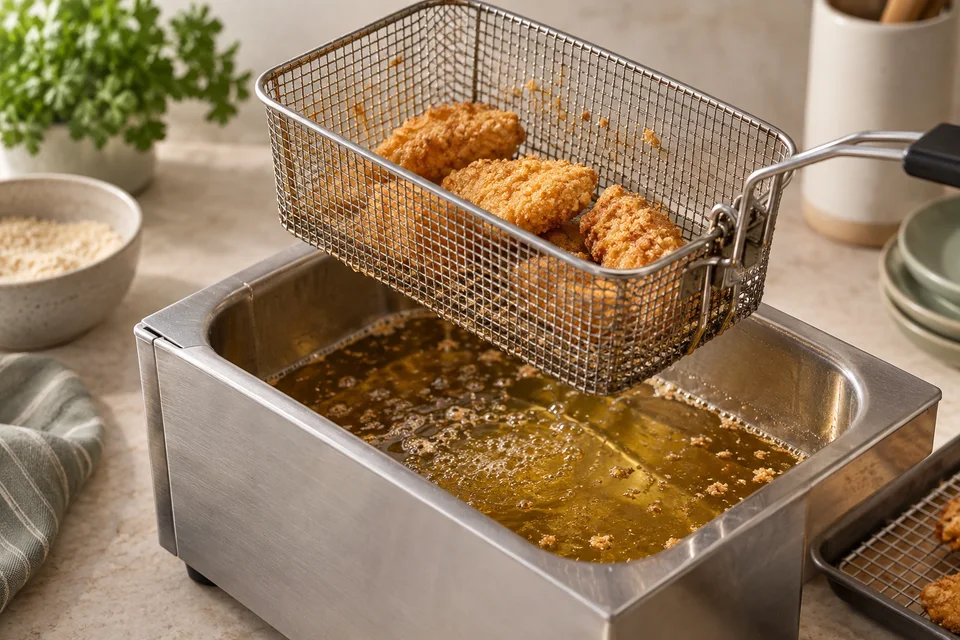
Oil & the fryer
The oil ingredient and what is fried in it are two separate checks. Refined peanut oil needs individual context; shared food residue is an additional issue.
An everyday example
A fryer uses an unspecified groundnut oil and also cooks peanut-containing food.
What addresses it
Establish the exact oil and refining information; follow your allergy advice.
Check shared foods and equipment even when the oil itself is suitable.
05 / PREPARATION
Bulk containers & toppings
Shared scoops, loose toppings and open containers make it easier for small peanut pieces to travel. The same applies to repacked ingredients.
An everyday example
One scoop is used across peanuts and another topping.
What addresses it
Use separately stored ingredients with their own clean scoops.
Keep containers covered and retain the original ingredient information.
Local ingredients, language and country-specific eating-out guidance belong in the destination guide.