Create allergy card
← All allergies

UNDERSTAND THE INGREDIENT

Shellfish Allergy

Understand the different names and forms of shellfish, what to check on ingredients lists, and how to explain your allergy when eating away from home.

Start with the basics ↓
A little ingredient knowledge.
Hover or tap to reveal the crab

START WITH THE SOURCE

Understanding shellfish allergy.

Shellfish covers crustaceans and molluscs. Crustaceans include shrimp and crab; molluscs include oysters, squid and abalone. Squid belongs here even without a visible shell.

A small amount of paste or stock can flavour an entire dish. Ask about the cooking base as well as obvious seafood pieces.

Use these ingredient and preparation checks alongside your personal allergy plan. Knowing the name is the first step; the complete recipe and handling matter too. If your avoidance needs are unclear, ask your allergy team before changing what you eat.

FARE: shellfish allergy ↗

01 / RECOGNISE THE INGREDIENT

Follow shellfish through its different forms.

Recognise shrimp paste, dried shrimp and oyster sauce alongside whole shellfish. The source matters even when it has been ground or dissolved. These are selected examples, not an exhaustive list. Follow the ingredient into powders, mixtures and finishing additions.

01

Crustaceans

Prawns / shrimp · crab · lobster · crayfish

Includes fresh, dried and powdered forms. Ask what species are in a seafood mix and whether dried or powdered ingredients are added.

02

Molluscs

Mussels · oysters · clams · scallops · squid · octopus · abalone

A shell need not be visible: squid and octopus belong here too. Learn the ingredient names as well as the wider category used on a menu.

03

Concentrated ingredients

Shrimp paste · shellfish stock · oyster extract

Small additions can be dispersed throughout a sauce or broth. Check the original stock and seasoning even when the finished dish is described as meat or vegetables.

ASCIA: seafood allergy ↗

Explore shellfish ingredient names →

02 / READ THE WHOLE LABEL

Check the ingredients, not just the product name.

Check every time you buy

Check broths, curry pastes and mixed seafood preparations. Removing the prawns does not remove their cooking juices or ingredients already mixed into a sauce.

Read the full ingredients list each time, including the ingredients inside a mix or sauce. Keep the packet available if staff need to check it. A product name or front-of-pack claim cannot answer every ingredient question.

ASCIA: seafood allergy ↗

Labels change across borders

Use the labelling guidance for the country where the food is sold. The foods covered, wording and presentation of allergen information can differ. Do not assume a familiar brand has the same recipe everywhere.

For unpackaged food, ask for ingredient information from the person preparing it. If a name or translation is unclear, keep the original wording available rather than guessing from a partial translation.

Allergy & Anaphylaxis Australia: labelling by country ↗
Add destination-specific guidance →

What can I eat instead?

Use a checked stock or seasoning made without the shellfish you avoid. Fish sauce is a different ingredient, but should not be assumed suitable without checking its formulation and your allergies. Check the replacement as carefully as the original. If you regularly replace a major food group, discuss nutritional needs with a dietitian.

In place ofOptions to considerWhat to check
Shellfish stockVegetable stockCheck the complete blend and the ladle or pot used.
Shrimp paste or oyster sauceA recipe using mushroom or vegetable seasoningConfirm the replacement has no shellfish ingredients; formulations differ.
Shellfish as the main ingredientA tolerated option such as tofu, beans or chickenFish is not an automatic substitute. Match choices to your individual allergy plan.

03 / FOLLOW THE PREPARATION

Explain the allergy, then ask about the kitchen.

Ask about shared boiling water, fryers and serving tools. Your allergy plan should identify which shellfish groups or species need avoidance; the broad menu word “seafood” is not precise enough.

Ask staff to check the recipe and any bought-in ingredients with the kitchen. Include the sauce, garnish and finishing step in the conversation, and explain which ingredients you need to avoid.

Get a clear answer about both ingredients and preparation before ordering. If the kitchen cannot confirm them, choose another option. A translated card can support this conversation when you do not share a language.

FARE: avoiding cross-contact ↗

Explore preparation guidance →

COMMON QUESTIONS

The details that often need a closer look.

Which foods count as shellfish?

Shellfish includes crustaceans, such as prawns and crab, and molluscs, such as mussels and squid. The name does not mean every animal has a visible shell. Your allergy plan should identify the groups or species you avoid.

ASCIA: seafood allergy ↗
Is fish the same allergy?

Finned fish is a separate group. Allergy to shellfish does not by itself establish fish allergy or fish tolerance. Mixed seafood stock, shared fryers and serving tools still need checking.

ASCIA: seafood allergy ↗
Does shellfish allergy mean iodine allergy?

Shellfish allergy concerns proteins, not iodine. Tell healthcare professionals about your actual previous reactions rather than labelling the allergy as iodine allergy. They can assess any medication or contrast concerns separately.

ASCIA: seafood allergy ↗
Can I eat the broth if the prawns are removed?

Shellfish ingredients can be dispersed through cooking liquid. Ask for a preparation made without the shellfish you avoid, including stock, pastes and extracts. Taking pieces out does not recreate a meal prepared without them.

ASCIA: seafood allergy ↗
Does cooking make shellfish suitable?

Cooking does not reliably destroy seafood allergens. Discuss any exposure to cooking steam with your specialist too. A grilled, boiled or fried version should not be assumed suitable because its texture has changed.

ASCIA: seafood allergy ↗

Overview expanded 21 September 2026 using the linked references. Independent clinical review remains pending.

Shellfish ingredients, explained.

Look up the ingredient itself, a derivative or a blend. Keep known sources separate from names that need more context.

14 ingredient entries

Named sources & derivatives

Recognise the ingredient connection. The species, nut or form covered by your allergy plan still matters.

Check the specific product

Establish the ingredients, source or processing rather than inferring from the category name.

  • Product checks

    Oyster sauce

    Conventional recipes use oyster ingredients.

    Vegetarian versions use different ingredients. Establish which product is used.

  • Product checks

    Seafood flavouring & stock blends

    A broad name may conceal the particular seafood.

    Identify crustacean, mollusc and fish ingredients separately.

  • Product checks

    Surimi / seafood extender

    Often fish-based; formulations may add shellfish ingredients.

    Imitation crab is not proof of being free from crab or other shellfish.

  • Product checks

    Fish sauce

    The name does not identify every seafood ingredient.

    Check for shrimp, krill or other shellfish in the specific formulation.

Ingredient links search the wider ingredient catalogue. Sources for this guide are listed below.

Shellfish & shared preparation.

Follow the routes an allergen can take through a kitchen—from storage to the finished plate. These examples apply at home and when eating out.

Ordinary cooking does not reliably remove food allergens. Preventing transfer and removing residue are separate from choosing ingredients.

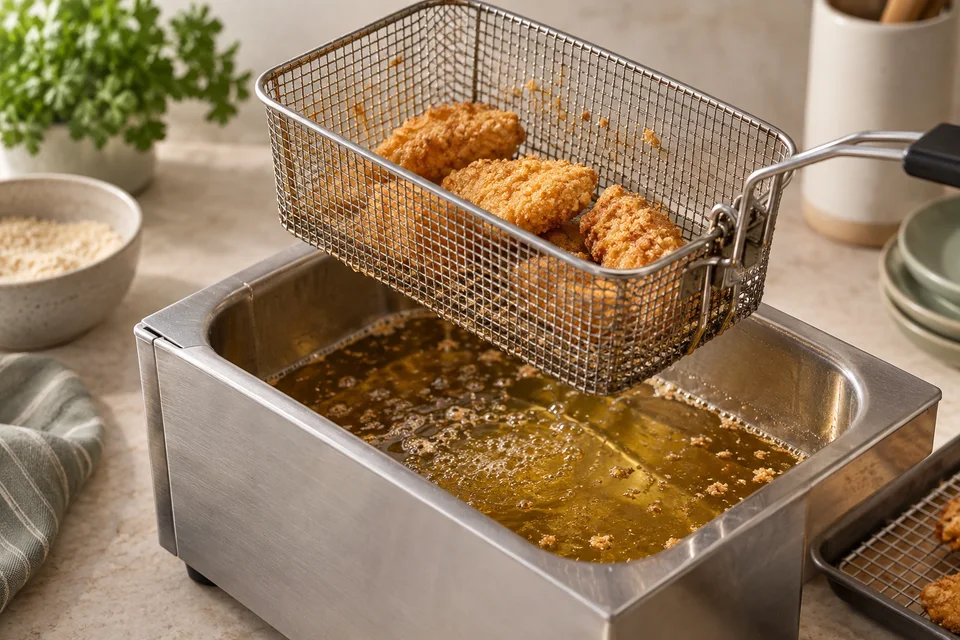
Battered food in a basket above frying oil.

01 / PREPARATION

Fryers & shared oil

Pieces of shellfish and their coatings can leave protein-containing residue in oil. A separate basket still dips into the same oil.

An everyday example

Prawns are fried before a portion of vegetables.

What addresses it

  • Establish what else uses the oil, not just the basket.
  • Use a separate suitable cooking method or an independently managed fryer.
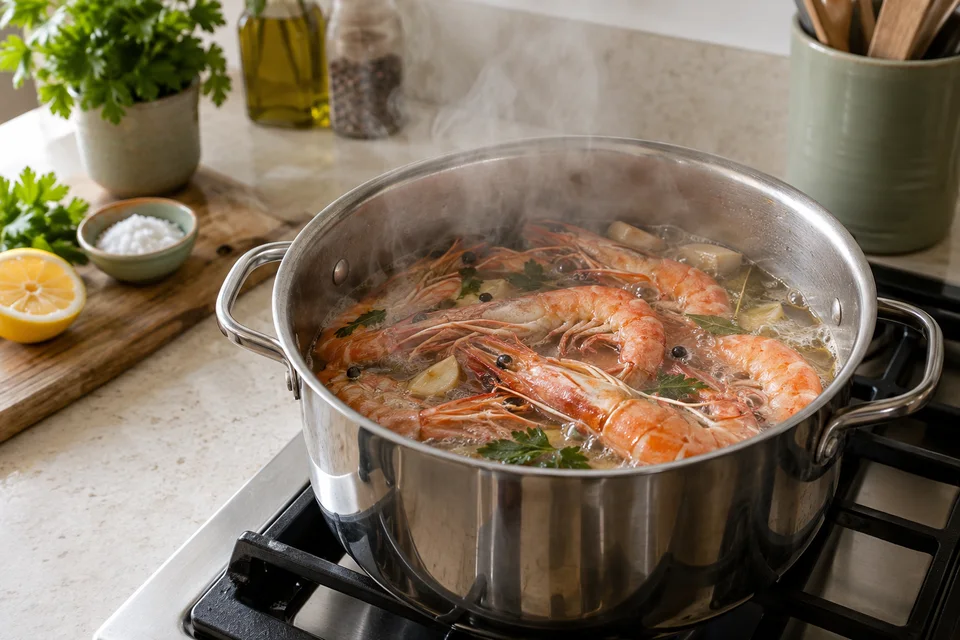
Prawns simmering in an uncovered pot with steam rising above it.

02 / PREPARATION

Cooking water, broth & ladles

Removing shellfish from a pot does not remove what has entered the liquid. Stock and sauces can carry shellfish throughout a meal.

An everyday example

Noodles are warmed in liquid previously used for prawns.

What addresses it

  • Use fresh suitable liquid in a thoroughly cleaned pot.
  • Keep broth ladles and serving spoons with their own containers.
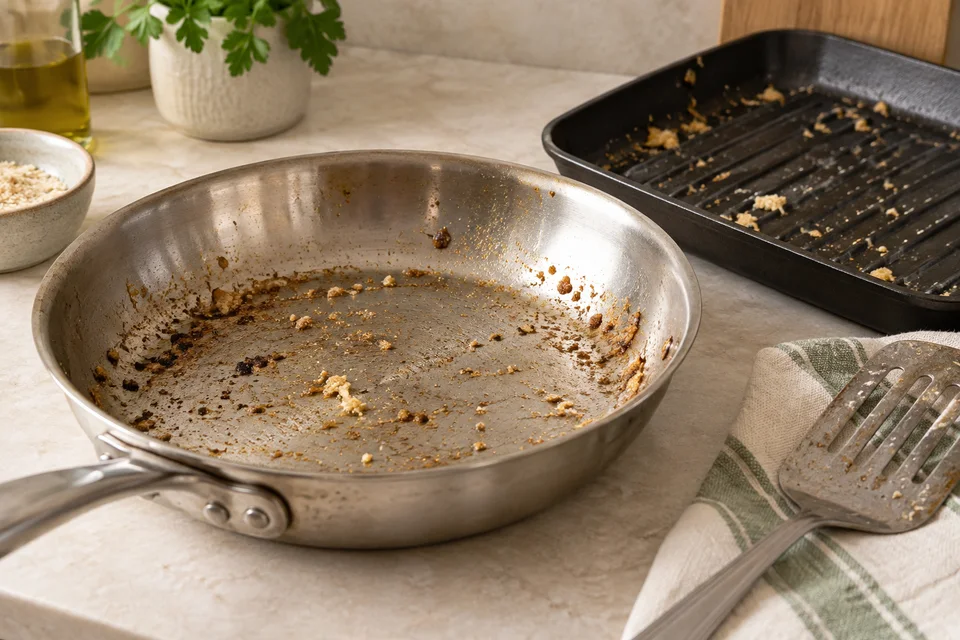
Cooking equipment with food residue on its surface.

03 / PREPARATION

Grills, pans & tongs

Juices and small pieces can remain on hotplates, pans and utensils. Heat alone is not an allergen-removal step.

An everyday example

The same tongs handle lobster and a separate portion of food.

What addresses it

  • Clean food-contact surfaces and utensils before preparation.
  • Use separate equipment where residue cannot be reliably removed.
A preparation board with crumbs beside cleaning supplies.

04 / PREPARATION

Preparation benches & storage

Raw seafood juices, hands and boards can transfer shellfish to another ingredient. Picking out visible pieces does not undo that transfer.

An everyday example

A board used to peel prawns is then used to cut a garnish.

What addresses it

  • Wash hands and clean the board and bench before changing tasks.
  • Keep shellfish covered and contain juices during storage.
Prawns simmering in an uncovered pot with steam rising above it.

05 / PREPARATION

Steam & the cooking area

Cooking shellfish can release airborne food proteins. This differs from simply smelling food and may matter for some people with shellfish allergy.

An everyday example

Shellfish is being boiled at an open cooking station.

What addresses it

  • Follow individual advice about proximity to seafood cooking.
  • Consider where food is prepared and served, as well as what is on the plate.

Local ingredients, language and country-specific eating-out guidance belong in the destination guide.

Choose a country →

ADD THE LOCAL CONTEXT

Shellfish guidance for your destination.

Choose a country for its dedicated allergen page. Local label rules, ingredient names, language and eating-out guidance belong there.

Choose the shellfish group you want to explore.

Country pages are available; their local allergen guidance is still being prepared.