A little ingredient knowledge.Hover or tap to reveal the seeds
START WITH THE SOURCE
Understanding sesame allergy.
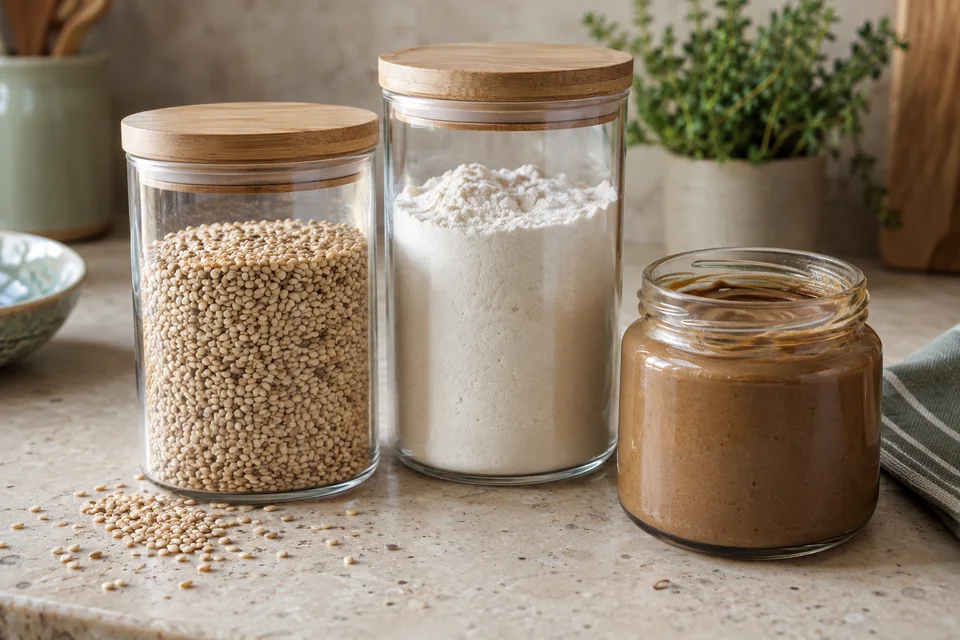
Sesame can be a paste or oil as well as a seed.Tahini is ground sesame; sesame oil may be stirred in or added just before serving. Neither needs visible seeds to be present.
White and black sesame seeds are both sesame. Picking seeds off bread or a finished dish does not undo contact, or remove sesame blended into the recipe.
Use these ingredient and preparation checks alongside your personal allergy plan. Knowing the name is the first step; the complete recipe and handling matter too. If your avoidance needs are unclear, ask your allergy team before changing what you eat.
Tahina, benne, gingelly and til are names worth recognising. Sesame paste and sesame flour keep their sesame origin despite a different texture. These are selected examples, not an exhaustive list. Follow the ingredient into powders, mixtures and finishing additions.
Names to recognise, rather than separate substitute ingredients. A local name can still refer to sesame. Keep both the original name and a translation available when asking.
Check hummus, dressings, halva and seasoning blends for sesame. A chickpea-based dip can also contain tahini; do not judge the dip by its main ingredient alone.
Read the full ingredients list each time, including the ingredients inside a mix or sauce. Keep the packet available if staff need to check it. A product name or front-of-pack claim cannot answer every ingredient question.
Use the labelling guidance for the country where the food is sold. The foods covered, wording and presentation of allergen information can differ. Do not assume a familiar brand has the same recipe everywhere.
For unpackaged food, ask for ingredient information from the person preparing it. If a name or translation is unclear, keep the original wording available rather than guessing from a partial translation.
A dip without tahini or a tolerated non-sesame oil may serve the same purpose. Check replacements for other seeds, nuts or dairy and shared production. Check the replacement as carefully as the original. If you regularly replace a major food group, discuss nutritional needs with a dietitian.
In place of
Options to consider
What to check
Tahini in a dip
Options to considerA dip using yogurt or sunflower seeds, if tolerated
What to checkA seed or nut replacement needs its own allergy and production check.
Sesame finishing oil
Options to considerOlive oil or another tolerated non-sesame oil
What to checkCheck the bottle and any previously used brush or wok.
Sesame garnish
Options to considerChopped herbs, if tolerated
What to checkPrepare a fresh portion; picking seeds off does not undo contact.
03 / FOLLOW THE PREPARATION
Explain the allergy, then ask about the kitchen.
Ask about finishing oil, toppings and shared spread utensils. Start with a fresh portion when sesame has already touched the food, rather than removing the garnish.
Ask staff to check the recipe and any bought-in ingredients with the kitchen. Include the sauce, garnish and finishing step in the conversation, and explain which ingredients you need to avoid.
Get a clear answer about both ingredients and preparation before ordering. If the kitchen cannot confirm them, choose another option. A translated card can support this conversation when you do not share a language.
Tahini is sesame paste. Tahina and tehina are alternate spellings you may encounter. A hummus or dressing can therefore contain sesame without any seeds visible on top.
Both are sesame. Do not use seed colour, hulling or toasting as a reason to treat one as a suitable substitute. Check the actual ingredient and follow your allergy plan.
Yes. Sesame oil can contain sesame protein. Include cooking and finishing oils in restaurant questions. Do not transfer advice about highly refined oils from a different ingredient to an ordinary sesame oil.
Removing the seeds does not reliably remove their contact with the bread. Ask for a separate sesame-free recipe and check handling, trays and tongs. A different-looking roll may still share production equipment.
Recipes vary. Many use tahini, while others do not. Ask for the actual ingredients and check the packet when it is bought in; “chickpea dip” describes only part of a possible recipe.
Check both ingredients and handling near seeded products.
Ingredient links search the wider ingredient catalogue. Sources for this guide are listed below.
Sesame & shared preparation.
Follow the routes an allergen can take through a kitchen—from storage to the finished plate. These examples apply at home and when eating out.
Ordinary cooking does not reliably remove food allergens. Preventing transfer and removing residue are separate from choosing ingredients.
01 / PREPARATION
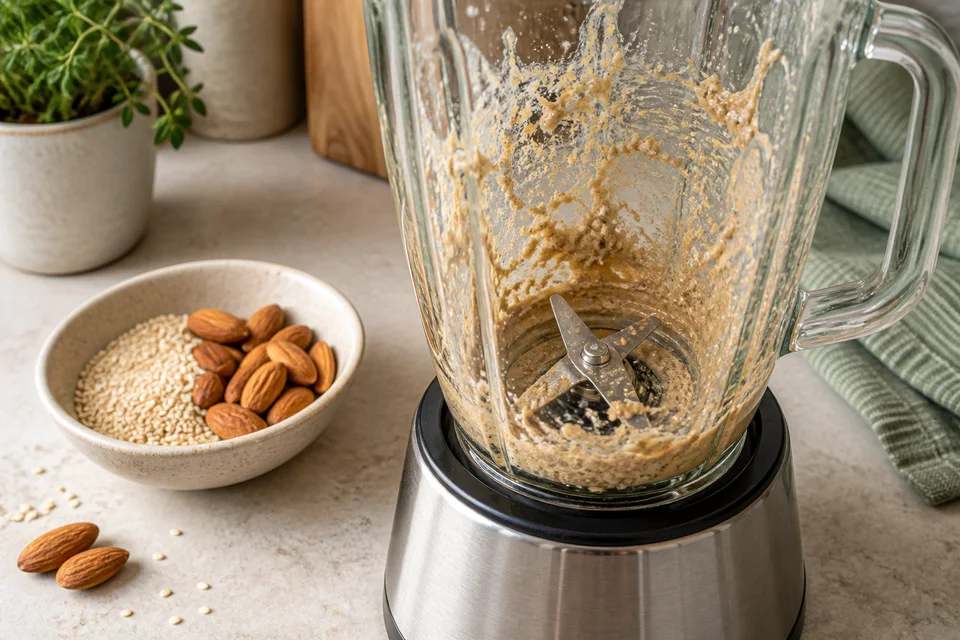
Tahini, grinders & blenders
Tahini coats blades, seals and lids. Sesame can remain as paste even when no whole seeds are visible.
An everyday example
A blender makes tahini dressing before another sauce.
What addresses it
Clean the full food-contact assembly, not just the jar sides.
Use separately managed equipment when paste cannot be reliably removed.
02 / PREPARATION
Loose seeds & preparation surfaces
Sesame seeds scatter during topping and slicing. They can reach boards, trays and uncovered ingredients nearby.
An everyday example
A seeded bun is cut beside an uncovered plain roll.
What addresses it
Separate seed handling from allergy-managed food preparation.
Clean the board and bench; picking off visible seeds is not enough.
03 / PREPARATION
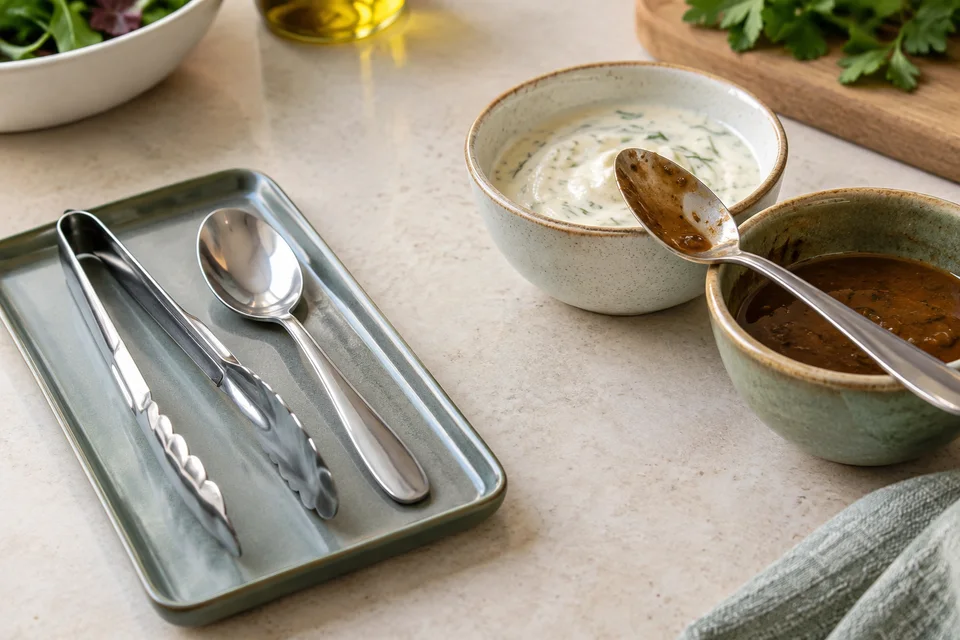
Dressings, dips & utensils
Tahini and sesame oil can be mixed through a dressing. Shared spoons can transfer them into a different dip.
An everyday example
One spoon serves hummus with tahini and then another spread.
What addresses it
Check each dip or dressing recipe, including the oil.
Keep serving spoons separate and replace portions affected by shared utensils.
04 / PREPARATION
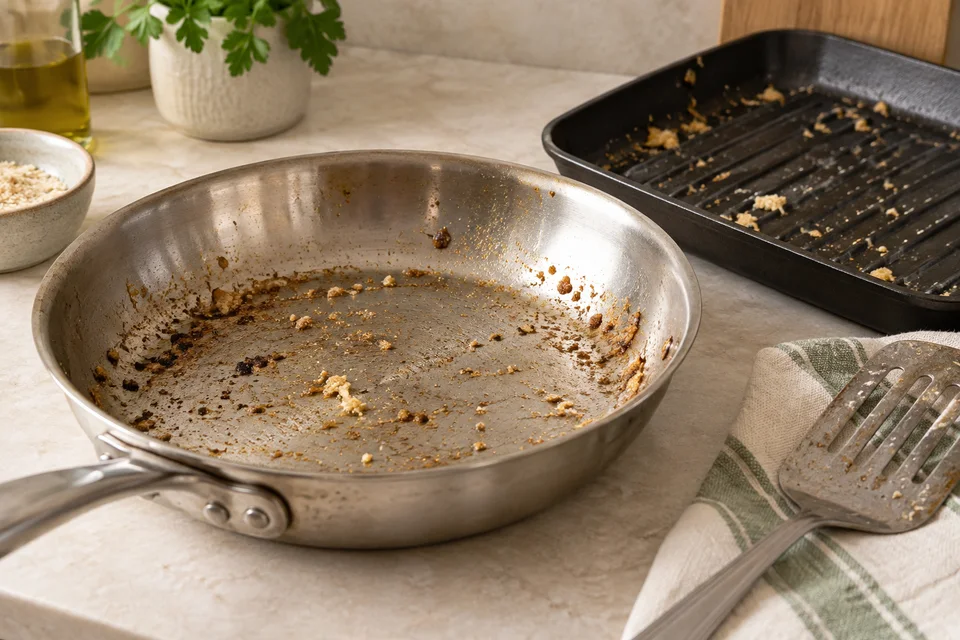
Pans, trays & cooking oil
Sesame oil and seed residue can stay on cooking equipment. Typical sesame oil is not equivalent to the highly refined oils discussed for some other allergens.
An everyday example
A pan is finished with sesame oil before being reused.
What addresses it
Identify cooking and finishing oils, not just the main ingredient.
Clean equipment before reuse or choose a separately managed pan.
05 / PREPARATION
Bakery trays & serving tongs
Shared trays, tongs and slicers can carry sesame seeds and crumbs. A plain-looking product may have shared those surfaces.
An everyday example
Tongs move between seeded and unseeded bread.
What addresses it
Check handling and storage as well as the recipe.
Use clean equipment and protected portions rather than removing a seeded topping.
Local ingredients, language and country-specific eating-out guidance belong in the destination guide.