Create allergy card
← All allergies

UNDERSTAND THE INGREDIENT

Fish Allergy

Understand the different names and forms of fish, what to check on ingredients lists, and how to explain your allergy when eating away from home.

Start with the basics ↓
A little ingredient knowledge.
Hover or tap to reveal the sardine

START WITH THE SOURCE

Understanding fish allergy.

Fish allergy concerns proteins in finned fish, including species eaten fresh, canned, smoked or dried. A fish fillet is only one form: fish sauce, fish stock and paste can spread the ingredient throughout a dish.

Follow the seasoning as well as the main protein. A vegetable dish or meat dish may use fish-derived flavouring; its name alone will not reveal the whole recipe.

Use these ingredient and preparation checks alongside your personal allergy plan. Knowing the name is the first step; the complete recipe and handling matter too. If your avoidance needs are unclear, ask your allergy team before changing what you eat.

ASCIA: seafood allergy ↗

01 / RECOGNISE THE INGREDIENT

Follow fish through its different forms.

Learn names such as anchovy, sardine and bonito flakes. Dried flakes and concentrated sauces still need a fish-allergy check. These are selected examples, not an exhaustive list. Follow the ingredient into powders, mixtures and finishing additions.

01

Named fish

Salmon · tuna · cod · haddock · trout

Fresh, canned, smoked and dried forms still identify fish. Confirm the species and the ingredients added during preserving or preparation.

02

Small fish, strong flavour

Anchovies · sardines · herring · bonito

Used whole, dried or blended into seasonings. A small amount can season an entire dish without appearing as a visible fish portion.

03

Derived ingredients

Fish sauce · fish stock · fish paste · fish gelatin

Look at the actual fish source and formulation. Ask for the formulation of the stock or sauce, including bought-in components.

ASCIA: seafood allergy ↗

Explore fish ingredient names →

02 / READ THE WHOLE LABEL

Check the ingredients, not just the product name.

Check every time you buy

Ask what is in the broth, dressing and seasoning paste. Vegetable-based does not establish fish-free, and recipes can change between restaurants.

Read the full ingredients list each time, including the ingredients inside a mix or sauce. Keep the packet available if staff need to check it. A product name or front-of-pack claim cannot answer every ingredient question.

ASCIA: seafood allergy ↗

Labels change across borders

Use the labelling guidance for the country where the food is sold. The foods covered, wording and presentation of allergen information can differ. Do not assume a familiar brand has the same recipe everywhere.

For unpackaged food, ask for ingredient information from the person preparing it. If a name or translation is unclear, keep the original wording available rather than guessing from a partial translation.

Allergy & Anaphylaxis Australia: labelling by country ↗
Add destination-specific guidance →

What can I eat instead?

A checked vegetable stock may replace fish stock, but check the whole blend. A substitute for fish sauce also needs checking for soy and other allergens. Check the replacement as carefully as the original. If you regularly replace a major food group, discuss nutritional needs with a dietitian.

In place ofOptions to considerWhat to check
Fish stockA checked vegetable or mushroom stockKeep its pot, water and ladle separate from fish stock.
Anchovy seasoningCapers or mushrooms in a recipe without fishCheck the complete sauce; removing anchovy pieces does not remove a blended ingredient.
Fish as the main proteinA tolerated option such as beans, tofu or chickenShellfish is not an automatic alternative. Follow your individual allergy plan.

03 / FOLLOW THE PREPARATION

Explain the allergy, then ask about the kitchen.

Shared fryers, grills and utensils need discussion. Fish and shellfish are different groups, but they may be handled together; use your specialist’s advice on the species you avoid.

Ask staff to check the recipe and any bought-in ingredients with the kitchen. Include the sauce, garnish and finishing step in the conversation, and explain which ingredients you need to avoid.

Get a clear answer about both ingredients and preparation before ordering. If the kitchen cannot confirm them, choose another option. A translated card can support this conversation when you do not share a language.

FARE: avoiding cross-contact ↗

Explore preparation guidance →

COMMON QUESTIONS

The details that often need a closer look.

Does fish allergy include prawns and crab?

Finned fish and shellfish are separate groups. A person can react to either or both. Shared seafood preparation also matters, so check the species you avoid and the equipment used.

ASCIA: seafood allergy ↗
Can I eat a different species of fish?

Tolerance varies between people and species. Do not trial a new fish without specialist advice. A menu description such as white fish is too broad to identify the species or establish suitability.

ASCIA: seafood allergy ↗
Can vegetable dishes contain fish?

Check broth, dressing and seasoning. Fish sauce, anchovy and bonito flakes can add flavour without a visible fillet. Ask about the cooking base and toppings separately, especially when a menu describes only vegetables.

ASCIA: seafood allergy ↗
Does thorough cooking remove the problem?

Cooking is not a reliable way to remove fish allergens. Some people tolerate particular processed forms, but this requires individual assessment. Do not treat canned, smoked or fried fish as automatically different for your allergy.

ASCIA: seafood allergy ↗
Can cooking fish affect someone nearby?

Cooking can release protein in droplets or steam. This is different from smell alone. Discuss cooking-area exposure with your specialist and consider the kitchen arrangement when choosing a venue.

ASCIA: seafood allergy ↗

Overview expanded 21 September 2026 using the linked references. Independent clinical review remains pending.

Fish ingredients, explained.

Look up the ingredient itself, a derivative or a blend. Keep known sources separate from names that need more context.

13 ingredient entries

Named sources & derivatives

Recognise the ingredient connection. The species, nut or form covered by your allergy plan still matters.

Check the specific product

Establish the ingredients, source or processing rather than inferring from the category name.

  • Product checks

    Fish sauce

    Conventional versions are fish-based.

    Verify the actual product; plant-based substitutes are different formulations.

  • Product checks

    Worcestershire sauce & dressings

    Some formulations use anchovy.

    Check the full list rather than assuming all versions contain—or omit—fish.

  • Product checks

    Dashi & stock powders

    May use bonito, other fish, seaweed or combinations.

    Identify every stock ingredient; the word “dashi” alone is not enough.

  • Product checks

    Surimi / imitation crab

    Often made from fish protein.

    Imitation crab can still contain real fish, with other allergens added.

  • Product checks

    Fish oil & omega-3 products

    Products and purification differ.

    Ask for individual clinical advice; an omega-3 claim does not identify its source.

Ingredient links search the wider ingredient catalogue. Sources for this guide are listed below.

Fish & shared preparation.

Follow the routes an allergen can take through a kitchen—from storage to the finished plate. These examples apply at home and when eating out.

Ordinary cooking does not reliably remove food allergens. Preventing transfer and removing residue are separate from choosing ingredients.

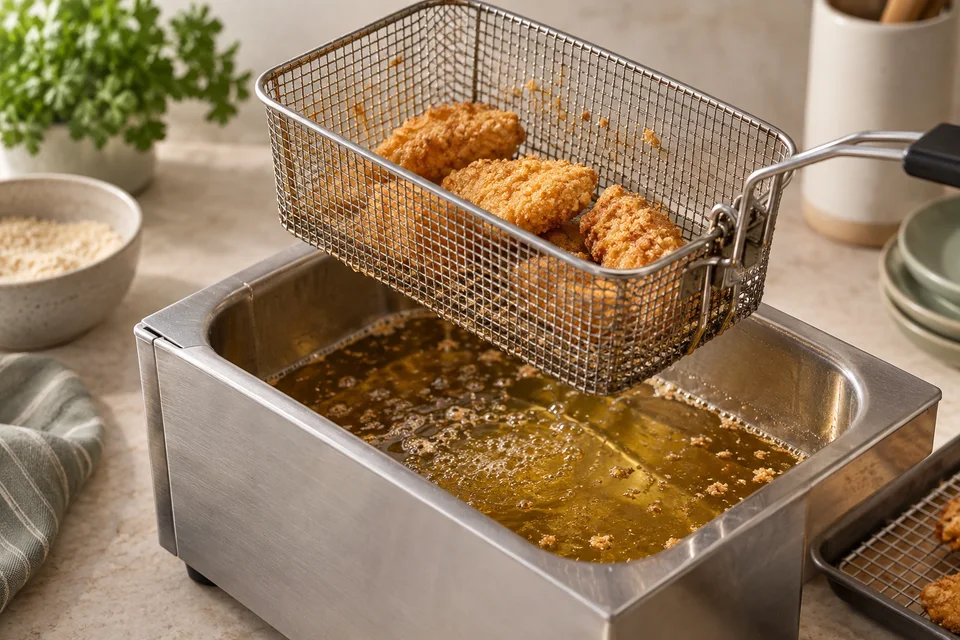
Battered food in a basket above frying oil.

01 / PREPARATION

Fryers & shared oil

Fish fragments and batter residue can remain in frying oil. Changing the basket does not separate the oil.

An everyday example

Chips are cooked in a fryer also used for battered fish.

What addresses it

  • Check what shares the oil.
  • Choose a separately managed fryer or another suitable cooking method.
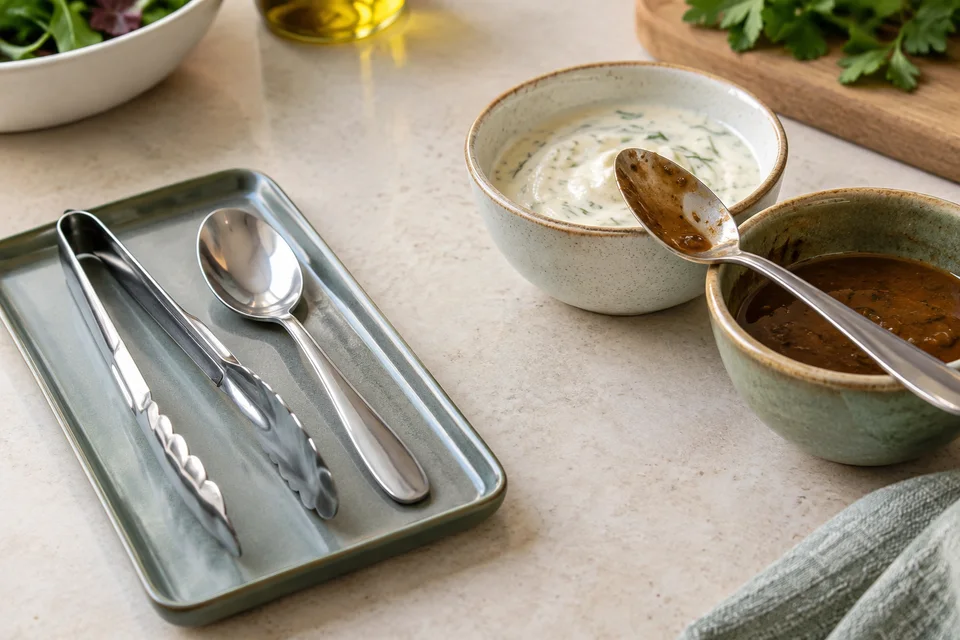
A used spoon between two sauces beside separate utensils on a tray.

02 / PREPARATION

Stock, water & sauce spoons

Fish stock, anchovy sauces and fish-based seasoning can spread through cooking liquid. Removing visible fish is not enough.

An everyday example

A ladle moves between fish broth and another soup.

What addresses it

  • Start with a verified fish-free stock or liquid.
  • Keep serving utensils separate and clean the pot before reuse.
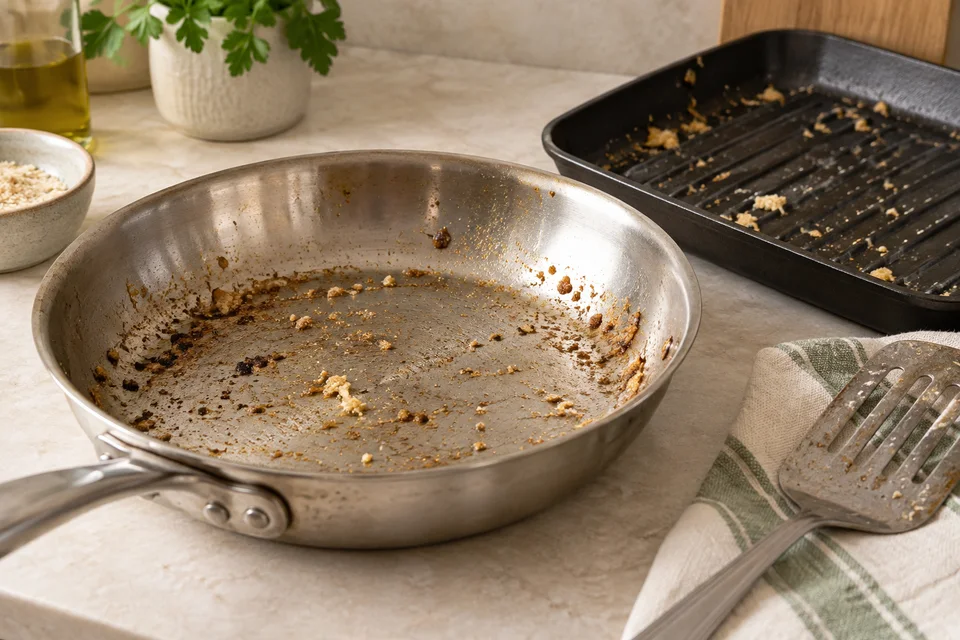
Cooking equipment with food residue on its surface.

03 / PREPARATION

Grills, pans & equipment

Fish juices and pieces can stay on a griddle, pan, spatula or pair of tongs. Reheating does not reliably remove the allergen.

An everyday example

A hotplate used for salmon is used for a different meal.

What addresses it

  • Remove residue through thorough cleaning before preparing the meal.
  • Use separate equipment if effective cleaning is not feasible.
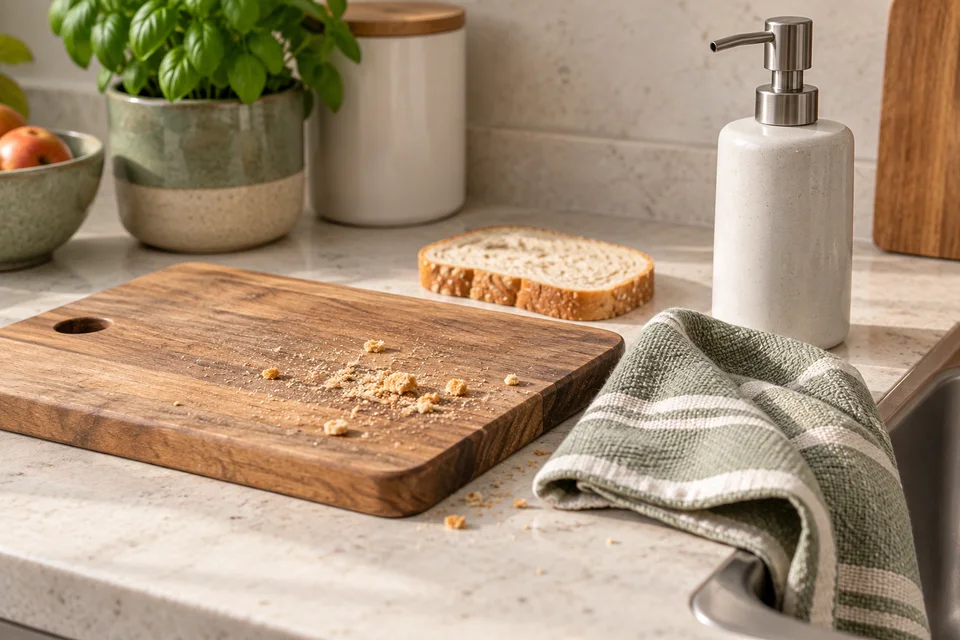
A preparation board with crumbs beside cleaning supplies.

04 / PREPARATION

Boards, hands & garnishes

Food handling connects raw fish, work surfaces and ready-to-eat ingredients. A clean plate cannot resolve contamination earlier in preparation.

An everyday example

Fish is portioned beside an uncovered garnish.

What addresses it

  • Separate preparation tasks and protect ready-to-eat ingredients.
  • Wash hands and clean boards, knives and the bench between tasks.
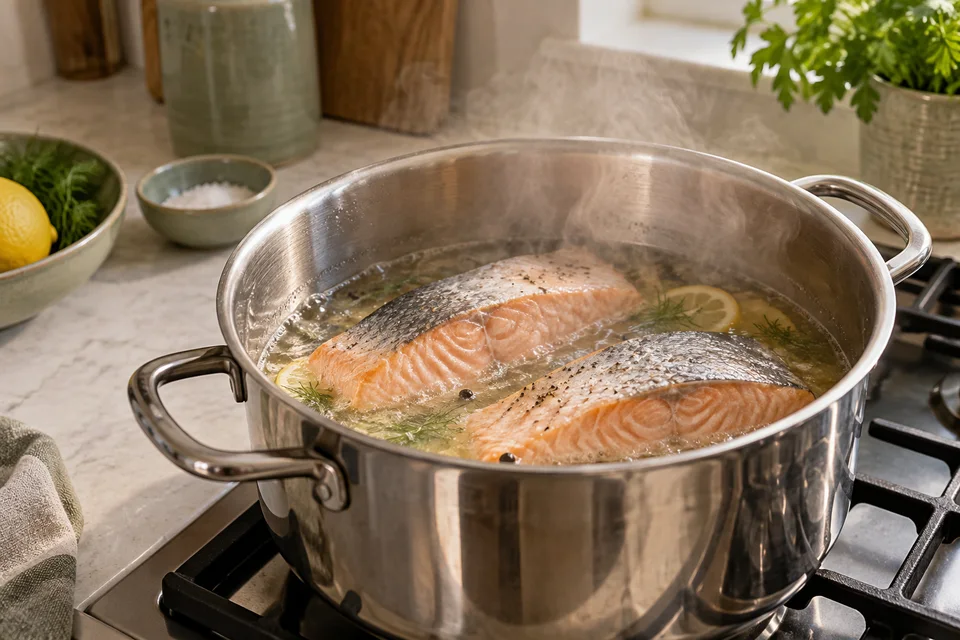
Salmon portions cooking in a pot with steam rising into the kitchen.

05 / PREPARATION

Steam & open kitchens

Fish cooking can release airborne proteins. Some fish-allergic people react around cooking fish; this is not the same as an odour alone.

An everyday example

Fish is steaming beside a serving counter.

What addresses it

  • Follow your individual advice about exposure around cooking fish.
  • Consider seating and preparation areas as well as meal ingredients.

Local ingredients, language and country-specific eating-out guidance belong in the destination guide.

Choose a country →

ADD THE LOCAL CONTEXT

Fish guidance for your destination.

Choose a country for its dedicated allergen page. Local label rules, ingredient names, language and eating-out guidance belong there.

Country pages are available; their local allergen guidance is still being prepared.