A little ingredient knowledge.Hover or tap to reveal the soybeans
START WITH THE SOURCE
Understanding soy allergy.
Soy allergy happens when the immune system reacts to proteins in soybeans. Some reactions happen quickly, while others are delayed. Symptoms and treatment depend on the type of allergy, and some immediate reactions can become severe. Your allergy specialist can help you understand your diagnosis and what you need to avoid.
This guide introduces the names and ingredients to recognise. Use it alongside your individual allergy advice, especially when checking ingredients such as soybean oil and soy lecithin.
The bean can be made into curd, drinks, flour, concentrated proteins and fermented ingredients. These examples are a starting point, not a complete list. Check the ingredient source even when the food looks very different.
Edamame are young soybeans. Tofu, also called soybean curd, and soy milk are made from the same source. Their different appearance does not make them separate allergens.
These ingredients are made from soy. Their names help identify soy in a mixture rather than a visible bean or piece of tofu. For a broad name such as vegetable protein, establish which plant it comes from.
Many versions are made from soybeans. Check the specific product: fermentation does not make a soy-based ingredient soy-free. Products sold under the same name can have different ingredients.
Read the full ingredients list and any allergen statements, even on a product you have eaten before. Ingredients can change.
Sauces, marinades, baked goods and meat alternatives are useful places to look more closely. The category alone does not tell you whether a particular product contains soy.
When travelling, do not assume soy will be declared or highlighted in the same way as at home. Food-labelling rules differ between countries.
Check your destination’s guidance and the particular packet. A familiar brand, translated product name or claim on the front does not replace the ingredients check.
Start with the job soy is doing: providing protein, a drink base or a savoury seasoning. A replacement needs its own ingredient and preparation checks. Use your allergy advice when choosing other legumes, nuts or dairy, and ask a dietitian about nutritional needs when replacing a regular food.
In place of
Options to consider
What to check
Soy drink or yogurt
Options to considerA tolerated dairy, oat or rice alternative
What to checkCheck nutrition, age suitability and any additional allergies.
Tofu or soy protein
Options to considerA tolerated option such as lentils, egg or chicken
What to checkOther legumes are separate assessments, not automatic exclusions or guarantees.
Soy-based sauce
Options to considerA checked coconut-based seasoning or a sauce made without soy
What to checkGluten-free soy sauce is not a soy-free substitute.
03 / FOLLOW THE PREPARATION
Explain the allergy, then ask about the kitchen.
Cross-contact happens when an allergen is unintentionally transferred into another food. Shared utensils, cooking surfaces and equipment can introduce soy even when the recipe does not include it. Ask about clean equipment and preparation as well as the ingredients.
Tell staff you have a soy allergy and ask them to check with the person preparing your food. A translated allergy card can help when you do not share a language, but should support a conversation about the ingredients and preparation.
When ingredients or preparation cannot be confirmed, choose another option rather than guessing. The Eating out tab explains the kitchen checks in more detail.
Not automatically. Soy belongs to the legume family alongside peanuts, peas, lentils and other beans. Soy allergy does not by itself mean you are allergic to all legumes, although allergies can occur together.
Follow your allergy specialist’s advice rather than excluding the whole food group.
The type of oil matters. Highly refined soybean oil contains very little soy protein and is tolerated by most people with soy allergy. Unrefined and cold-pressed soybean oils can retain more protein and should not be treated as equivalent.
Ask your allergy specialist which oils you need to avoid. If a product or restaurant cannot confirm the type of oil, do not assume it is highly refined.
No. A gluten-free label does not mean soy-free. Gluten-free soy sauces, including tamari products, can still be made from soybeans. Check the actual ingredients rather than treating gluten-free as a soy-allergy claim.
Removing tofu or another soy-containing ingredient does not reliably remove the allergen from the remaining food. Reheating is not a reliable solution either.
A replacement meal needs suitable ingredients and precautions against cross-contact. Ask for it to be prepared again with clean equipment rather than having the soy-containing pieces taken off.
Germinated soybeans; distinct from mung bean sprouts.
This list covers raw soy ingredients. Prepared foods, sauces and processed soy derivatives are outside this list.
Soy & shared preparation.
Follow the routes an allergen can take through a kitchen—from storage to the finished plate. These examples apply at home and when eating out.
Ordinary cooking does not reliably remove food allergens. Preventing transfer and removing residue are separate from choosing ingredients.
01 / PREPARATION
Sauces, marinades & utensils
Soy sauce, miso and soy-based marinades can coat brushes, spoons and bowls. Removing a piece of tofu does not remove a soy-containing sauce.
An everyday example
A basting brush moves from a soy marinade to another portion.
What addresses it
Identify the sauce and marinade ingredients.
Keep utensils separate and use clean bowls for a different preparation.
02 / PREPARATION
Woks, pans & griddles
Sauce residue can remain on a wok or griddle. Heat alone is not a reliable method of removing soy protein.
An everyday example
A pan used for a soy-sauce stir-fry is reused without cleaning.
What addresses it
Clean food-contact equipment between preparations.
Use a separate pan when the shared surface cannot be properly cleaned.
03 / PREPARATION
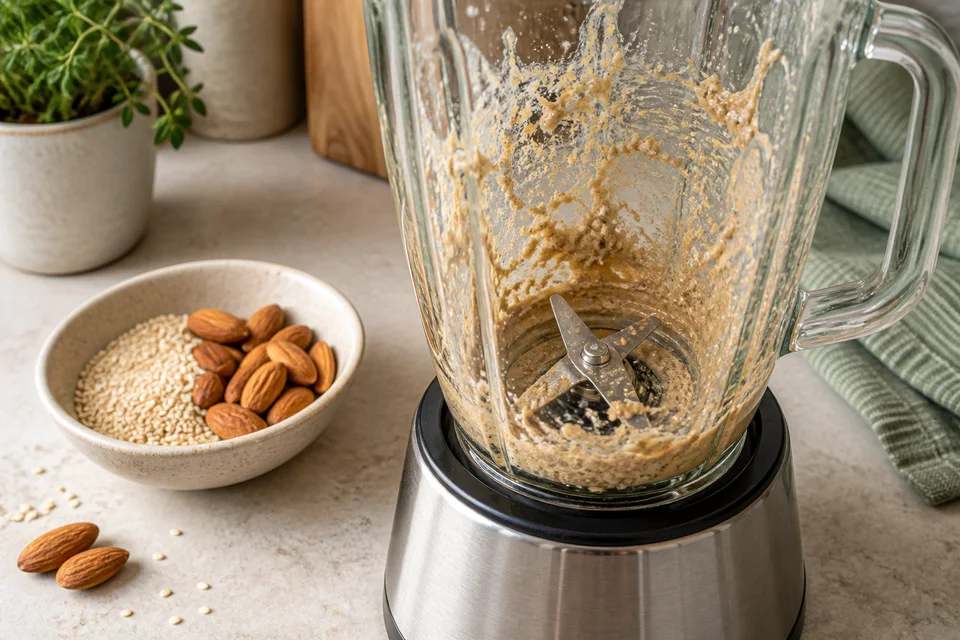
Soy drinks & blenders
Soy drinks and protein powders can remain in a blender, frothing jug or lid seal. The next drink may pick up that residue.
An everyday example
A soy protein shake is followed by another smoothie.
What addresses it
Include lids, seals and attachments in cleaning.
Use separately managed equipment when necessary.
04 / PREPARATION
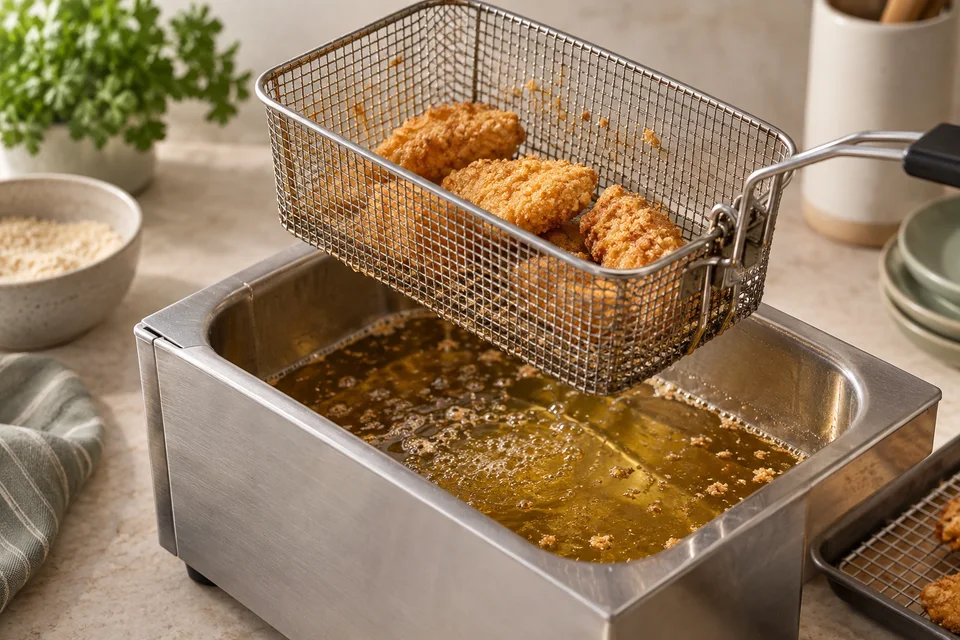
Fryer oil & shared foods
Whether the oil is highly refined and whether soy-containing foods share it are separate questions. Soy oil advice does not settle cross-contact from food.
An everyday example
A fryer uses refined soybean oil but also cooks soy-containing coatings.
What addresses it
Establish the oil type and follow your individual advice.
Check what shares the oil and consider a separate cooking method.
05 / PREPARATION
Powders, scoops & benches
Soy protein powder and dry mixes can spill onto surfaces or shared scoops. A small addition can be distributed through the whole batch.
An everyday example
A protein-powder scoop is reused in another ingredient tub.
What addresses it
Keep ingredient containers covered with separate scoops.
Wash hands and clean the bench after measuring powders.
Local ingredients, language and country-specific eating-out guidance belong in the destination guide.