Understand the different names and forms of milk and dairy, what to check on ingredients lists, and how to explain your allergy when eating away from home.
A little ingredient knowledge.Hover or tap to pour the milk
START WITH THE SOURCE
Understanding dairy allergy.
Milk allergy is a reaction to milk proteins, including casein and whey. It reaches beyond a glass of milk: butter, cream and cheese bring milk into cooking, baking and sauces.
Look for what gives a food its richness, coating or finish. Butter may be melted over vegetables; milk powder may be mixed into chocolate or seasoning. A dish can contain milk without looking creamy.
Use these ingredient and preparation checks alongside your personal allergy plan. Knowing the name is the first step; the complete recipe and handling matter too. If your avoidance needs are unclear, ask your allergy team before changing what you eat.
Recognise everyday dairy first, then less familiar label names such as whey, casein and milk solids. Buttermilk and milk powder also belong in the milk check. These are selected examples, not an exhaustive list. Follow the ingredient into powders, mixtures and finishing additions.
Fresh, fermented and powdered forms. A milk ingredient can be used for richness, texture or fermentation. Check the source even when the product is not a drink.
Small cooking or finishing additions still need checking. Ask about the cooking fat and the last addition before serving, not only the main sauce.
03
Milk proteins
Whey · casein · caseinates · milk solids
May be present without the word “dairy” in the product name. Read the protein names in powders and mixes. The finished food does not need to look creamy.
Lactose-free does not mean milk-free. With spreads, creamers and plant-based substitutes, check the full ingredients rather than relying on the name on the front.
Read the full ingredients list each time, including the ingredients inside a mix or sauce. Keep the packet available if staff need to check it. A product name or front-of-pack claim cannot answer every ingredient question.
Use the labelling guidance for the country where the food is sold. The foods covered, wording and presentation of allergen information can differ. Do not assume a familiar brand has the same recipe everywhere.
For unpackaged food, ask for ingredient information from the person preparing it. If a name or translation is unclear, keep the original wording available rather than guessing from a partial translation.
Choose a replacement for the task: oil for cooking, or a checked drink for a sauce. Soy milk and almond milk introduce different allergens; nutritional suitability matters too. Check the replacement as carefully as the original. If you regularly replace a major food group, discuss nutritional needs with a dietitian.
In place of
Options to consider
What to check
Milk as a drink
Options to considerA tolerated, age-appropriate fortified soy, oat or other drink
What to checkCheck protein and calcium. Ordinary plant drinks do not replace infant formula.
Butter for cooking
Options to considerOlive oil or a confirmed milk-free spread
What to checkCheck the pan and finishing butter as well as the replacement.
Cream or cheese in a recipe
Options to considerA checked oat, soy or coconut-based cooking alternative
What to checkNut- or soy-based replacements introduce different ingredients to assess.
03 / FOLLOW THE PREPARATION
Explain the allergy, then ask about the kitchen.
Ask about finishing butter, shared utensils and milk residue as well as the main recipe. A milk-free drink poured into a jug used for dairy still needs a preparation check.
Ask staff to check the recipe and any bought-in ingredients with the kitchen. Include the sauce, garnish and finishing step in the conversation, and explain which ingredients you need to avoid.
Get a clear answer about both ingredients and preparation before ordering. If the kitchen cannot confirm them, choose another option. A translated card can support this conversation when you do not share a language.
Lactose is a sugar; milk allergy concerns proteins. Lactose-free dairy milk still contains milk proteins. A product designed for lactose intolerance does not meet the same need as a milk-free product.
These are not routine substitutes for cow’s-milk allergy. Their proteins can also cause reactions. Discuss a suitable replacement with your allergy team, particularly when milk is an important part of a child’s diet.
Butter and ghee come from milk. Do not judge suitability by the fat content or the small amount used. Ask about butter added to vegetables, rice, bread and sauces, including the finishing step.
Some people can eat particular baked-milk foods under an agreed plan. That does not establish tolerance of fresh milk or every cooked dish. Follow specialist advice before trying a milk ladder or changing avoidance.
Is a plant-based drink a complete milk replacement?
Check both ingredients and nutrition. Plant drinks differ in protein and fortification, and may introduce soy or nuts. A dietitian can help choose an age-appropriate option; ordinary plant drinks should not be used as a replacement for infant formula.
Dark chocolate and savoury seasoning are product checks, not automatic milk-free categories.
Ingredient links search the wider ingredient catalogue. Sources for this guide are listed below.
Dairy & shared preparation.
Follow the routes an allergen can take through a kitchen—from storage to the finished plate. These examples apply at home and when eating out.
Ordinary cooking does not reliably remove food allergens. Preventing transfer and removing residue are separate from choosing ingredients.
01 / PREPARATION
Griddles, pans & butter
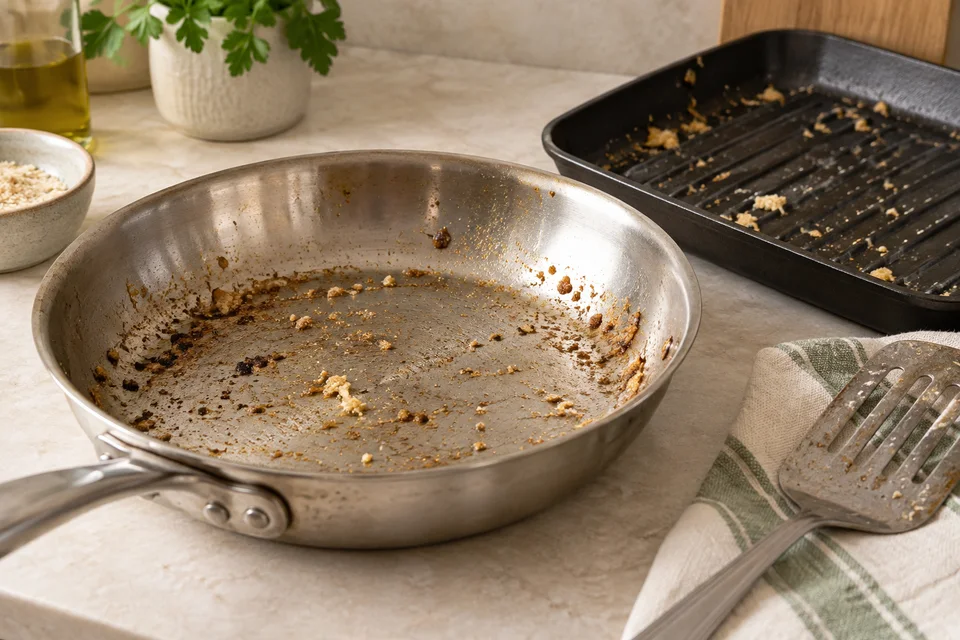
Butter, cheese and milk-based sauces can leave milk protein on a hotplate or pan. A dairy-free ingredient can pick it up during cooking.
An everyday example
A griddle is buttered before an otherwise dairy-free meal.
What addresses it
Check cooking fats as well as the main ingredients.
Clean equipment before preparation or use a separately managed pan.
02 / PREPARATION
Jugs, steam wands & blenders
Milk drinks leave residue in shared jugs, wands, blender seals and lids. Swapping to a plant drink changes the ingredient, not the equipment.
An everyday example
A shared milk jug is reused for a plant-based drink.
What addresses it
Include every milk-contact part in the equipment cleaning process.
Use separate equipment when cleaning cannot reliably remove residue.
03 / PREPARATION
Knives, crumbs & spread tubs
A buttery knife can introduce milk into a different spread. Crumbs from milk-containing bread or biscuits can also collect in shared containers.
An everyday example
A buttered knife is dipped into a dairy-free spread.
What addresses it
Use clean knives and uncontaminated portions of spreads.
Keep dairy-free portions covered and separate during service.
04 / PREPARATION
Sauces, spoons & finishing touches
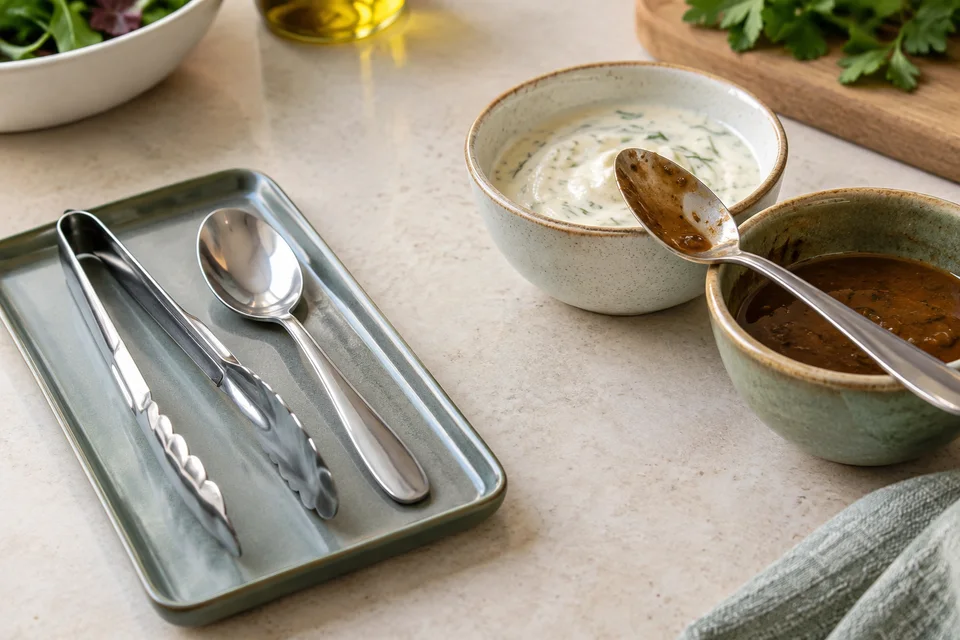
Cream, cheese or milk powder can be added after the main cooking step. Shared sauce spoons provide another route into food.
An everyday example
A spoon moves between a cream sauce and a separate gravy.
What addresses it
Check finishes, dressings and garnishes individually.
Keep sauce utensils separate; removing a cheese topping does not undo contact.
05 / PREPARATION
Milk powder, mixes & storage
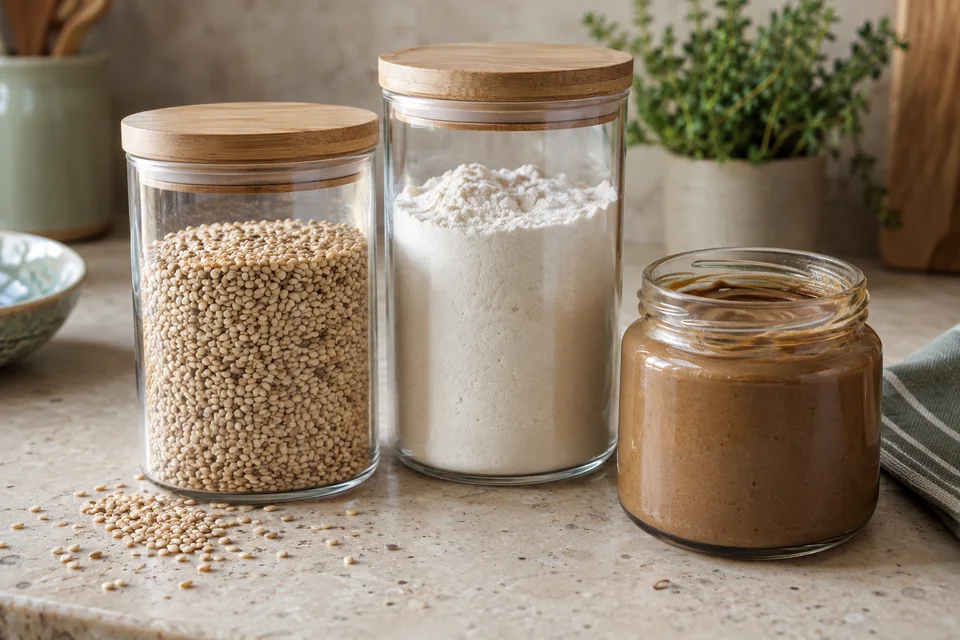
Milk powder can scatter during measuring and remain on scoops and bench surfaces. “Lactose-free” still describes a milk product when milk proteins remain.
An everyday example
A scoop used for milk powder is used for another ingredient.
What addresses it
Keep powders contained with dedicated clean scoops.
Wash hands and clean the preparation area before changing ingredients.
Local ingredients, language and country-specific eating-out guidance belong in the destination guide.