A little ingredient knowledge.Hover or tap to open the egg
START WITH THE SOURCE
Understanding egg allergy.
Egg can bind, thicken, glaze or foam, so it is not always visible as a piece of egg. It may hold a burger together, coat food before breading or give pastry its glossy surface.
Egg allergy concerns egg proteins. Separating the yolk from the white is not a reliable way to avoid egg: check both, along with dried and liquid forms.
Use these ingredient and preparation checks alongside your personal allergy plan. Knowing the name is the first step; the complete recipe and handling matter too. If your avoidance needs are unclear, ask your allergy team before changing what you eat.
Look beyond whole eggs to egg powder, albumen and egg-derived protein ingredients. Egg noodles are another useful name to recognise; recipes and brands vary. These are selected examples, not an exhaustive list. Follow the ingredient into powders, mixtures and finishing additions.
01
Whole egg & parts
Egg white · egg yolk · liquid egg
Raw, cooked and pasteurised forms are not automatically interchangeable for allergy. Check which parts and forms are used; separating an egg is not an avoidance method.
02
Dried & concentrated
Egg powder · egg solids · albumen
Found in mixes, coatings and protein ingredients. A dry mix can introduce egg before any fresh ingredients are added. Ask to see the packet.
03
Protein names
Ovalbumin · ovomucoid · egg-derived lysozyme
Less obvious names can still point back to egg. If a technical ingredient name is unclear, ask the manufacturer to confirm its source.
Check the sauce, coating and finishing step. Mayonnaise, custard, fresh pasta and some cocktail foams can contain egg even when the main ingredient does not.
Read the full ingredients list each time, including the ingredients inside a mix or sauce. Keep the packet available if staff need to check it. A product name or front-of-pack claim cannot answer every ingredient question.
Use the labelling guidance for the country where the food is sold. The foods covered, wording and presentation of allergen information can differ. Do not assume a familiar brand has the same recipe everywhere.
For unpackaged food, ask for ingredient information from the person preparing it. If a name or translation is unclear, keep the original wording available rather than guessing from a partial translation.
A replacement for binding a mixture may not whip into a foam. Pick an egg-free recipe or a checked substitute for that specific job, and check for other allergens. Check the replacement as carefully as the original. If you regularly replace a major food group, discuss nutritional needs with a dietitian.
In place of
Options to consider
What to check
Egg for binding
Options to considerPotato or fruit purée in an appropriate recipe
What to checkChoose according to the recipe and your other allergies.
Egg in baking
Options to considerAn egg-free recipe or checked egg replacer
What to checkDifferent recipes need different binding and raising properties.
Mayonnaise or egg wash
Options to considerAn egg-free mayonnaise, or a recipe using oil for glazing
What to checkCheck its other ingredients and any shared brush, bowl or spoon.
03 / FOLLOW THE PREPARATION
Explain the allergy, then ask about the kitchen.
An egg-free filling does not make the whole dish egg-free. Ask about egg wash, batter bowls and shared brushes, including what touches the food just before cooking.
Ask staff to check the recipe and any bought-in ingredients with the kitchen. Include the sauce, garnish and finishing step in the conversation, and explain which ingredients you need to avoid.
Get a clear answer about both ingredients and preparation before ordering. If the kitchen cannot confirm them, choose another option. A translated card can support this conversation when you do not share a language.
Separating an egg does not reliably separate its allergens. Egg white and yolk may contaminate each other. Use the forms allowed in your individual plan rather than separating an egg at home as an avoidance method.
Other birds’ eggs can also cause reactions in people with hen’s-egg allergy. A different bird does not make the egg a suitable substitute. Ask your specialist before considering one.
Some people tolerate egg baked into certain foods. This needs individual advice, including the recipe and amount permitted. Boiled egg, scrambled egg and a baked cake are not interchangeable steps.
Does egg-free pasta mean the whole dish is egg-free?
The pasta is one component. Ask about the sauce, stuffing and garnish, then how the dish is prepared. Fresh pasta, dried pasta and noodles vary by recipe; check the actual product rather than treating all pasta alike.
Start with its job: binding, lifting, thickening or foaming. One substitute rarely does all four. Use a recipe designed for the replacement, check the full label and include the coating or glaze in the check.
Ingredient links search the wider ingredient catalogue. Sources for this guide are listed below.
Egg & shared preparation.
Follow the routes an allergen can take through a kitchen—from storage to the finished plate. These examples apply at home and when eating out.
Ordinary cooking does not reliably remove food allergens. Preventing transfer and removing residue are separate from choosing ingredients.
01 / PREPARATION
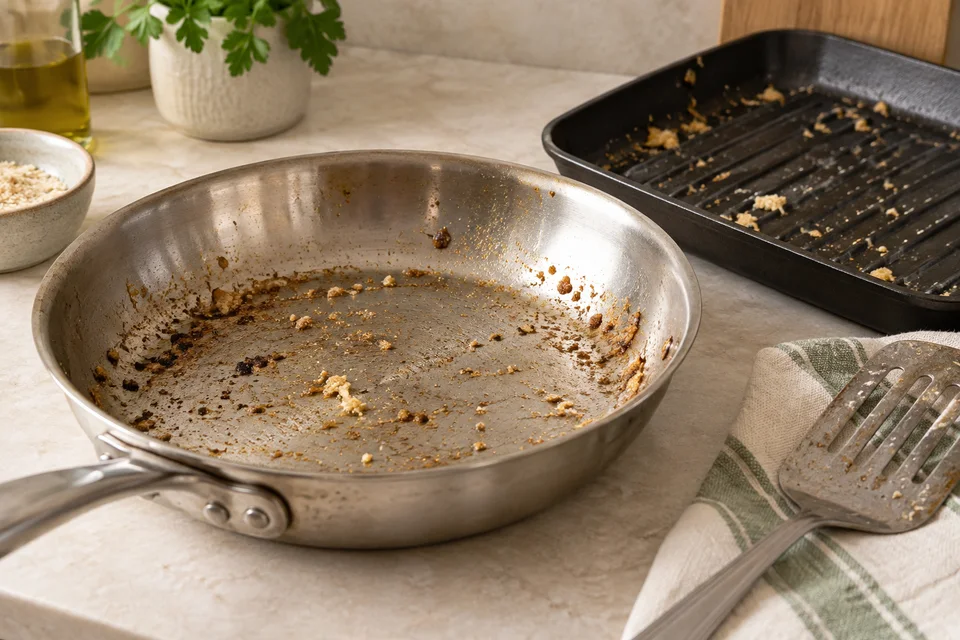
Breakfast griddles & pans
Egg can leave residue on a pan, griddle, spatula or brush. Ordinary cooking is not a reliable way to remove it.
An everyday example
A hotplate used for scrambled egg is used for a separate breakfast.
What addresses it
Clean the surface and utensils before preparing the meal.
Use separately managed equipment where cleaning is impractical.
02 / PREPARATION
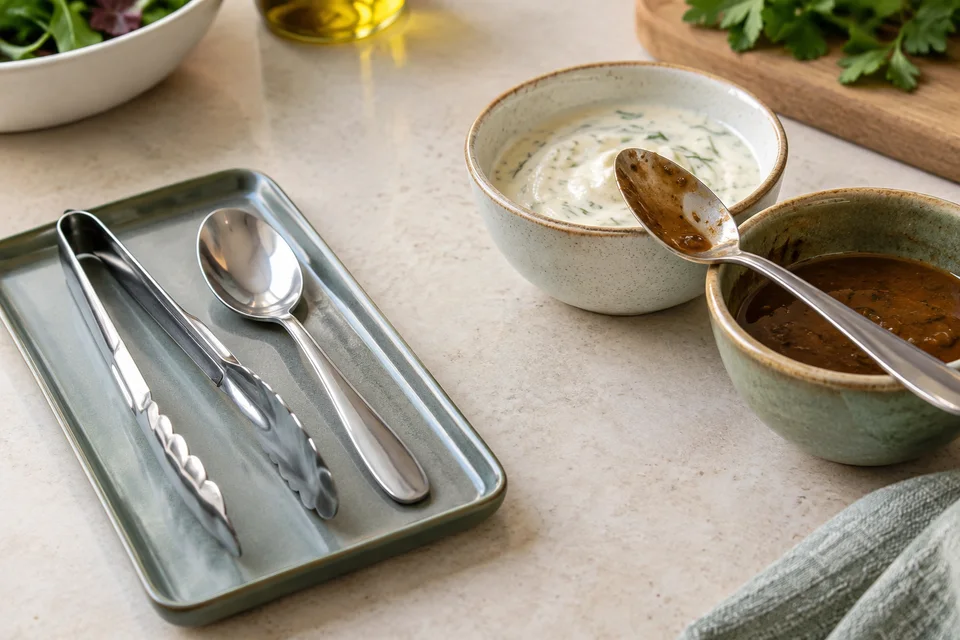
Mayonnaise, brushes & spoons
Mayonnaise and egg wash can transfer through a spoon or pastry brush. An egg-free filling does not settle what was brushed onto the outside.
An everyday example
One brush is used for egg wash and then another glaze.
What addresses it
Check coatings, glazes and sauces as individual ingredients.
Keep brushes and serving utensils separate and thoroughly clean them.
03 / PREPARATION
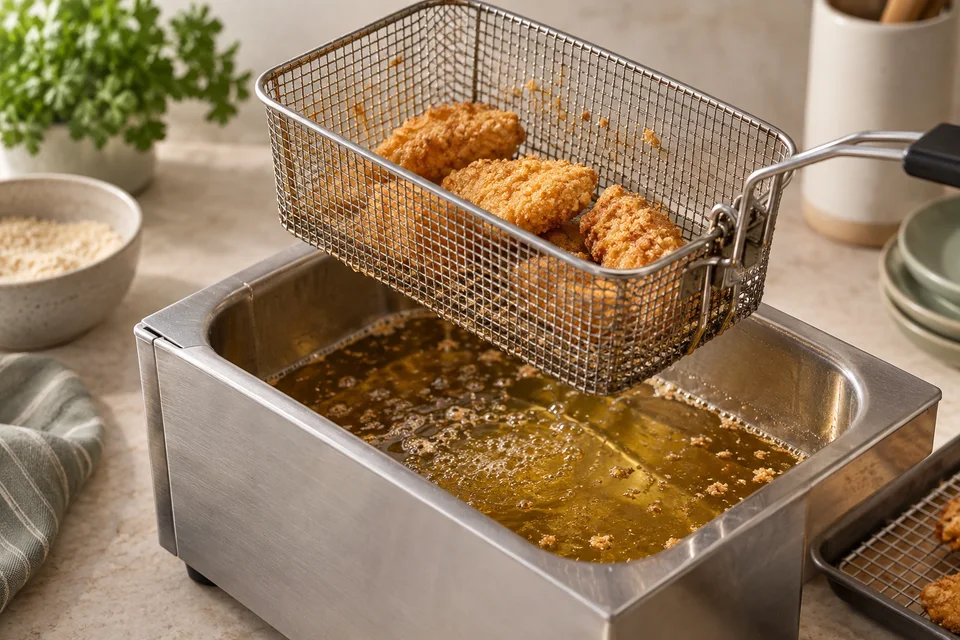
Cooking water & shared fryers
Egg-containing batter fragments can remain in oil; egg pasta can leave residue in cooking water. A different basket or portion does not separate the liquid.
An everyday example
An egg-free coating is fried in oil used for egg batter.
What addresses it
Check both the coating recipe and what shares the fryer.
Use fresh cooking water and clean equipment for a separately managed pasta portion.
04 / PREPARATION
Mixers, bowls & benches
Egg batter can collect on mixer attachments, bowl rims and work surfaces. Shell fragments are not the only material to remove.
An everyday example
A cake batter bowl is reused without washing.
What addresses it
Clean bowls, attachments and nearby surfaces between recipes.
Wash hands after handling egg and before touching other ingredients.
05 / PREPARATION
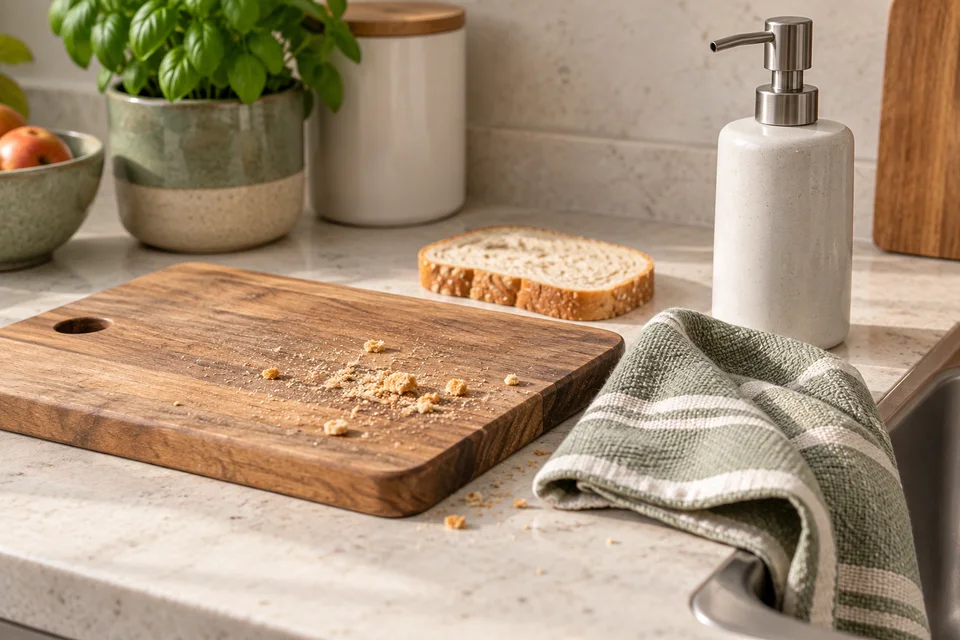
Serving & bakery crumbs
Cake crumbs and egg-coated pastry flakes can move through shared trays, tongs and spread knives. Removing a visible topping does not remove earlier contact.
An everyday example
The same tongs serve egg-glazed pastries and another bread.
What addresses it
Use clean utensils and protect separate portions during service.
Follow an individual baked-egg plan; do not infer tolerance from how a product looks.
Local ingredients, language and country-specific eating-out guidance belong in the destination guide.