
BEFORE YOUR FIRST MEAL
Navigating food allergies in Algeria
Algerian food ranges from semolina-based breads, couscous and noodles to grilled lamb, fish, soups, filled pastries and sweet dishes. Recipes and fillings vary, while broth, toppings, butter, egg and nuts may be added during cooking or finishing. Ask about the whole dish rather than relying on its name, especially at bakeries, markets and shared tables.
What to know first
Semolina is common
Couscous, rechta, kesra, mhadjeb and many pastries use wheat semolina or flour. Ask whether the base is wheat, and distinguish wheat questions from coeliac or gluten requirements.
Recipes can change
Chakchouka may include egg, bourek may contain cheese or egg, and soups may use celery or prepared broth. Confirm the actual recipe, not the dish title.
Communicate precisely
Prepare a written explanation in Arabic and French, adding Algerian Arabic wording where appropriate. Ask the cook to confirm every ingredient, sauce, stock, garnish and cooking surface.
Check preparation too
Ask whether shared oil, water, pans, boards, utensils or pastry worktops are used, and whether toppings are added after cooking. A plain-looking portion may still share preparation.
Read the whole label
Read the complete ingredients and allergen information on the actual product. If you avoid a food that is not highlighted, ask the producer or food provider to check it specifically.
Understanding the food
Semolina, bread, vegetables, pulses, meat, olive oil, dates and spices take different forms across a vast country. Amazigh, Arab, Ottoman, Mediterranean and African histories meet in regional dishes rather than one uniform national menu.
A continental-sized country creates regional tables.
| Area | Landscape & history | Food cues |
|---|---|---|
| Coast & Algiers | Mediterranean ports and layered urban histories | Fish, vegetables, breads, pastries, sauces and city specialities |
| Kabylie & northern mountains | Amazigh villages, olives and upland farming | Olive oil, grains, legumes, herbs and seasonal produce |
| High plateaus & Aurès | Pastoral and cereal-growing country | Semolina breads, couscous, chakhchoukha, lamb and fermented milk |
| Sahara & oases | Date palms, trade routes and arid agriculture | Dates, grains, meat, pulses and oasis produce |
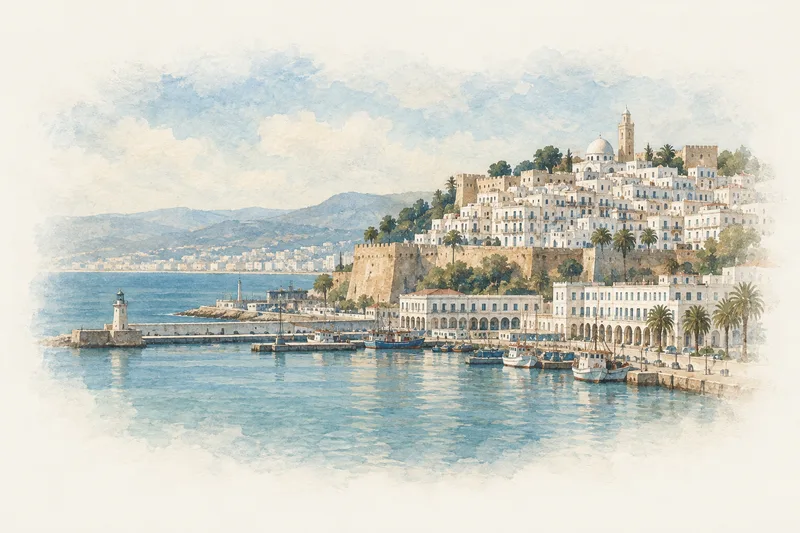
Geography is the clearest way into Algerian food. The tourism ministry distinguishes a Mediterranean coast, mountain ranges, high plateaus and Saharan oases. Ingredients, preservation and cooking methods respond to these very different environments. [7]
City and regional repertoires remain distinct. Constantine documents dishes such as chakhchoukha, trida and djari frik, while Khenchela’s official material centres semolina breads, couscous and Chaoui preparations. A national label should not flatten those differences. [9][10]
Semolina can become grain, bread or torn sheets.
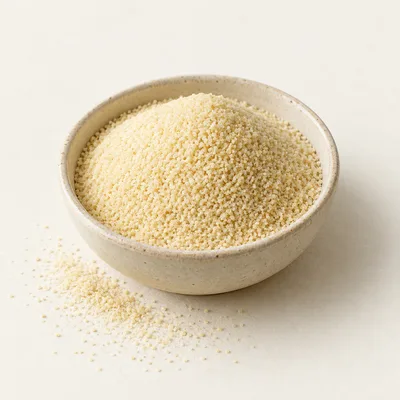 GRAINSemolina
Rolled for couscous or worked into breads and dough
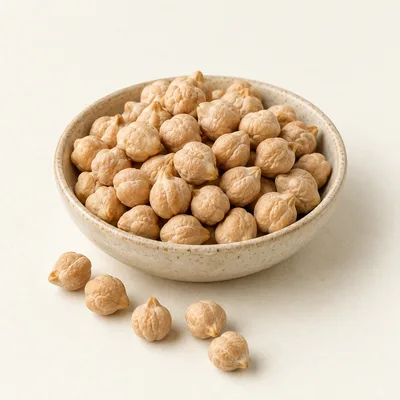 PULSEChickpea
Added to broths, couscous and stews
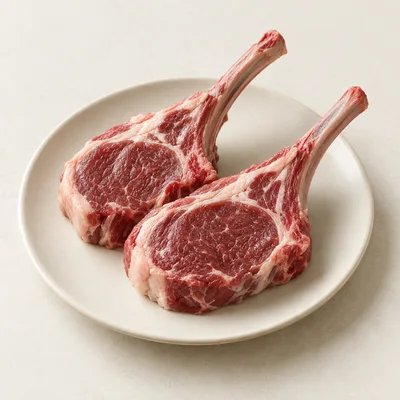 MEATLamb
Stewed, grilled or served with couscous
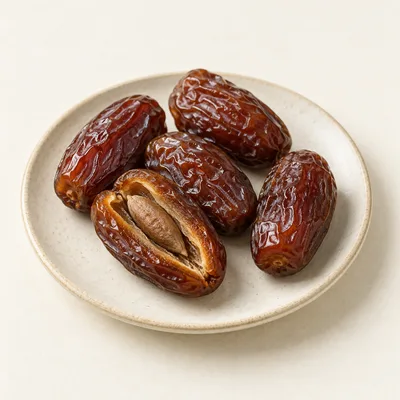 OASIS FRUITDate
An everyday ingredient and a product of oasis life
Couscous is a technique and social practice as much as a dish. UNESCO describes grain ground to semolina, rolled by hand, steamed and served with vegetables and meats that vary by region, season and occasion. The same name therefore covers many legitimate preparations. [8]
Flatbreads and torn dough create another family of meals. Khenchela’s culinary material describes kesra cooked on a clay or metal griddle and regional chakhchoukha built from torn cooked dough with sauce, chickpeas and changing vegetables. Fermented milk can accompany some versions. [9]
Food carries ceremony, hospitality and everyday routine.
Couscous is strongly tied to sharing. UNESCO records its associations with solidarity, conviviality, ceremonies and meals eaten together. Its utensils and hand-rolling knowledge are transmitted through families and communities as well as through newer formal settings. [8]
Do not stop at the most famous dish. Bakeries, grills, sweet shops and regional restaurants reveal breads, soups, filled pastries, skewers, stews and desserts that a couscous-only view misses. In Constantine alone, the official local list spans sweet dishes, soups, trida and several tagines. [10]
Food-culture sources checked .
Couscous, breads and noodles
Couscous can have a semolina base and a sauce that may contain meat, potatoes, carrots, courgette and chickpeas. Wheat may also be present in rechta noodles, kesra, mhadjeb, msemen, chakhchoukha and tikerbabine. Ask whether the grain, torn bread or noodles are wheat-based, whether they were steamed over a sauce, and whether a separate pot or shared serving spoon was used.
Soups, broths and stews
Chorba is a meaty soup, while chorba frik is associated with celery and durum-wheat freekeh; harira may use celery, wheat flour or vermicelli. Rechta is served in a recorded example with clear chicken broth, potatoes and chickpeas. Ask about stock cubes, flour thickeners, vermicelli, celery, meat juices and whether the broth was made separately from noodles or vegetables.
Filled and cooked dishes
Bourek and bourek annabi may use wheat pastry wrappers, with some versions containing cheese and egg. Chakchouka is made with green peppers, onions and tomatoes, with egg sometimes added; qarnoun mahshi may use egg or breadcrumbs as a binder. Ask about fillings, binding ingredients, pastry dusting flour and oil shared with other fried items.
Grilled, sweet and regional examples
Mechoui is charcoal-grilled lamb, while sardines mechermla identifies sardines as its defining protein. Southern examples include fettate from Tamanrasset and taguella, described as a nomad bread. Algerian sweets include almond-filled baklawa, kalb el louz, ktayef and makroud. Ask whether butter, almond, egg, wheat pastry, syrup or a garnish was added, and how items were handled.
Ingredients worth recognising
Start with these ingredients, then follow their names and recorded food connections. Check the recipe and product actually used.
Durum wheat semolina
This wheat ingredient appears in couscous, kesra, mhadjeb, mesfouf, makroud and other recorded dishes. Ask whether semolina is used in the base, dusting flour, crumbs or shared work surface, particularly when checking wheat or gluten requirements.
Celery
Celery is itself the ingredient and is recorded as a common aromatic in chorba frik and harira. Ask whether it is in the soup, stock, spice mixture or garnish, and whether a prepared broth was used.
Sardine
Sardines are the defining protein in sardines mechermla, and are finfish. Ask whether the fish is served whole, marinated or sauced, what the sauce contains, and whether the grill, pan or utensils are shared.
Butter
Butter can occur in Algerian baklava, kalb el louz, mesfouf, rfiss, tamina and tcharek el ariane. It is a milk-derived ingredient. Ask whether it is in pastry, a filling, the cooking fat or a finishing layer.
Egg
Egg may be used in bourek, bourek annabi, chakchouka, karantika, qarnoun mahshi and several pastries. Ask whether it is mixed into a filling, used as a binder or glaze, cooked whole, or brushed on before baking.
Almond
Almond is recorded in baklava, dziriette, kalb el louz, ktayef, makroud and other sweets; it is a tree nut. Ask about ground almond in the mixture, almond flour, fillings, decoration and shared trays or serving tongs.
How food labelling works
A current, country-specific allergen-labelling summary for Algeria has not yet been verified for this guide. Do not transfer the list of regulated allergens or restaurant disclosure rules from your home country to this one.
Read the complete ingredients on the actual package and keep any local-language sticker with the original label. For imported products, compare the information on that pack rather than a photograph of the brand sold elsewhere. Ask the manufacturer or seller to clarify an unfamiliar term.
For loose food or meals prepared to order, ask who can check the recipe and the labels on bought-in ingredients. Explain every food you avoid, including ingredients outside familiar allergy groups; a short symbol chart may not cover your list.
Language and communication
Arabic and Tamazight are Algeria’s official languages. Algerian Arabic (Darja) is used in everyday conversation, and French is also widely used. Prepare a written explanation in a language the person checking your order can understand, separating the foods you avoid from questions about sauces, stock and shared preparation.
Kabyle is especially relevant around Bejaia, Bouira and Boumerdes. Ask which language will work for the conversation and arrange reliable help with your written explanation where needed. Names such as couscous or bourek identify dishes to ask about; the cook still needs to confirm the ingredients and preparation of the version being served.
Eating in different settings
Market or street counter
For couscous, chakchouka, mhadjeb or bourek, ask which ingredients are in today’s batch, including egg, cheese, broth and wheat pastry. Ask whether the item was cooked in shared oil or handled with the same tongs, board or serving spoon as other foods.
Bakery or sweet shop
For baklava, kalb el louz, ktayef, makroud or sfenj, ask about wheat flour, semolina, butter, egg and almond in the dough, filling and topping. Check whether trays, knives, display tongs or worktops are shared between nut-filled and other pastries.
Restaurant or shared meal
Before ordering rechta, chorba, couscous, tajine or sardines mechermla, ask for the complete recipe and every sauce or broth. Confirm whether noodles, grains, vegetables and garnishes were prepared separately, and whether bread, crumbs or stock were added at the table.
Packaged-food shop
Read the full ingredient list on couscous, vermicelli, broth, breadcrumbs, pastries and sweets. Check flavourings, milk ingredients, egg, wheat, nuts and possible formulation changes. If the label is unclear, ask a shopkeeper to identify the complete list rather than judging from the product name.
Before you travel
Review your personal plan
Discuss your travel plans with your clinician and keep your prescribed medicines and emergency instructions accessible. Tell companions where these are and how to follow your plan.
Check your medicines before entering Algeria
Medicine rules in Algeria may differ from those in the UK. Before travel, check TravelHealthPro guidance and confirm the current import and documentation requirements for each prescribed or bought medicine with the relevant Algerian authority. Ask your prescriber how to manage prescribed medicines while travelling.
Make the first meals easier to organise
Contact your accommodation and transport providers in advance. Save your written food list, menu questions and destination address offline. Check entry restrictions before packing backup food, and plan how you will check meals during arrival and onward journeys.
Plan access to medical help
Private clinics in Algeria are described as usually having better facilities than government hospitals. Arrange adequate travel health insurance and accessible funds for treatment and repatriation, and check cover and provider details in advance. English is not widely spoken, so plan communication in Arabic or French.
Emergency resources
For a suspected severe allergic reaction, follow your prescribed emergency plan and seek urgent medical help. Give your exact location clearly.
Ambulance and urgent medical help
Call 16 or 1021 and ask for an ambulance.
Explore next
Your allergy in Algeria
Choose a food concern for the country notes and questions relevant to it.
Dishes in Algeria
Follow the ingredients and cuisine connections in individual dish records.
Your own food list
Combine allergy groups and individual ingredients in one guide, with local names where recorded.
Allergy cards
Prepare the information you need to explain your food requirements.
FAQs, sources and review dates
Could a plain-looking chakchouka contain egg?
Yes, egg may be added to the usual green pepper, onion and tomato mixture. Ask whether this batch includes egg, when it was added, and whether the pan or spoon was also used for egg-containing dishes.
What should I ask about broth in rechta or soup?
Ask what the broth was made from and whether it contains prepared stock, celery, wheat flour, vermicelli or other flavourings. For rechta, also ask whether the noodles were cooked in the broth or separately, and whether the serving spoon is shared.
Is dried fruit automatically a concern?
Not automatically. Recorded ingredient notes say some dried plums and some light-coloured raisins may use sulfites, depending on formulation. For a dish or packaged product containing them, ask to see the full ingredients and confirm whether a preserving treatment is listed.
Sources checked: . This researched draft is awaiting editorial review. Practical questions apply the sources below to local food settings; they do not confirm any individual meal's ingredients or preparation.
Sources & references (10)
- FCDO · Algeria health and medical assistance
Emergency contact details, local healthcare and medicine guidance. UK-specific eligibility does not apply to every visitor.
- Wikivoyage contributors · Algeria
Community-edited food and dining context, checked against the recorded food examples. This is not an allergy or medical authority. Brief food-context adaptations; CC BY-SA 4.0, https://creativecommons.org/licenses/by-sa/4.0/.
- FARE · Dining out
General recipe and preparation questions, applied here to country-specific food examples.
- FARE · Travelling with food allergies
General preparation, written communication and access to prescribed medicines. Not country-specific import permission.
- PlateSafe · Algeria recorded food connections
Existing draft dish and ingredient records, used as examples to investigate. These are not independently verified recipes or suitability assessments.
- Unicode CLDR · Territory language data
Language suggestions. Regional language needs must be confirmed with the particular food provider.
- Algerian Ministry of Tourism and Handicrafts — Discover Algeria
- UNESCO — Knowledge and practices pertaining to couscous
- Khenchela Directorate of Tourism — Culinary traditions
- Constantine Directorate of Tourism — Local gastronomy