
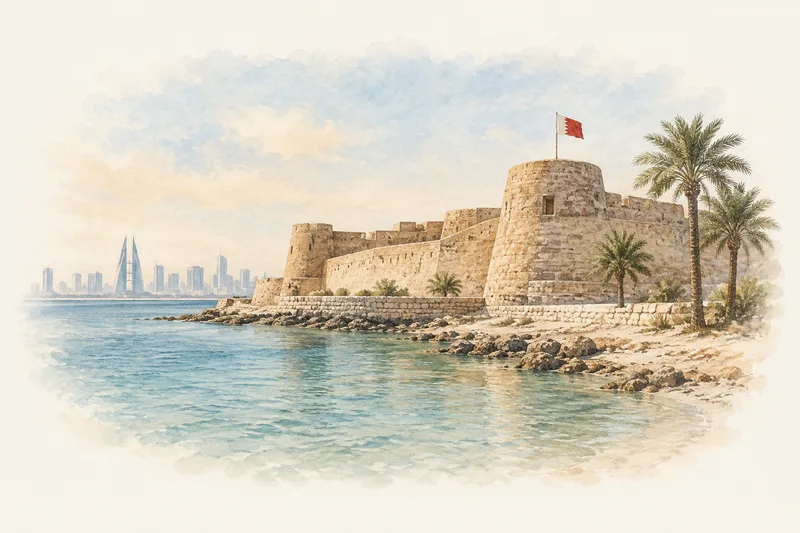
BEFORE YOUR FIRST MEAL
Navigating food allergies in Bahrain
Bahrain’s recorded food examples range from rice dishes and fish variations to wheat-based breads, pastries, puddings and fried sweets. Recipes can differ between homes, stalls and restaurants, so a familiar name is only a starting point. Ask about the complete recipe, cooking fat, stock, toppings and preparation equipment, especially when ordering machboos, samboosa, balaleet or traditional desserts.
What to know first
Rice dishes may include fish
Machboos is described with rice, meat and vegetables, while fish is a recognised variation; muhammar is sweet rice typically served with fish. Confirm the exact protein and stock.
Wheat appears across the table
Samboosa, khubz-style breads, regag, chebab, luqaimat and several puddings can involve wheat flour, while harees uses wheat berries. Do not infer ingredients from the dish name.
Explain the whole concern
Ask whether the dish contains your ingredient, stock, sauce, topping or garnish, and whether the same oil, water, utensils or surfaces are used for other foods.
Preparation can change the recipe
For balaleet, chebab, khanfaroosh or samboosa, ask about egg, milk, butter, cheese, fillings and frying arrangements rather than relying on a vegetarian, vegan or dish label.
Read the complete label
For packaged foods, read the full ingredient list and any preparation directions each time. A Bahrain-wide legal labelling rule is not established here.
Understanding the food
Rice, fish, meat, wheat, dates, saffron, cardamom and dried lime support a Gulf repertoire shaped by trade and hospitality. Traditional bakeries, Muharraq cafés, family cooking and contemporary restaurants keep that history visible in different ways.
Bread, rice and slow-cooked grain form three anchors.
| Form | Technique | Examples |
|---|---|---|
| Rice dishes | Spiced rice with fish or meat | Family meals and celebratory platters |
| Tannour & rgag breads | Clay-oven loaves and thin griddle bread | Breakfasts, fillings and accompaniments |
| Soft grain dishes | Wheat or rice cooked down with meat | Harees, mathrooba and margoog |
| Sweets & drinks | Starch, sugar, aromatics and tea | Bahraini halwa, chai haleeb and coffee |
Traditional food carries the history of exchange. Bahrain’s culture authority describes a cuisine enriched by visitors and foreign influence over many decades, while keeping particular breads, grain dishes, sweets and drinks tied to local memory. [8]
Neighbourhood bakeries remain an everyday institution. Tannour bread is described as a staple baked in locally made clay ovens across cities and villages. Thin rgag bread, meanwhile, can appear plain or with different fillings. [7]
Aromatic ingredients carry the Gulf character.
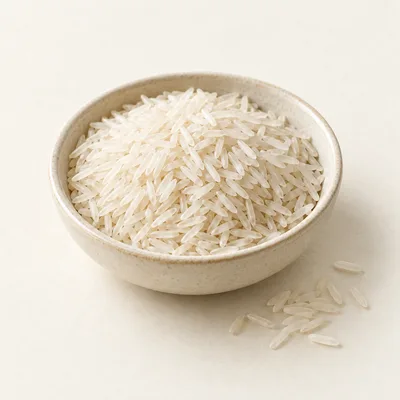 GRAINRice
The base for spiced fish and meat dishes
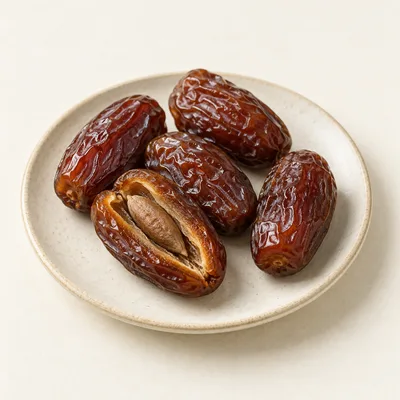 FRUITDate
Fresh, dried and used across sweets and hospitality
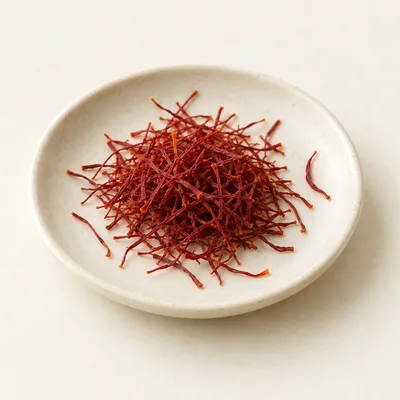 SPICESaffron
Colour and perfume for sweets, tea and rice
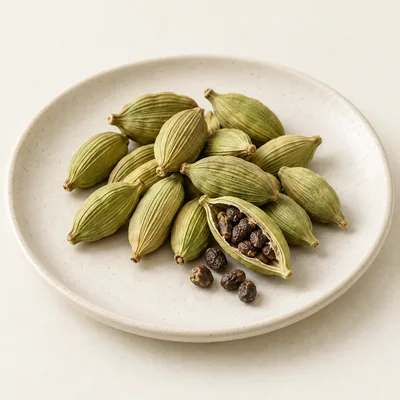 SPICECardamom
Aromatic warmth in coffee, tea and desserts
Bahraini halwa concentrates several signature aromas. The culture authority describes a sweet based on starch, sugar and oil with nuts, saffron, rose water and cardamom. It represents a confectionery craft with a documented history of more than two centuries. [7]
Contemporary chefs continue to reinterpret familiar flavours. A Muharraq supper club used black lime, coriander, vegetables, meat, shrimp and pomegranate in new versions of popular dishes such as tikka, samboosa and kibbeh. [8]
Muharraq and the old suq connect food with place.
Cafés were meeting points before they were visitor attractions. Bahrain’s heritage material describes a Muharraq café where fishermen and pearl divers gathered, alongside family ice-cream shops, halwa makers and traditional food stalls. [7]
The suq mixes everyday and ceremonial foods. Bab Al Bahrain combines spice and tea shops, sweets, coffee houses and restaurants serving local dishes. Elsewhere, modern cafés and fine dining sit beside family kitchens and festival food, reflecting the island’s continuing openness. [9][8]
Food-culture sources checked .
Rice, fish and savoury dishes
Machboos is recorded as a mixture of spices, usually long-grain basmati rice, meat and vegetables, with fish recognised as a variation. Muhammar is a sweet rice dish typically served with fish. Ask whether the rice was cooked in fish, chicken or another broth, whether spice mixtures contain added ingredients, and whether fish or meat was prepared in shared cookware.
Breads, doughs and filled pastries
Wheat-based examples include khubz, khobz al-tannour, regag bread, regag flatbread, gabout dumplings, samboosa and thareed with regag flatbread. Samosa fillings may include spiced potato, onion, peas, lentils, lamb or chicken; samboosa may also contain cheese. Ask about the wrapper, filling, oil, sauces and shared frying equipment.
Sweet batters and puddings
Chebab uses wheat flour, egg and milk in the recorded example; khanfaroosh combines wheat flour with rice flour and uses egg and cow milk. Balaleet has wheat vermicelli, an egg omelette topping and commonly butter. Khabeesa and harees may use ghee, while sago pudding may use cow milk and pistachio. Confirm each topping and finish.
Desserts, garnishes and variation
Bahraini halwa is described as a jelly-like sweet made with corn starch, saffron and various nuts, while luqaimat may have sesame garnish. Date ma’amoul may contain durum wheat semolina or wheat flour, butter and nut fillings or garnishes. Ask whether nuts, sesame, dairy or flour are added to the portion, sauce or decoration.
Ingredients worth recognising
Start with these ingredients, then follow their names and recorded food connections. Check the recipe and product actually used.
Sesame Seed
Sesame is recorded as an occasional garnish for luqaimat, and may appear on or beside a finished sweet. Ask whether sesame is added during cooking or only at serving, and whether the same garnish container or utensil is used for other dishes.
Durum wheat semolina
Durum wheat semolina is connected with Bahraini date ma’amoul, whose pastry may also use wheat flour. Ask which flour is in the dough, whether the filling contains nuts, and whether the pastry is made on a shared surface.
Wheat berries
Wheat berries are the defining grain in harees. Confirm whether the serving is made with only the recorded grain and its stated additions, or whether ghee, stock, milk or another finishing ingredient is included in this preparation.
Dried shrimp
A dried-shrimp version of mumawwash is recorded, so the dish name alone does not identify the protein. Ask whether this batch uses dried shrimp, another protein or no seafood, and whether the ingredient was added to a shared pot.
Fish
Fish is a recognised variation in machboos and an option in madrouba and salona; muhammar is typically served with fish. Ask which dish contains fish, whether fish broth is used elsewhere, and whether utensils or pans are shared.
Butter
Some versions of date ma’amoul and balaleet use butter, which is milk-derived. Ask whether butter is in the dough, used to fry or finish the dish, or replaced by another fat, and check the complete packaged ingredient list where relevant.
How food labelling works
A current, country-specific allergen-labelling summary for Bahrain has not yet been verified for this guide. Do not transfer the list of regulated allergens or restaurant disclosure rules from your home country to this one.
Read the complete ingredients on the actual package and keep any local-language sticker with the original label. For imported products, compare the information on that pack rather than a photograph of the brand sold elsewhere. Ask the manufacturer or seller to clarify an unfamiliar term.
For loose food or meals prepared to order, ask who can check the recipe and the labels on bought-in ingredients. Explain every food you avoid, including ingredients outside familiar allergy groups; a short symbol chart may not cover your list.
Language and communication
Arabic is Bahrain’s official language, and the Bahraini dialect is native to the island, while Modern Standard Arabic is taught in school. Prepare a written explanation in Arabic naming the ingredient, the dish and the need to confirm the complete recipe.
English and Persian are described as widely spoken; Urdu and Hindi are understood among South Asian expatriates, with Malayalam also popular. These may help with communication in particular settings, but ask a staff member to confirm the recipe and preparation rather than relying on a dish name.
Eating in different settings
Traditional Arabic restaurant
For machboos, muhammar, madrouba or salona, ask which protein is in this batch and whether the rice or stew uses fish, chicken or another broth. Check spices, finishing fat, garnishes and shared serving utensils before ordering a complete portion.
Bakery or bread counter
When buying khubz, regag, khobz al-tannour, chebab or gabout, ask which flour is used and whether egg, milk, butter or ghee is added. For thin breads, ask about the griddle, oil and utensils used for other doughs.
Samosa or fried-food stall
Ask what is inside each samosa or samboosa today: potato, onion, peas, lentils, lamb, chicken or cheese. Confirm the wrapper and frying oil, whether other filled pastries share the oil, and whether sauces or garnishes are added after frying.
Supermarket or packaged-food shop
For halwa, date ma’amoul, sago pudding, vermicelli or other packaged foods, read the complete ingredient list rather than relying on the front name. Check for wheat, milk, egg, nuts, sesame, fish or shrimp, and recheck different sizes or batches.
Before you travel
Review your personal plan
Discuss your travel plans with your clinician and keep your prescribed medicines and emergency instructions accessible. Tell companions where these are and how to follow your plan.
Check your medicines before entering Bahrain
If you take prescribed medicines, carry a doctor’s note. Before bringing prescription medicines into Bahrain, check with the nearest Bahrain Embassy or consulate whether prior agreement from the authorities may be needed. Do not assume UK medicine rules apply there.
Make the first meals easier to organise
Contact your accommodation and transport providers in advance. Save your written food list, menu questions and destination address offline. Check entry restrictions before packing backup food, and plan how you will check meals during arrival and onward journeys.
Plan access to medical help
FCDO identifies medical providers in Bahrain, some with staff who may speak English. Emergency treatment is chargeable, so check that your travel health insurance covers medical treatment abroad and repatriation, and that you have accessible funds. Confirm current provider and eligibility details before travel.
Emergency resources
For a suspected severe allergic reaction, follow your prescribed emergency plan and seek urgent medical help. Give your exact location clearly.
Ambulance and urgent medical help
Call 999 and ask for an ambulance.
Explore next
Your allergy in Bahrain
Choose a food concern for the country notes and questions relevant to it.
Dishes in Bahrain
Follow the ingredients and cuisine connections in individual dish records.
Your own food list
Combine allergy groups and individual ingredients in one guide, with local names where recorded.
Allergy cards
Prepare the information you need to explain your food requirements.
FAQs, sources and review dates
Can I assume machboos contains meat rather than fish?
No. The recorded description uses meat and vegetables, but fish is also a recognised machboos variation. Ask which protein is used today, whether the rice was cooked in fish broth, and whether the same stock, pan or serving utensil was used for another seafood dish.
What should I ask about a sweet rice or vermicelli dish?
For muhammar, ask whether fish is served with it and whether the rice has a separate stock or garnish. For balaleet, ask about wheat vermicelli, the egg omelette topping, and butter used to fry or finish it; confirm whether toppings are added after cooking.
Is pistachio the same concern as every other nut?
Do not treat all nuts as interchangeable. Pistachio is recorded as a garnish or variation in halwa and sago pudding, while ma’amoul notes may mention nuts more generally. Ask specifically which nut is present, whether it is in the filling or garnish, and whether utensils are shared.
Sources checked: . This researched draft is awaiting editorial review. Practical questions apply the sources below to local food settings; they do not confirm any individual meal's ingredients or preparation.
Sources & references (9)
- FCDO · Bahrain health and medical assistance
Emergency contact details, local healthcare and medicine guidance. UK-specific eligibility does not apply to every visitor.
- Wikivoyage contributors · Bahrain
Community-edited culinary context only; not an allergy or medical authority. Brief food-context adaptations, CC BY-SA 4.0: https://creativecommons.org/licenses/by-sa/4.0/. Recipe questions also use PlateSafe’s draft records.
- FARE · Dining out
General recipe and preparation questions, applied here to country-specific food examples.
- FARE · Travelling with food allergies
General preparation, written communication and access to prescribed medicines. Not country-specific import permission.
- PlateSafe · Bahrain recorded food connections
Existing draft dish and ingredient records, used as examples to investigate. These are not independently verified recipes or suitability assessments.
- Unicode CLDR · Territory language data
Language suggestions. Regional language needs must be confirmed with the particular food provider.
- Bahrain Authority for Culture and Antiquities — Food heritage
- Bahrain Authority for Culture and Antiquities — Bahraini cuisine as heritage
- Bahrain Authority for Culture and Antiquities — Bab Al Bahrain