
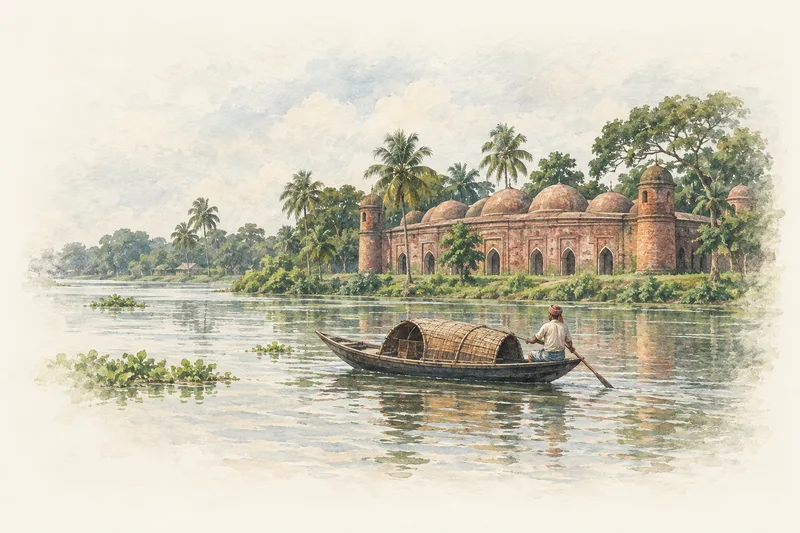
BEFORE YOUR FIRST MEAL
Navigating food allergies in Bangladesh
Bangladeshi meals commonly centre on rice, with fish, mutton, chicken, dal and vegetable curries appearing in varied combinations. Hilsa, mustard preparations, biryani, fuchka, breads and milk-based sweets can differ by recipe and place. Treat familiar names as starting points: ask about the full preparation, sauces, toppings, cooking fat and shared utensils before ordering.
What to know first
Rice and fish are central
Rice is usually the staple accompaniment, while freshwater fish such as hilsa, rohu, pabda and chitol appear in distinct curries, steamed dishes and dumplings.
Recipes vary across Bangladesh
Dal may be relatively light and brothy or thicker and more spiced; vegetable variety also differs between major cities and rural areas, so ask locally.
Explain the whole concern
In Bengali, prepare a written explanation naming the ingredient and asking about the complete recipe, stock, sauce, topping, oil, shared water and utensils.
Preparation still needs checking
Ask whether rice, curry, fish, fritters or sweets are cooked in separate pans and oil, and whether serving spoons or preparation surfaces are shared.
Read complete ingredient lists
For packaged food, read the full ingredient list rather than relying on a dish name or dietary description; national labelling requirements are not specified.
Understanding the food
River fish, vegetables, lentils, bhorta, meat curries, pickles and sweets gather around rice rather than competing for one main-dish position. Delta geography and strong regional identities make the repertoire far more varied than “rice and curry” suggests.
Rice stays central while the accompaniments change.
| Part | Role on the plate | Examples |
|---|---|---|
| Rice | The central staple | Plain rice, khichuri or biryani depending on the meal |
| Vegetables & bhorta | Early accompaniments and strong contrasts | Mashed aubergine, potato, dried fish or chilli mixtures |
| Fish, meat or egg | One or more savoury curries | River fish, shrimp, chicken, beef or egg |
| Daal & sweet finish | Lentils complete the savoury meal | Yellow lentils followed by doi or mishti |
The official tourism handbook describes rice and curry as the core. Fish, meat, egg or vegetable curries and yellow lentils are served around plain rice, often eaten in a progression rather than as one mixed bowl from the start. [7]
Bhorta adds concentrated flavour and texture. Mashed vegetables, potato, dried fish or other ingredients can be seasoned with chilli, onion and oil and served in small portions. Several bhorta may appear beside rice in the same meal. [7]
The delta pantry favours fish, mustard and sharp contrasts.
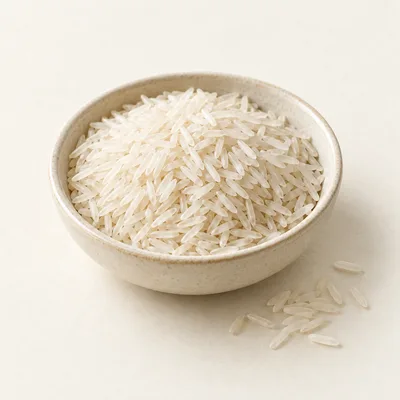 GRAINRice
Plain, fragrant, fried or cooked into khichuri
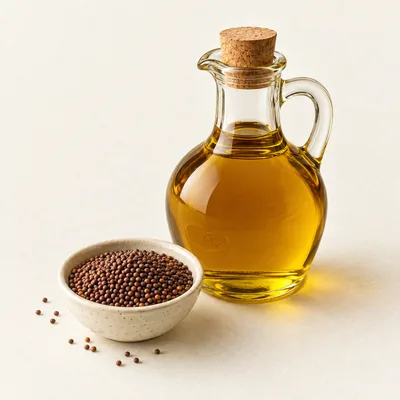 SEASONINGMustard oil
A pungent cooking and finishing flavour
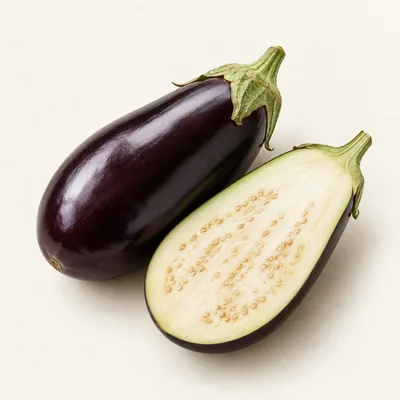 VEGETABLEAubergine
Fried, curried, mashed or smoked for bhorta
Cooked into daal to accompany rice and curries
Fish appears in many forms. Freshwater and coastal fish may be fried, steamed, curried or mashed; shrimp enters curries and mixed dishes. Mustard, chilli, turmeric, onion and green herbs create different regional profiles. [7]
Sweets are a distinct chapter, not an afterthought. The tourism handbook points to mishti and doi, while milk, sugar and flour support a broader confectionery tradition. Tea, yoghurt drinks and borhani also shape how richer meals are finished. [7]
Home-style restaurants often display the whole meal at once.
Look for the rice-and-curry spread. Restaurants may show numerous fish, meat, vegetable and bhorta dishes from which diners build a plate around rice. A biryani house, sweet shop and street-snack stall each specialise in a different part of the repertoire. [7]
Regional and festive foods deserve their own space. Dhaka biryani, Sylheti dishes, Chattogram’s mezban traditions and coastal fish do not collapse into one national curry. The same is true of Ramadan foods, wedding meals and the rice-and-fish combinations of ordinary days. [7]
Food-culture sources checked .
Rice, biryani and bread
Rice commonly accompanies curry, while Dhakai biryani, kacchi biryani and morog polao have recorded yogurt or ghee connections. Bakarkhani, singara and fuchka shells commonly use wheat flour. Ask whether the rice includes yogurt, ghee or a separate stock, and whether bread, pastry or crisp shells share oil or surfaces.
Fish and mustard preparations
Hilsa is recorded in ilish bhapa, ilish paturi and shorshe ilish, where mustard paste and typically mustard oil form the characteristic coating or steaming mixture. Pabda jhol and rohu kalia use different fish. Ask which species is present, whether paste or oil is added, and how fish is fried or steamed.
Curries, dal and vegetables
Mixed vegetable curries may include potato, aubergine, squash and tomato, while dal is described as a common side or course with regional and household variation. Shorshe begun centres on mustard paste; lau chingri and pui shak chingri include shrimp. Ask about curry base, stock, finishing fat and added toppings.
Street foods and sweets
Chotpoti may have sliced hard-boiled egg, and fuchka commonly has wheat-flour shells. Chomchom uses fresh chhena, while mishti doi uses cow milk and yogurt. Ask whether chutney, filling, garnish or syrup is made separately, and whether a fryer, ladle or counter is shared with other foods.
Ingredients worth recognising
Start with these ingredients, then follow their names and recorded food connections. Check the recipe and product actually used.
Wheat flour
Wheat flour is recorded in bakarkhani, singara and commonly fuchka shells; it may also occur in mughlai paratha and some patishapta or taler bora recipes. Check the complete dough or batter, and ask about shared boards, fryers and serving utensils.
Hilsa Fish
Hilsa is the defining fish in ilish bhapa, ilish paturi and shorshe ilish, with mustard paste or oil commonly involved. Check the exact fish, marinade and cooking vessel, especially where fish and other proteins use the same oil or pan.
Shrimp
Shrimp is recorded in chingri malai curry, lau chingri and pui shak chingri. Ask whether the dish contains shrimp stock, paste or garnish as well as whole shrimp, and whether preparation shares oil, water, knives or pans.
Cow Milk
Cow milk or milk-derived ingredients are recorded in yogurt-based biryanis, mishti doi, patishapta and milk sweets. Ask whether the recipe uses milk, yogurt, ghee or reduced milk, and check fillings, toppings and the complete packaged ingredient list.
Mustard Paste
Mustard paste is central to shorshe begun and several hilsa preparations, including shorshe ilish. Ask whether the sauce contains mustard paste or another mustard preparation, when it is added, and whether the same spoon or blender is used elsewhere.
Egg
Egg is recorded in mughlai paratha, some patishapta batters and chotpoti as a sliced boiled topping. Ask about batter, filling, garnish and mayonnaise-like additions if present, plus shared griddles, pans, knives and serving utensils.
How food labelling works
A current, country-specific allergen-labelling summary for Bangladesh has not yet been verified for this guide. Do not transfer the list of regulated allergens or restaurant disclosure rules from your home country to this one.
Read the complete ingredients on the actual package and keep any local-language sticker with the original label. For imported products, compare the information on that pack rather than a photograph of the brand sold elsewhere. Ask the manufacturer or seller to clarify an unfamiliar term.
For loose food or meals prepared to order, ask who can check the recipe and the labels on bought-in ingredients. Explain every food you avoid, including ingredients outside familiar allergy groups; a short symbol chart may not cover your list.
Language and communication
Bengali (Bangla) is Bangladesh’s national and official language and is written in its own script. Prepare a written Bengali explanation that names the ingredient concerned and asks about the full recipe, stock, sauce, topping, oil and utensils. Use dish names only to identify what you are discussing, not as a safety judgement.
Regional or household variation matters: ask the person preparing the food to confirm the answer for that particular serving. English use varies, so do not assume an explanation will be understood. Show the written note while pointing to the food, and ask again about shared fryers, water, pans and serving spoons.
Eating in different settings
Dhaka restaurant
For biryani, rezala, kebabs or vegetable dishes, ask whether yogurt, ghee, wheat, egg or mustard is in the recipe, marinade or sauce. Confirm the rice, curry and garnish are served with clean utensils and ask what stock or cooking fat is used.
Street-food counter
Before ordering fuchka or chotpoti, ask about wheat-flour shells, egg topping, fillings, chutneys and shared water. Ask whether the ladle, bowl, knife and preparation surface also handle other dishes, and whether the portion can be assembled separately.
Bakery or sweet shop
For bakarkhani, singara, chomchom, patishapta or mishti doi, ask about wheat flour, milk, yogurt, chhena and egg in both base and filling. Check whether items are cut, filled or displayed with shared trays, tongs or knives.
Packaged-food shop
Read the complete ingredient list and identify the exact product rather than relying on a food name. Check for wheat, milk, egg, fish, shrimp, mustard and recipe-specific oils, then ask a shop worker or manufacturer when the list is unclear.
Before you travel
Review your personal plan
Discuss your travel plans with your clinician and keep your prescribed medicines and emergency instructions accessible. Tell companions where these are and how to follow your plan.
Check your medicines before entering Bangladesh
The legal status and regulation of medicines prescribed or bought in the UK may differ in Bangladesh. Carry medical papers or prescriptions and be prepared to answer questions about medicines you are carrying. Ask the relevant authority what current requirements apply to the medicines you plan to bring.
Make the first meals easier to organise
Contact your accommodation and transport providers in advance. Save your written food list, menu questions and destination address offline. Check entry restrictions before packing backup food, and plan how you will check meals during arrival and onward journeys.
Plan access to medical help
Medical facilities in Bangladesh are poor and routine tests and X-rays are unreliable. Ask your insurer which facilities and payment arrangements apply, check the current FCDO list of medical providers, and ask the relevant provider what care and staff support are available at your destination.
Emergency resources
For a suspected severe allergic reaction, follow your prescribed emergency plan and seek urgent medical help. Give your exact location clearly.
Ambulance and urgent medical help
Request ambulance assistance on 999. Save the location and contact details of a suitable hospital before you need urgent help; local transport arrangements may also need checking.
Explore next
Your allergy in Bangladesh
Choose a food concern for the country notes and questions relevant to it.
Dishes in Bangladesh
Follow the ingredients and cuisine connections in individual dish records.
Your own food list
Combine allergy groups and individual ingredients in one guide, with local names where recorded.
Allergy cards
Prepare the information you need to explain your food requirements.
FAQs, sources and review dates
Is a vegetable curry automatically free from fish or shrimp?
No. Lau chingri and pui shak chingri may include shrimp, while vegetable curries vary. Ask whether the curry contains fish, shrimp, dried fish, stock, paste or shared cooking oil, and confirm the complete recipe rather than ordering from the word “vegetable” alone.
What should I ask about mustard?
Ask whether mustard paste, mustard oil or another mustard preparation is used, particularly in shorshe begun, shorshe ilish, ilish bhapa, ilish paturi and pabda jhol. Also ask when it is added and whether the same blender, spoon or pan is used for another sauce.
What about coconut, which is outside the common groups listed here?
Coconut appears as a recorded ingredient, but its classification is not universal and it should not be assigned to a legal or botanical allergen group here. Ask whether coconut is present as flesh, milk, cream or garnish, and check the complete recipe and shared utensils.
Sources checked: . This researched draft is awaiting editorial review. Practical questions apply the sources below to local food settings; they do not confirm any individual meal's ingredients or preparation.
Sources & references (9)
- FCDO · Bangladesh health and medical assistance
Emergency contact details, local healthcare and medicine guidance. UK-specific eligibility does not apply to every visitor.
- Wikivoyage contributors · Bangladesh
Community-edited culinary context only; not an allergy or medical authority. Brief food-context adaptations, CC BY-SA 4.0: https://creativecommons.org/licenses/by-sa/4.0/. Recipe questions also use PlateSafe’s draft records.
- FARE · Dining out
General recipe and preparation questions, applied here to country-specific food examples.
- FARE · Travelling with food allergies
General preparation, written communication and access to prescribed medicines. Not country-specific import permission.
- PlateSafe · Bangladesh recorded food connections
Existing draft dish and ingredient records, used as examples to investigate. These are not independently verified recipes or suitability assessments.
- Unicode CLDR · Territory language data
Language suggestions. Regional language needs must be confirmed with the particular food provider.
- Bangladesh Tourism Board — Tourist handbook and food guide
- FAO — Bangladesh at a glance
- FAO GIEWS — Bangladesh country brief