
BEFORE YOUR FIRST MEAL
Navigating food allergies in Burkina Faso
Burkinabè meals often centre on a starch with sauce, rice with seasoned stock, grilled meat or fried snacks. For allergy-aware travel, ask about the complete recipe rather than relying on a dish name: confirm flour, broth, sauce, dressing, frying oil and shared utensils. The recorded food examples also include peanut, dairy and dried fish, so recipe-by-recipe checking matters.
What to know first
Sauces change the dish
Tô may be served with okra, peanut, baobab-leaf or sorrel sauce; ask which sauce is used today and whether more sauce is added after cooking.
Rice is not just rice
Riz gras can contain tomato sauce, flavoured stock and onion, while riz sauce may come with tomato or peanut sauce. Confirm the cooking liquid and topping.
Explain the whole meal
Name the staple, sauce, stock, dressing, garnish and cooking method you need checked. Ask whether the same spoon, pan, oil or water is used for another recipe.
Fried foods need process questions
For beignets, fried ignames, sweet-potato fries, alloco or gateau, ask what the batter contains and what else is fried in the same oil.
Read the complete list
Read the complete ingredients and allergen information on the actual product. If you avoid a food that is not highlighted, ask the producer or food provider to check it specifically.
Understanding the food
Millet, sorghum, maize and rice sustain both home cooking and urban food culture. Tô is shaped to carry concentrated sauces; soumbala deepens savoury dishes; leafy preparations, beans, groundnuts, livestock and seasonal produce reflect many regional communities and climates.
Grain, livestock and gathered plants shift across ecological zones.
| Area | Food context | Examples to explore |
|---|---|---|
| Central plateau | Millet, sorghum, maize and Mossi food traditions | Tô with leaf or okra sauces, beans and grilled meat |
| West & Bobo-Dioulasso | Richer rainfall, rice, maize and cultural exchange | Riz gras, fonio or grain dishes, sauces and market foods |
| Sahel north | Pastoral products and drought-tolerant grains | Millet preparations, meat, milk and fermented drinks |
| Southwest | Tubers, shea, groundnuts and varied produce | Yam, legumes, leaf sauces and regional drinks |
Burkinabè gastronomy is explicitly treated as regional heritage. The National Culture Week culinary competition is designed to value local dishes and the traditions of different regions, presenting cooking as transmitted knowledge and collective memory. [7]
Local production is part of the contemporary food conversation. Government programmes foreground rice, maize, sesame, groundnut, cassava, livestock, fish and poultry, while public campaigns encourage local grains, soumbala and national market chains. [8][9]
The staple is deliberately mild so the sauce can carry the meal.
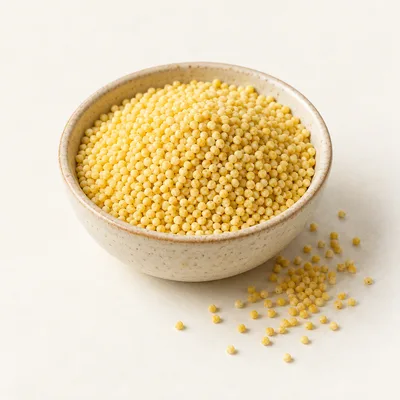 DRYLAND GRAINMillet
Porridges, tô and fermented drinks
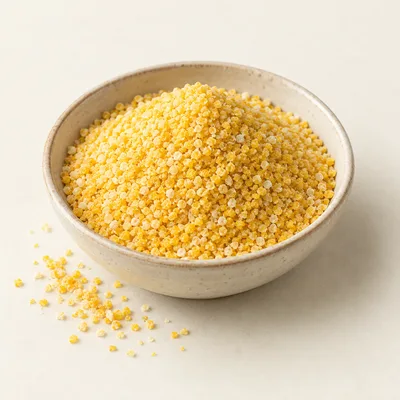 GRAINCornmeal
One route to tô and other staple porridges
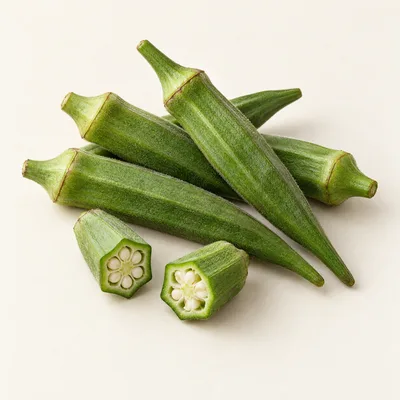 SAUCE VEGETABLEOkra
Body and texture for sauces eaten with grain staples
Roasted, pounded or cooked into rich sauces
Tô describes a structure more than a single recipe. A firm porridge may be made from millet, sorghum or maize and paired with okra, leafy, tomato, groundnut or meat sauces. The grain and sauce reveal local and household variation. [7][8]
Soumbala provides fermentation-driven depth. The fermented seed seasoning is a locally valued alternative to industrial stock cubes and helps define sauces, rice dishes and stews through a powerful savoury aroma. [8]
Markets and maquis connect everyday cooking with regional identity.
Ouagadougou and Bobo-Dioulasso gather dishes from many communities. Look for tô-and-sauce plates, riz gras, grilled meat, beans, fritters and local drinks at small restaurants and market stalls; names and accompaniments may change between vendors. [7][8]
Food events are useful records of living cuisine. National Culture Week brings regional cooks, local dishes and beverages into public competition and exchange, making Bobo-Dioulasso an especially important cultural-food setting when the event is held. [7]
Food-culture sources checked .
Starches with sauce
Tô is described as a millet- or corn-flour jelly-like staple, paired with sauces including okra, peanut, baobab leaf or sorrel. Foufou is a pounded boiled-igname starch ball, usually with tomato sauce. Ask which flour or root is used, whether the sauce contains stock or peanut, and whether a separate spoon or serving ladle is used.
Rice, pasta and vegetables
Riz gras is rice cooked in tomato sauce and flavoured stock, often with onion; extra sauce may be added. Riz sauce is usually white rice with tomato or peanut sauce. Spaghetti may be served au gras rather than with a separate sauce. Green beans and peas are described with tomato sauce, often from cans, so check the can contents and sauce together.
Grilled, roasted and stewed foods
Poulet Télévisé refers to roast chicken, while brochettes may contain meat, liver, tripe or intestines. Porc au four is baked pork pieces served with hot sauce, salt and sometimes mustard. Ragout d’igname combines boiled igname with tomato sauce and is also described as a beef and yam stew. Confirm the cut, marinade, stock and finishing sauce.
Soups, salads and snacks
Soupe may be made with chicken, guinea fowl or fish. Salade is described with lettuce, tomato, cucumber, onion and a mayonnaise-based dressing containing vinegar, salt and pepper. Snacks include bean-flour beignets, fried igname, sweet-potato fries, grilled plantain alloco and fried dough gateau. Ask about batter, dressing, seasoning and shared frying oil.
Ingredients worth recognising
Start with these ingredients, then follow their names and recorded food connections. Check the recipe and product actually used.
Peanut
Peanut appears as a defining ingredient in kuli-kuli and peanut soup, and peanut sauce is also recorded with tô or rice. Ask whether peanut is in the main sauce, garnish or shared preparation, and whether another sauce is substituted.
Dried Fish
Dried fish is recorded as a common savoury addition to Babenda and may be relevant when a soup or sauce is described simply as savoury. Ask whether dried fish, fish stock or fish powder is included, and whether it is added during cooking or at serving.
Yogurt
Yogurt is a core dairy ingredient in Dèguè. Confirm whether the portion uses yogurt, whether another milk-derived ingredient is mixed in, and whether toppings or additions are prepared in the same bowl or with the same spoon.
Cow Milk
Cow milk or a milk-derived ingredient is recorded for some preparations. When a dish is creamy, sweet or described as containing milk, ask which form is used and whether powdered, condensed or fresh milk has been added to the complete recipe.
Beef broth
Beef broth may have a vegetable base containing celery in some formulations. Ask whether broth is used in rice, soup, stew or sauce, what the full broth ingredients are, and whether a stock cube or prepared concentrate replaces homemade broth.
Vegetable Oil
The oil source is unspecified and may be soybean oil. For alloco, fried dough, beignets, fried igname or sweet-potato fries, ask which oil is used, whether it is a blend, and what other foods share the fryer.
How food labelling works
A current, country-specific allergen-labelling summary for Burkina Faso has not yet been verified for this guide. Do not transfer the list of regulated allergens or restaurant disclosure rules from your home country to this one.
Read the complete ingredients on the actual package and keep any local-language sticker with the original label. For imported products, compare the information on that pack rather than a photograph of the brand sold elsewhere. Ask the manufacturer or seller to clarify an unfamiliar term.
For loose food or meals prepared to order, ask who can check the recipe and the labels on bought-in ingredients. Explain every food you avoid, including ingredients outside familiar allergy groups; a short symbol chart may not cover your list.
Language and communication
Prepare a written explanation first in the locally used languages identified for Burkina Faso: Mooré, Bissa, Dyula and Fula, with French also useful in the country’s multilingual setting. Give the written note to the cook or seller and ask them to confirm the entire recipe, not just one ingredient name.
Mooré has the most speakers, while language use varies between communities; French may be less useful outside larger cities. Regional or personal language differences can affect whether a question is understood, so have a local speaker confirm the explanation. Dish and ingredient names are recognition aids, not a complete allergy request.
Eating in different settings
Food market or street stall
For grilled chicken, brochettes, alloco or porо au four, ask what marinade, mustard, hot sauce and seasoning are used. Check whether cooked food touches the same grill, tongs, board or serving spoon as other meats, offal or sauced items.
Restaurant serving tô or rice
Ask whether the tô flour is millet or corn, and whether the sauce is okra, peanut, baobab leaf or sorrel. For riz gras or riz sauce, confirm stock, tomato sauce, onion and any sauce added on top before ordering.
Snack or frying counter
For beignets, gateau, fried igname, sweet-potato fries and alloco, ask about the batter or coating, the oil and the fryer’s previous contents. Also check whether fried items are placed on a shared tray or handled with shared tongs.
Packaged-food shop or accommodation
For Dèguè or other chilled foods, check the complete ingredient list for yogurt, cow milk or milk-derived ingredients. For tins of peas or green beans, confirm the tomato sauce and any added stock, then ask staff to identify unclear ingredients.
Before you travel
Review your personal plan
Discuss your travel plans with your clinician and keep your prescribed medicines and emergency instructions accessible. Tell companions where these are and how to follow your plan.
Check your medicines before entering Burkina Faso
The official health source warns that the legal status and regulation of medicines prescribed or bought in the UK may differ in other countries. Before travel, review TravelHealthPro guidance and check medicine import or documentation requirements with the relevant Burkinabè authority and your prescriber; do not change prescribed treatment.
Make the first meals easier to organise
Contact your accommodation and transport providers in advance. Save your written food list, menu questions and destination address offline. Check entry restrictions before packing backup food, and plan how you will check meals during arrival and onward journeys.
Plan access to medical help
Medical facilities in Burkina Faso are described as very limited, with serious treatment requiring evacuation to Europe. Check that travel insurance covers treatment and medical evacuation, and that you have accessible funds. The FCDO maintains a list of providers, including some where staff may speak English; confirm current availability with your insurer.
Emergency resources
For a suspected severe allergic reaction, follow your prescribed emergency plan and seek urgent medical help. Give your exact location clearly.
Ambulance and urgent medical help
In Ouagadougou, request an ambulance on 18. Elsewhere, use 112. If neither service responds, seek local help identifying a hospital and arranging transport.
Explore next
Your allergy in Burkina Faso
Choose a food concern for the country notes and questions relevant to it.
Dishes in Burkina Faso
Follow the ingredients and cuisine connections in individual dish records.
Your own food list
Combine allergy groups and individual ingredients in one guide, with local names where recorded.
Allergy cards
Prepare the information you need to explain your food requirements.
FAQs, sources and review dates
Could a salad be suitable because it contains only vegetables?
Not necessarily. The recorded salad includes lettuce, tomato, cucumber and onion with a mayonnaise-based dressing containing vinegar, salt and pepper. Ask for the dressing separately, confirm every ingredient in the mayonnaise, and check the knife, bowl and serving utensils used.
What should I ask about a dish containing an ingredient outside common allergy groups?
If you are avoiding an individual ingredient such as baobab leaf, sorrel, igname or celery, name that ingredient specifically and ask whether it is in the sauce, broth, garnish or stock base. Ask for the complete recipe rather than inferring from the dish name.
How can I distinguish the different fish and meat possibilities in soup or brochettes?
Soup may use chicken, guinea fowl or fish, while brochettes may be meat, liver, tripe or intestines. Ask which animal and cut are being used, whether a marinade or broth was added, and whether the same grill, pan or ladle is shared.
Sources checked: . This researched draft is awaiting editorial review. Practical questions apply the sources below to local food settings; they do not confirm any individual meal's ingredients or preparation.
Sources & references (10)
- FCDO · Burkina Faso health and medical assistance
Emergency contact details, local healthcare and medicine guidance. UK-specific eligibility does not apply to every visitor.
- Wikivoyage contributors · Burkina Faso
Community-edited culinary context only; not an allergy or medical authority. Brief food-context adaptations, CC BY-SA 4.0: https://creativecommons.org/licenses/by-sa/4.0/. Recipe questions also use PlateSafe’s draft records.
- FARE · Dining out
General recipe and preparation questions, applied here to country-specific food examples.
- FARE · Travelling with food allergies
General preparation, written communication and access to prescribed medicines. Not country-specific import permission.
- PlateSafe · Burkina Faso recorded food connections
Existing draft dish and ingredient records, used as examples to investigate. These are not independently verified recipes or suitability assessments.
- Unicode CLDR · Territory language data
Language suggestions. Regional language needs must be confirmed with the particular food provider.
- Burkina Faso Government Information Service — National Culture Week culinary competition
- Burkina Faso Government Information Service — Local food and production
- Burkina Faso Council of Ministers — Priority agricultural food chains
- UNESCO World Heritage Centre — Burkina Faso cultural context