
BEFORE YOUR FIRST MEAL
Navigating food allergies in Chad
Chadian meals vary between millet, sorghum or corn staples, rich sauces, grilled meats and, particularly in N’Djamena and the south, fish. A dish name will not establish its recipe: ask about flour, peanut paste, tahini, butter, stock, toppings and preparation surfaces. During Ramadan, dining arrangements may also differ in northern and central areas, so plan questions before ordering.
What to know first
Staples can contain wheat
Aseeda is recorded with wheat flour, while boule may use millet, sorghum or corn. Ask which grain and flour are used in this particular serving.
Sauces need a full ingredient check
Daraba, mafé and mullah have recorded peanut-based connections; ask whether the sauce contains peanut paste and whether toppings or finishing ingredients are added separately.
Explain the whole concern in writing
Carry a written explanation in Arabic and French, then confirm the complete recipe, cooking method and shared equipment with the person preparing or serving the food.
Ask about the preparation surface
For grilled lamb, camel or fish, check whether the same grill, oil, pan, utensils or serving dish is used for other foods you need to avoid.
Read the complete ingredient list
Read the complete ingredients and allergen information on the actual product. If you avoid a food that is not highlighted, ask the producer or food provider to check it specifically.
Understanding the food
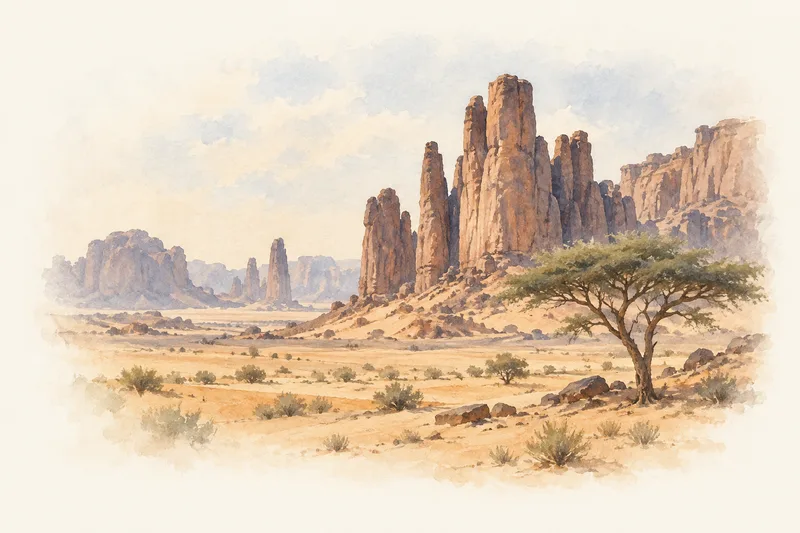
Millet and sorghum sustain much of the country, shaped into boule, porridge and drinks that accompany okra, groundnut, meat or fish sauces. Pastoral foods dominate parts of the north and centre, Lake Chad supports fishing and trade, and the wetter south adds cassava, maize and more varied crops.
Climate divides the country into very different food economies.
| Zone | Food landscape | Examples to explore |
|---|---|---|
| Saharan north | Oases, dates, pastoral meat and milk | Dried foods, camel or goat products and grain brought through trade |
| Sahelian centre | Millet, sorghum, livestock and groundnuts | Boule with sauce, bouillie and grilled or stewed meat |
| Lake Chad basin | Fishing, flood-recession farming and trade | Fresh or dried fish, grains and sauces |
| Sudanian south | More rainfall, sorghum, maize, cassava and vegetables | Daraba, cassava dishes, greens and groundnut sauces |
The ecological gradient is the first organising fact. FAO describes Chad from arid north through Sahel to tropical wet-dry south, with millet and sorghum, roots, tubers and nuts as major foods. What grows and travels changes accordingly. [7][8]
Lake Chad is a food-producing cultural landscape. UNESCO records long continuity in fishing, farming, herding, fish processing and exchange around the lake. Fresh and dried fish link waterside communities to markets far beyond the shore. [9]
A grain ball becomes a utensil for the sauce.
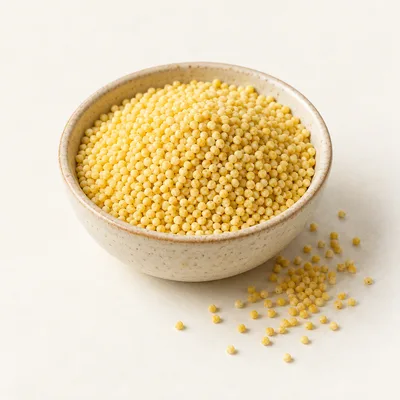 DRYLAND GRAINMillet
Boule, porridge and fermented drinks
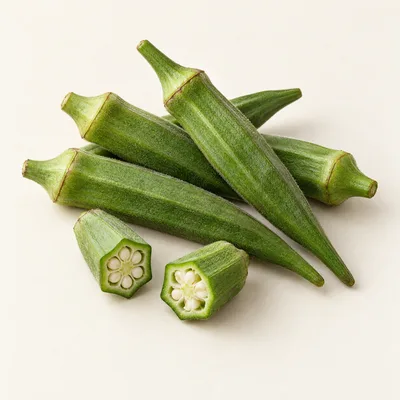 SAUCE VEGETABLEOkra
Body and texture in daraba and other sauces
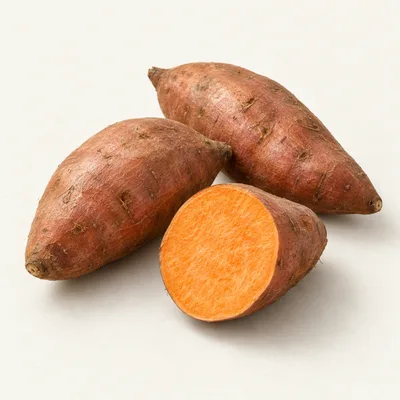 ROOTSweet potato
A southern crop and component of vegetable stews
Porridge, paste and sauce enrichment
Boule is a family of staples. Corn, sorghum, cassava, rice or groundnut mixtures can be cooked into a firm ball and eaten with tomato, onion, dried fish, meat or vegetable sauces. The grain is an important part of the name and taste. [10][8]
Daraba turns vegetables into the centre of the meal. Okra, tomato, sweet potato, greens and groundnut paste produce a thick stew suited to grain staples. It shows that Chadian food is not reducible to grilled meat. [10]
Street stalls and household meals expose different parts of the repertoire.
N’Djamena gathers Sahelian, Arabic and southern influences. Markets and small eateries may offer boule, porridge, grilled meat, fish, beans and sauces alongside breads and regional dishes. Ask which grain was used and where the preparation comes from. [10][7]
Pastoral and fishing foods are tied to movement and preservation. Milk, dried meat and grain travel in dry regions; smoked or dried fish moves from the lake. These methods are practical food systems, not merely rustic styles. [9][8]
Food-culture sources checked .
Porridges and grain staples
La bouille is described as an almost liquid breakfast porridge made with millet, peanut butter and lemons. La boule is a fufu-like accompaniment based on millet, sorghum or corn and served with sauces. Ask which grain is present, whether peanut butter was added, and whether the bowl, spoon or pot was shared with another preparation.
Sauced dishes and toppings
Daraba can be made with peanut paste, while mafé has a defining peanut-paste sauce and mullah can have a peanut-based sauce in recognised versions. Ful medames may have tahini as an occasional topping. Ask whether the sauce is made from scratch, what stock or oil it contains, and whether tahini or other toppings are added after cooking.
Grilled and regional proteins
Grilled lamb and camel meat are described as common, while fish is particularly noted in N’Djamena and southern parts of Chad. Salandé has recorded versions using fish and versions adding peanuts. Ask which protein is used, whether a marinade contains flour or paste, and whether the grill, pan, oil or serving utensils are shared.
Ingredients worth recognising
Start with these ingredients, then follow their names and recorded food connections. Check the recipe and product actually used.
Wheat flour
Wheat flour is recorded as the typical base for Aseeda, so confirm whether it is used in the dough, sauce thickener or coating. Ask for the exact flour and whether another grain has replaced it.
Peanut
Peanuts may appear in Salandé for richness or texture, and peanut-based foods are also relevant to local dishes. Ask whether peanuts are mixed into the dish, sprinkled on top, or handled with the same utensils.
Tahini
Tahini is recorded as an occasional accompaniment or topping for ful medames. Check whether it is served separately or already mixed through the beans, and ask what other sauce or garnish is present.
Fish
Fish is recorded as the protein in some traditional versions of Salandé and is noted in southern Chad and N’Djamena. Ask which fish is used, how it is cooked, and whether the pan, oil or utensils are shared.
Butter
Butter is a common accompaniment or finishing ingredient for Aseeda. Ask whether it is stirred into the dish, placed on top, or used on the cooking surface, and check any packaged butter label.
How food labelling works
A current, country-specific allergen-labelling summary for Chad has not yet been verified for this guide. Do not transfer the list of regulated allergens or restaurant disclosure rules from your home country to this one.
Read the complete ingredients on the actual package and keep any local-language sticker with the original label. For imported products, compare the information on that pack rather than a photograph of the brand sold elsewhere. Ask the manufacturer or seller to clarify an unfamiliar term.
For loose food or meals prepared to order, ask who can check the recipe and the labels on bought-in ingredients. Explain every food you avoid, including ingredients outside familiar allergy groups; a short symbol chart may not cover your list.
Language and communication
Prepare a written explanation in Arabic and French before travelling, naming the foods or ingredients you must avoid and asking for a complete recipe. Arabic is widely used in Chad, including Chadian Arabic, which differs from literary Arabic; French is also a main language.
Use the written explanation alongside spoken confirmation, especially when discussing whether a sauce, flour, topping, stock, oil or utensil is shared. Chadian Arabic is widely used as a trade language, while literary Arabic may not communicate the same detail in every setting.
Eating in different settings
Grill or meat counter
When ordering grilled lamb or camel, ask what was used in the marinade and whether the meat is cooked on a shared grill. Confirm whether fish or other foods use the same rack, oil, tongs, board or serving plate.
Breakfast or staple-food stall
For la bouille, ask whether the millet porridge contains peanut butter and lemon, and whether toppings are mixed in. For la boule, ask whether the base is millet, sorghum or corn and which sauce accompanies it.
Sauce-based restaurant meal
Before choosing daraba, mafé, mullah or ful medames, ask for the complete sauce and topping recipe. Confirm peanut paste, tahini, stock, butter, oil and garnishes, and ask whether a separate serving uses the same ladle or pot.
Packaged-food shop or accommodation
Read the complete ingredient list on flour, sauces, spreads and prepared foods. Ask the seller or cook to identify every ingredient, including the cooking fat and toppings, rather than relying on a product name or dietary description.
Before you travel
Review your personal plan
Discuss your travel plans with your clinician and keep your prescribed medicines and emergency instructions accessible. Tell companions where these are and how to follow your plan.
Check your medicines before entering Chad
The legal status and regulation of some medicines prescribed or bought in the UK can differ in Chad. Check the current TravelHealthPro guidance and ask the relevant Chadian authority whether your medicine has any import or documentation requirements before travel. Ask a pharmacist or prescriber about safe arrangements for travelling with it.
Make the first meals easier to organise
Contact your accommodation and transport providers in advance. Save your written food list, menu questions and destination address offline. Check entry restrictions before packing backup food, and plan how you will check meals during arrival and onward journeys.
Plan access to medical help
Medical facilities in Chad are described as poor, with hospitals in N’Djamena stretched and sometimes affected by strikes. Arrange adequate travel health insurance and accessible funds for treatment abroad and repatriation. Check the FCDO list of medical providers and ask your insurer what treatment and repatriation arrangements the policy covers.
Emergency resources
For a suspected severe allergic reaction, follow your prescribed emergency plan and seek urgent medical help. Give your exact location clearly.
Ambulance and urgent medical help
Call 1212 and ask for an ambulance.
Explore next
Your allergy in Chad
Choose a food concern for the country notes and questions relevant to it.
Dishes in Chad
Follow the ingredients and cuisine connections in individual dish records.
Your own food list
Combine allergy groups and individual ingredients in one guide, with local names where recorded.
Allergy cards
Prepare the information you need to explain your food requirements.
FAQs, sources and review dates
Could la boule be made without wheat?
La boule may be millet-, sorghum- or corn-based, but not every recipe is necessarily the same. Ask which grain was used and whether wheat flour, a sauce or a shared utensil was introduced during preparation.
What should I ask about olives?
Olive is recorded as a basic ingredient, and some cured or processed olives may use sulfites, though this is not universal. Ask how the olives were cured or packed, request the complete label where available, and check whether they were added to a prepared dish.
Is fish-free Salandé automatically suitable?
No. Recorded Salandé examples include fish in some versions and peanuts in some versions, but neither connection defines every recipe. Ask which protein and additions were used, then check the sauce, cooking oil, utensils and serving dish.
Sources checked: . This researched draft is awaiting editorial review. Practical questions apply the sources below to local food settings; they do not confirm any individual meal's ingredients or preparation.
Sources & references (10)
- FCDO · Chad health and medical assistance
Emergency contact details, local healthcare and medicine guidance. UK-specific eligibility does not apply to every visitor.
- Wikivoyage contributors · Chad
Community-edited culinary context only; not an allergy or medical authority. Brief food-context adaptations, CC BY-SA 4.0: https://creativecommons.org/licenses/by-sa/4.0/. Recipe questions also use PlateSafe’s draft records.
- FARE · Dining out
General recipe and preparation questions, applied here to country-specific food examples.
- FARE · Travelling with food allergies
General preparation, written communication and access to prescribed medicines. Not country-specific import permission.
- PlateSafe · Chad recorded food connections
Existing draft dish and ingredient records, used as examples to investigate. These are not independently verified recipes or suitability assessments.
- Unicode CLDR · Territory language data
Language suggestions. Regional language needs must be confirmed with the particular food provider.
- FAO — Chad food and crop profile
- FAO — Millet farming and household food in Chad
- UNESCO World Heritage Centre — Lake Chad cultural landscape
- US Air Force Culture and Language Center — Chad field guide