
BEFORE YOUR FIRST MEAL
Navigating food allergies in Gabon
Gabonese food examples in this guide centre on stews, fish preparations and plantain fritters, but recipes may vary between households and places. Ask for the complete recipe rather than relying on a dish name. In particular, check whether peanut enriches a leaf stew, which fish is used, whether wheat flour binds a batter, and how oil and utensils are shared.
What to know first
Leafy stews
Cassava-leaf stew and nkumu leaf stew may be enriched with peanut or served with fish. Ask whether both are included in the particular pot being prepared.
Fish dishes
Fish is central to Fish Maboké, grilled fish, salted fish stew and several recorded stews. Confirm the species, seasoning, sauce and any added ingredients.
Communication
French is Gabon’s sole national language. Prepare a written explanation in French, and allow extra time for staff or hosts to confirm recipes and preparation details.
Preparation
For plantain fritters, ask about wheat flour in the batter, the oil used, and whether the same oil, pan or utensils are used for other foods.
Labels
Read the complete ingredients and allergen information on the actual product. If you avoid a food that is not highlighted, ask the producer or food provider to check it specifically.
Understanding the food
Cassava, plantain, palm products, groundnuts, leafy vegetables, chillies and fish form the everyday foundation, while forest communities hold distinct knowledge of wild plants, mushrooms and seasonal foods. Libreville’s markets gather coastal, riverine and inland repertoires without making them identical.
Coast, river and forest change the source of the same meal structure.
| Region or setting | Food landscape | Examples to explore |
|---|---|---|
| Libreville & Estuary | Atlantic fish, city markets and national migration | Grilled fish, cassava, plantain and palm or groundnut sauces |
| Port-Gentil & coast | Marine fisheries, mangroves and port commerce | Seafood, smoked fish, rice and chilli sauces |
| Ogooué river basin | Freshwater fish, cassava and river transport | Fish in leaves, smoked catch and leaf sauces |
| Interior forest regions | Forest crops, hunting histories and gathered foods | Mushrooms, wild leaves, nuts, cassava and seasonal ingredients |
Gabon’s food economy is more coastal and imported than forest imagery suggests. FAO profiles cassava, plantain and other crops alongside high urban concentration and dependence on imported food. Markets combine local catch and produce with rice, wheat and packaged goods. [7]
Forest food knowledge belongs to communities and landscapes. UNESCO documents long human occupation and cultural landscapes across Lopé-Okanda, while Ivindo protects exceptional river and forest ecosystems. Gathered foods should be described with local context, not as an anonymous wild pantry. [8][9]
A mild starch carries a concentrated sauce or grilled catch.
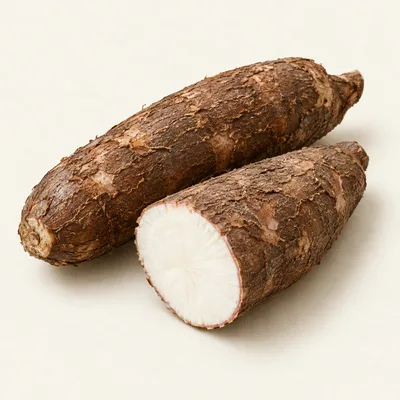 ROOTCassava
Boiled roots, flour, fermented forms and leaves
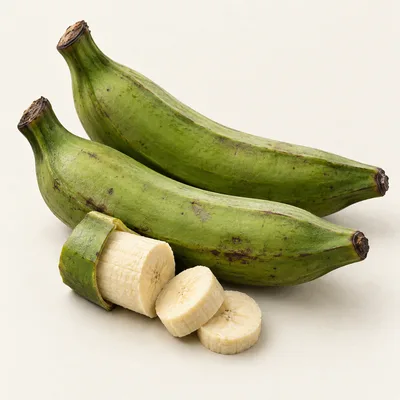 TROPICAL STARCHPlantain
Fried, boiled, roasted or pounded
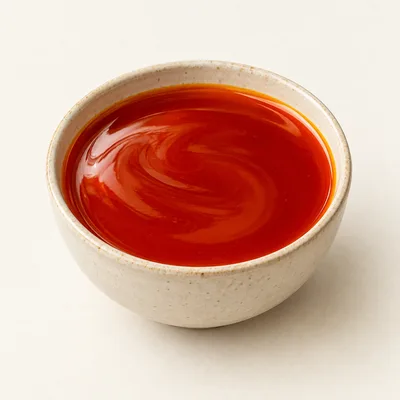 SAUCE FATRed palm oil
Colour and body for fish, meat and leaf sauces
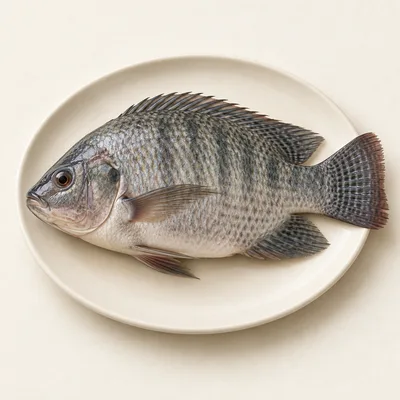 COAST & RIVERFish
Fresh, smoked, grilled or steamed in leaves
Nyembwe identifies a palm-nut sauce, not one fixed protein. Chicken is well known, but fish or other meats can be cooked in the rich sauce. Recognising the palm base explains the dish more clearly than focusing only on the protein. [7]
Odika supplies a distinct forest seasoning. Seeds of the African mango are processed into a dark, aromatic paste or block used to deepen sauces. The ingredient is tied to Central African forest knowledge and trade. [8]
Libreville’s markets and grills provide the broadest public introduction.
Choose the fish before the preparation when possible. Coastal restaurants and market grills may offer the day’s catch by size or species, then grill or sauce it to order with cassava, plantain or rice. [7][10]
Interior ingredients may be seasonal or arrive preserved. Smoked fish, dried foods, mushrooms and forest products move along river and road networks. Availability and provenance are useful questions rather than signs of an incomplete menu. [9][8]
Food-culture sources checked .
Leaf stews and enrichment
Cassava-Leaf Stew (Saka-Saka) is recorded with peanut in some regional or household variations, while fish is a common protein added. Nkumu Leaf Stew may use peanut to enrich the stew or form its sauce, and fish may accompany it. Ask whether peanut is in the pot, sauce or topping, and whether fish is cooked into the same portion.
Okra and fish stews
One version of Dongo-Dongo Okra Stew includes fish as a common protein, but this does not establish every other ingredient or the finished recipe. Ask whether the fish is cooked in the okra stew, added separately, or used in stock or sauce. Confirm the full recipe rather than treating “okra stew” as a fixed formulation.
Wrapped, grilled and salted fish
Fish Maboké and Grilled Fish (Poisson Braisé) are identified by fish as their defining or core protein. Salted Fish Stew (Poisson Salé) is defined by salted fish. Ask about the fish species, any sauce or seasoning, and whether the cooking surface, oil or utensils are shared with another dish.
Plantain fritters
Plantain Fritters (Beignets de Banane Plantain) are recorded with wheat flour as a core batter binder. Ask whether the recipe uses wheat flour, what liquid and seasonings are added, and whether fritters are fried in oil also used for other battered foods. The dish name alone cannot answer these questions.
Ingredients worth recognising
Start with these ingredients, then follow their names and recorded food connections. Check the recipe and product actually used.
Vegetable Oil
Vegetable oil may be used for frying or cooking, but it is unspecified and may be soybean oil. Ask which oil is actually used and whether the same oil or fryer is shared.
Peanut
Peanut may enrich Nkumu Leaf Stew or form its sauce, and appears in some cassava-leaf stew variations. Ask whether it is ground into the pot, added as a sauce, or omitted from this recipe.
Wheat flour
Wheat flour is recorded as a core binder in plantain fritters. Ask whether it is present in the batter, whether another flour is also added, and whether the frying oil or utensils are shared.
Fish
Fish is the defining protein in Fish Maboké and Grilled Fish, and is commonly added to several stews. Ask which species is used, whether fish stock or sauce is included, and whether it is cooked with other ingredients.
Salted fish
Salted Fish Stew is defined by salted fish, but the species is unspecified. Ask which fish was salted, whether it is the only fish ingredient, and how it is prepared in the stew.
How food labelling works
A current, country-specific allergen-labelling summary for Gabon has not yet been verified for this guide. Do not transfer the list of regulated allergens or restaurant disclosure rules from your home country to this one.
Read the complete ingredients on the actual package and keep any local-language sticker with the original label. For imported products, compare the information on that pack rather than a photograph of the brand sold elsewhere. Ask the manufacturer or seller to clarify an unfamiliar term.
For loose food or meals prepared to order, ask who can check the recipe and the labels on bought-in ingredients. Explain every food you avoid, including ingredients outside familiar allergy groups; a short symbol chart may not cover your list.
Language and communication
French is Gabon’s official language, so prepare a written explanation in French describing the ingredient or cross-contact concern and the foods to avoid. Use dish names only as recognition aids, then ask for the complete recipe, sauce, stock, toppings and preparation equipment.
Fang is also spoken in Gabon. Ask which language will make the conversation clearest, and arrange help from a reliable local speaker if needed. Keep the written French explanation available and ask the person checking the recipe to confirm the actual ingredients, sauces and preparation rather than relying on a familiar dish name.
Eating in different settings
Local restaurant
If ordering a stew or fish dish, ask whether peanut is used in the sauce or pot, whether fish stock is included, and which protein is added. For grilled fish, ask whether the cooking surface and utensils are shared with other foods.
Fritter or fried-food counter
For Plantain Fritters, ask whether the batter contains wheat flour and what oil is used. Confirm whether the same oil, pan, tongs or utensils are used for other battered or fried foods before ordering.
Shared meal or host’s kitchen
With cassava-leaf, nkumu-leaf or okra stew, ask to see or hear the complete recipe: peanut, fish, stock, sauce and toppings. Ask whether your portion can be identified before ingredients are mixed, without assuming separation is possible.
Packaged-food shop
Read the complete ingredient list on packaged food and check unfamiliar terms with the seller. For fish products, ask whether the item is salted fish and which species is named; for oil, ask whether the product identifies its source.
Before you travel
Review your personal plan
Discuss your travel plans with your clinician and keep your prescribed medicines and emergency instructions accessible. Tell companions where these are and how to follow your plan.
Check your medicines before entering Gabon
The legal status and regulation of some medicines prescribed or bought in the UK can be different in Gabon. Before travelling, read the best-practice guidance on travelling with medicines on TravelHealthPro and check what documentation you need for your medicines.
Make the first meals easier to organise
Contact your accommodation and transport providers in advance. Save your written food list, menu questions and destination address offline. Check entry restrictions before packing backup food, and plan how you will check meals during arrival and onward journeys.
Plan access to medical help
Medical facilities are limited, particularly in rural areas. Check that your travel insurance provides adequate cover, that accessible funds are available for treatment abroad and repatriation, and consult the FCDO’s list of Gabon medical providers when planning access to care.
Emergency resources
For a suspected severe allergic reaction, follow your prescribed emergency plan and seek urgent medical help. Give your exact location clearly.
Ambulance and urgent medical help
Ambulance contact numbers are 117, 1300, 011760873 and 1333. Lines can be unreliable and assistance limited. Be prepared to explain the location in French.
Explore next
Your allergy in Gabon
Choose a food concern for the country notes and questions relevant to it.
Dishes in Gabon
Follow the ingredients and cuisine connections in individual dish records.
Your own food list
Combine allergy groups and individual ingredients in one guide, with local names where recorded.
Allergy cards
Prepare the information you need to explain your food requirements.
FAQs, sources and review dates
Could cassava-leaf stew contain peanut and fish together?
It could, according to the recorded connections: peanut appears in some regional or household variations, and fish is a common added protein. Ask specifically whether this pot contains peanut, fish, fish stock or a peanut sauce, rather than relying on the dish name.
Is fish always the same in Gabonese fish dishes?
No single universal species is specified. Fish is the core or defining protein in Fish Maboké, grilled fish and salted fish stew, while it is also common in several stews. Ask which species is being used and whether salted fish is involved.
What should I check about vegetable oil if soybean is a concern?
The oil source is unspecified, although generic vegetable oil may be soybean oil. Ask which oil is in the bottle or fryer, whether it is a blend, and whether the same oil has been used for other foods. Do not infer the oil source from the phrase “vegetable oil” alone.
Sources checked: . This researched draft is awaiting editorial review. Practical questions apply the sources below to local food settings; they do not confirm any individual meal's ingredients or preparation.
Sources & references (10)
- FCDO · Gabon health and medical assistance
Emergency contact details, local healthcare and medicine guidance. UK-specific eligibility does not apply to every visitor.
- Wikivoyage contributors · Gabon
Community-edited food and dining context, checked against the recorded food examples. This is not an allergy or medical authority. Brief food-context adaptations; CC BY-SA 4.0, https://creativecommons.org/licenses/by-sa/4.0/.
- FARE · Dining out
General recipe and preparation questions, applied here to country-specific food examples.
- FARE · Travelling with food allergies
General preparation, written communication and access to prescribed medicines. Not country-specific import permission.
- PlateSafe · Gabon recorded food connections
Existing draft dish and ingredient records, used as examples to investigate. These are not independently verified recipes or suitability assessments.
- Unicode CLDR · Territory language data
Language suggestions. Regional language needs must be confirmed with the particular food provider.
- FAO — Gabon country profile
- UNESCO World Heritage Centre — Ecosystem and Relict Cultural Landscape of Lopé-Okanda
- UNESCO World Heritage Centre — Ivindo National Park
- Gabon government — Official portal