
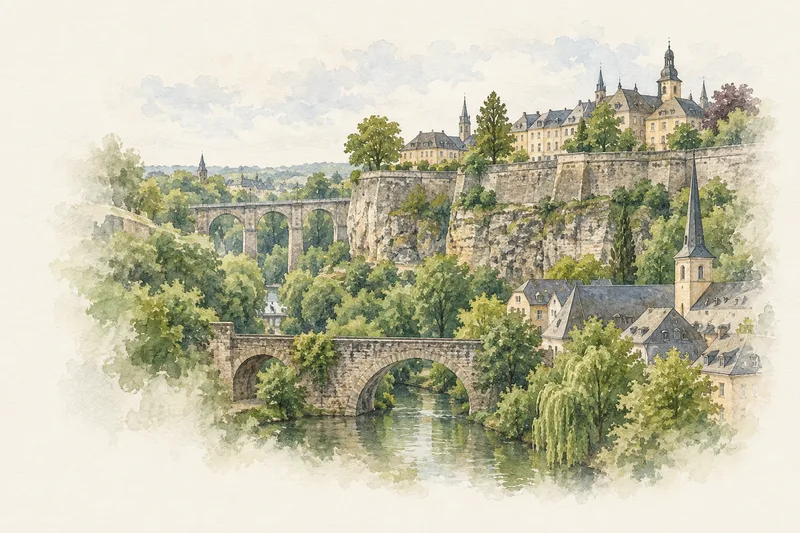
BEFORE YOUR FIRST MEAL
Navigating food allergies in Luxembourg
Luxembourg’s recorded local dishes combine pork, potatoes, beans, pastry, dumplings and rich sauces, while restaurant menus may also draw on French and Italian cooking. Recipes can vary: cream, butter, egg, wheat flour, mustard, wine or stock may appear in particular versions. Check the complete preparation of the exact dish, including garnishes, frying oil, utensils and accompaniments.
What to know first
Potatoes can still mean batter
Gromperekichelchen are shredded potato cakes with onion, shallot and parsley, but recorded versions typically add wheat flour and egg. Ask about the complete batter before ordering.
Sauces change the dish
Trout with Riesling, cream and butter, or wine sauce with mustard, may be served differently between recipes. Ask whether sauce, glaze or garnish is included or served separately.
Explain the whole concern
Tell the server exactly which ingredients must be avoided and whether you need information about shared oil, water, pans, boards, utensils or preparation surfaces.
Check the recipe, not the name
For a market snack, restaurant dish or celebration cake, ask about every ingredient and cooking step. Fried, baked or boiled does not by itself answer an allergy question.
Read the full label
EU food-information rules cover 14 allergen categories; on prepacked food, relevant allergens must stand out in the ingredients list. Check the full list, not only a short allergen key.
Understanding the food
Potatoes, pork, beans, freshwater fish, dairy, pastry and Moselle wine connect farmhouse and bistro traditions. French and German neighbours are close, while Portuguese, Italian and other migration has reshaped everyday eating without erasing Luxembourgish dishes.
Capital, Moselle, Ardennes and Red Lands offer different scales of eating.
| Region or setting | Food landscape | Examples to explore |
|---|---|---|
| Luxembourg City | Bistros, fine dining and multilingual migrant neighbourhoods | Judd mat gaardebounen, pâtisserie and Portuguese-Luxembourg tables |
| Moselle | Vineyards, orchards, river fish and wine villages | Riesling, crémant, fried fish, grape products and seasonal menus |
| Éislek / Ardennes | Cattle, dairy, potatoes, forests and smoked meat | Ham, sausages, game, potato dishes and farmhouse dairy |
| Mullerthal & Red Lands | Orchards and cheese in the east; industrial migration in the south | Cider, cheese, pastries and Italian or Portuguese food traditions |
The official food guide links tradition to cultural diversity. Visit Luxembourg presents bistro cooking, patisserie, Moselle wine, artisan cheese and migrant cuisines as parts of one contemporary food landscape. [8][9]
The Moselle is a river-and-vineyard culture. The tourism region centres steep vineyards, cellar visits, wine villages and river landscapes rather than treating wine as an isolated product. [10]
Potato, pork and cream meet the acidity of wine, mustard and orchard fruit.
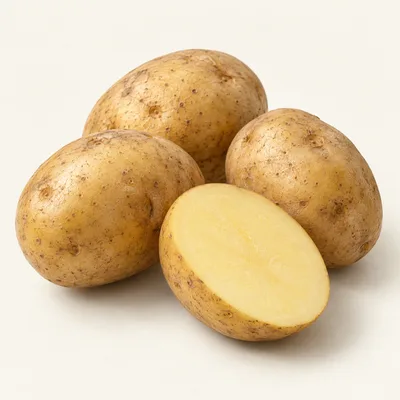 FIELD CROPPotato
Fritters, soups, sides and farmhouse dishes
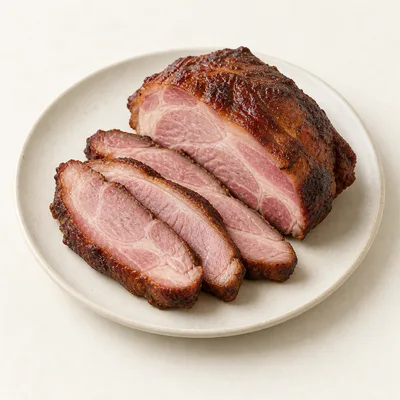 CURED MEATPork
Smoked neck, ham, sausage and slow-cooked mains
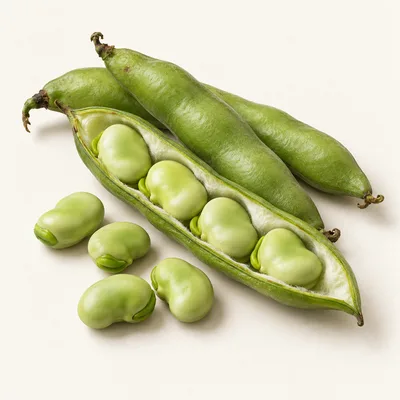 GARDEN PULSEBroad bean
The defining accompaniment to Judd mat gaardebounen
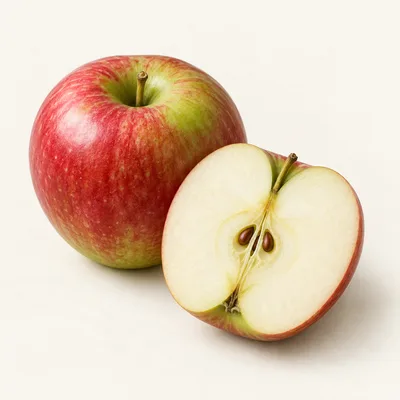 ORCHARD FRUITApple
Cider, juice, pastry and preserves
Judd mat gaardebounen remains the reference savoury dish. Smoked pork collar is simmered and served with broad beans, often with potatoes; its strength lies in curing, gentle cooking and a simple garden pulse. [8]
Street and bakery foods carry the calendar. Gromperekichelcher potato cakes, Bretzel pastries, Boxemännchen figures and seasonal cakes connect fairs, feast days and everyday shopping. [8]
Bistro, cellar, bakery and migrant café all belong in the overview.
Language can shift with the room. Menus and conversation may move among Luxembourgish, French, German, Portuguese and English. Dish names often stay in their original language even when descriptions change. [9][8]
Wine pairing is regional, not merely prestigious. Riesling, Auxerrois, Pinot varieties and Crémant de Luxembourg are made along the Moselle and paired with fish, charcuterie, cheese and lighter modern cooking. [10]
Food-culture sources checked .
Potato dishes and fried snacks
Potatoes appear in gromperekichelchen and Tierteg, but the recorded recipes are not simply potato dishes: gromperekichelchen may contain wheat flour and egg, while Tierteg uses wheat flour and commonly egg to bind grated potato. At an outdoor market or funfair, ask what is in the batter, which oil is used, whether it is shared, and whether the cakes are fried alongside other foods.
Pork, beans and dumplings
Judd mat gaardebounen is recorded as smoked pork neck served with boiled broad beans, while Bouneschlupp may be finished with cream. Kniddelen are wheat-flour dumplings commonly bound with egg and served or enriched with milk and butter. Ask whether stock, bacon, sauce or dairy is added, and whether dumplings are cooked in the same water as other foods.
Fish, meat and wine sauces
F’rell am Rèisleck uses trout with a Riesling-based sauce in the recorded connection, with cream and butter common in that sauce. Huesenziwwi may use wheat flour, red wine, cream and sometimes butter; Wäinzoossiss may combine dry white wine, cream, butter and Dijon mustard. Ask about thickening, wine, mustard and final garnishes rather than relying on the dish title.
Pastry and celebration baking
Bamkuch is a layered cake traditionally made on a spit, while Boxemännchen is a brioche-style dough; both have recorded wheat and egg connections. Paschtéit and Rieslingspaschtéit use wheat pastry, commonly with egg glaze, and Quetschentaart uses a wheat pastry or dough base. Ask whether fillings, glaze, dusting or decoration add further ingredients.
Ingredients worth recognising
Start with these ingredients, then follow their names and recorded food connections. Check the recipe and product actually used.
Wheat flour
Wheat flour appears in gromperekichelcher, Kniddelen, Tierteg, pastry, cakes and several sauces. Ask whether it is used in batter, dough, breading or as a thickener, and distinguish wheat avoidance from gluten-related requirements when explaining your needs.
Trout
Trout is the fish connection in F’rell am Rèisleck. Ask whether the fish is served with Riesling, cream or butter sauce, what garnish is added, and whether it is cooked on a surface or in oil also used for other foods.
Chicken stock
Chicken stock may contain celery as a common aromatic, so it can matter in soups, sauces or savoury fillings even when the dish name does not mention it. Ask whether stock is used, which stock it is, and for its complete ingredient information.
Dijon Mustard
Dijon mustard is a mustard-based seasoning recorded in Wäinzoossiss and may involve wine or other sulphite-containing ingredients. Ask whether it is in the sauce, dressing or marinade, and request the product’s full ingredients if a specific formulation matters.
Butter
Butter is a cow-milk-derived ingredient connected with trout sauce, Huesenziwwi, Kniddelen and Wäinzoossiss. Ask whether butter is used in cooking, finishing or pastry, whether cream is added too, and whether the accompaniment can be left off only after the full recipe is checked.
Egg
Egg is recorded in gromperekichelcher, Kniddelen, pastry, cakes and breaded dishes, either as a binder or glaze. Ask about batter, dough wash, breading and garnishes separately, since removing a visible egg topping may not remove egg from the recipe.
How food labelling works
EU food-information rules cover 14 allergen categories used as ingredients. On prepacked food, these must stand out in the ingredients list. The categories include gluten-containing cereals, crustaceans, eggs, fish, peanuts, soybeans, milk, specified nuts, celery, mustard, sesame, sulphites above the stated threshold, lupin and molluscs.
Allergen information is also required for food sold without prepacking, including restaurant meals. Ask how to obtain the information for the exact order. National arrangements affect how it is supplied; an ingredient declaration does not by itself describe shared equipment or handling.
If you avoid a food outside those categories, read the complete ingredients and name that food when speaking to staff. A short allergen key cannot answer every ingredient-specific question.
Language and communication
Prepare a written explanation first in French, Luxembourgish and German, the country’s three official languages. French is especially useful for written street and food information; German is also prominent in writing, while Luxembourgish is widely used in spoken and informal contexts. Use the language that lets the food question be recorded most clearly.
Names such as gromperekichelchen, judd mat gaardebounen, Kniddelen and Wäinzoossiss can help identify a dish, but they are recognition aids rather than allergy requests. Ask for confirmation in the language being used, especially where regional speech or a cross-border kitchen affects how an ingredient is described.
Eating in different settings
Outdoor market or funfair
For gromperekichelchen, ask the seller to list the complete batter, including flour, egg, onion, shallot and parsley. Ask what oil is used, whether it is shared with other foods, and whether the same tongs, tray or fryer handle other items.
Restaurant with a local menu
Before ordering judd mat gaardebounen, Bouneschlupp or Kniddelen, ask about stock, smoked pork, cream, milk, butter, egg and the cooking water. Confirm whether sauces and toppings are already mixed in, rather than assuming they can be removed after cooking.
Restaurant serving fish or meat
For F’rell am Rèisleck, Huesenziwwi or Wäinzoossiss, ask which wine, thickener, mustard and dairy ingredients are used. Check whether the sauce is made in the pan with the protein and whether a garnish, bread or side has its own dressing.
Bakery or celebration order
For Bamkuch, Boxemännchen, Paschtéit or Quetschentaart, ask for the complete ingredients in the pastry, filling and glaze. Check for wheat flour and egg in both the dough and finish, and ask whether decorations, dusting or accompaniments are provided separately.
Before you travel
Review your personal plan
Discuss your travel plans with your clinician and keep your prescribed medicines and emergency instructions accessible. Tell companions where these are and how to follow your plan.
Check your medicines before entering Luxembourg
Medicine rules and regulation can differ between the UK and Luxembourg. Before travel, check TravelHealthPro guidance on carrying medicines and ask the relevant Luxembourg authority whether any import or documentation requirements apply. Ask your clinician or pharmacist whether your medicines need any travel-specific checks.
Make the first meals easier to organise
Contact your accommodation and transport providers in advance. Save your written food list, menu questions and destination address offline. Check entry restrictions before packing backup food, and plan how you will check meals during arrival and onward journeys.
Plan access to medical help
For UK travellers seeking medically necessary state healthcare in Luxembourg, check whether you qualify for and have the correct GHIC or EHIC, and review NHS guidance on eligibility and temporary cover. These cards are not travel insurance and may not cover private care, non-urgent treatment, extra treatment costs or repatriation.
Emergency resources
For a suspected severe allergic reaction, follow your prescribed emergency plan and seek urgent medical help. Give your exact location clearly.
Ambulance and urgent medical help
Dial 112 and ask for an ambulance. If you ask for a SAMU (‘Service d’Aide Medicale Urgente’), a doctor will come with an ambulance.
Explore next
Your allergy in Luxembourg
Choose a food concern for the country notes and questions relevant to it.
Dishes in Luxembourg
Follow the ingredients and cuisine connections in individual dish records.
Your own food list
Combine allergy groups and individual ingredients in one guide, with local names where recorded.
Allergy cards
Prepare the information you need to explain your food requirements.
FAQs, sources and review dates
Is a potato dish automatically free from wheat and egg?
No. The recorded connections for gromperekichelchen include wheat flour and egg, and Tierteg commonly uses both wheat flour and egg as a binder. Ask about the exact mixture, not just the potato, and check frying oil, utensils and any sauce or topping.
How should I ask about wine in a sauce?
Ask whether the sauce contains Riesling, red wine or dry white wine, whether it is reduced or otherwise prepared, and whether mustard, cream or butter is also included. If sulphites matter to you, ask for the exact ingredient information for that recipe or product.
What if I react to a particular vinegar?
Generic vinegar does not identify its source or formulation: some vinegars may be malt-based, and some may contain sulphites. Ask which vinegar is used in the dressing or vinaigrette, request its complete ingredients, and check whether it is added to mustard or another sauce.
Sources checked: . This researched draft is awaiting editorial review. Practical questions apply the sources below to local food settings; they do not confirm any individual meal's ingredients or preparation.
Sources & references (11)
- FCDO · Luxembourg health and medical assistance
Emergency contact details, local healthcare and medicine guidance. UK-specific eligibility does not apply to every visitor.
- Wikivoyage contributors · Luxembourg
Community-edited culinary context only; not an allergy or medical authority. Brief food-context adaptations, CC BY-SA 4.0: https://creativecommons.org/licenses/by-sa/4.0/. Recipe questions also use PlateSafe’s draft records.
- FARE · Dining out
General recipe and preparation questions, applied here to country-specific food examples.
- FARE · Travelling with food allergies
General preparation, written communication and access to prescribed medicines. Not country-specific import permission.
- PlateSafe · Luxembourg recorded food connections
Existing draft dish and ingredient records, used as examples to investigate. These are not independently verified recipes or suitability assessments.
- Unicode CLDR · Territory language data
Language suggestions. Regional language needs must be confirmed with the particular food provider.
- European Commission · Allergen information
Scoped allergen-labelling summary. Does not establish an individual meal’s ingredients or preparation.
- Visit Luxembourg — Food and drink
- Visit Luxembourg — Official tourism portal
- Visit Luxembourg — Moselle region
- FAO — Luxembourg country profile