
BEFORE YOUR FIRST MEAL
Navigating food allergies in Micronesia
Food across the Federated States of Micronesia includes taro, yam, breadfruit, banana and coconut, alongside fish, crabs, other shellfish, pork and chicken. Culinary traditions differ between Yap, Chuuk, Pohnpei and Kosrae, and a named food does not reveal every component. Check the complete preparation, including coconut milk, sauces, seasoning, cooking liquid, toppings, utensils and serving dishes. Ask whether your portion can be prepared separately from other food.
What to know first
Staples may be combined
FahFah Erah in Kosrae is described with pounded taro, banana and coconut milk. Ask whether the complete recipe includes seasoning, stock, sauce or topping, and whether your portion is mixed with anything else before serving.
Protein does not explain the dish
Fish, crabs, other shellfish, pork and chicken are all recorded foods, but the accompanying preparation may vary. Ask about marinades, cooking liquid, seasoning, oil, sauces and contact with other dishes before ordering.
Explain the complete concern
Use a clear written explanation that the cook can understand, then ask them to confirm every ingredient and preparation step. Point to the particular dish and ask about sauces, stock, toppings, utensils and cooking liquid.
Check shared preparation
Ask whether pounding tools, chopping boards, pans, grills, oil, water or serving utensils are shared. Clarify whether taro, yam, breadfruit or banana is cooked, mashed or served with other ingredients.
Read the full product label
Read the complete ingredient list and any allergen information on the actual packaged product. If an ingredient is unclear or not highlighted, ask the shop or food provider to identify it rather than relying on the product name.
Understanding the food
Breadfruit, taro, yam, banana, coconut, fish and shellfish recur, but Yap, Chuuk, Pohnpei and Kosrae differ in soils, reefs, ceremonial exchange and colonial histories. Imported rice, flour, canned meat and instant noodles are now common alongside local crops and ocean food.
Each state has its own crops, prestige foods and ways of gathering.
| State | Food landscape | Examples to explore |
|---|---|---|
| Yap | Taro patches, reef fish, coconut and strong ceremonial exchange | Taro, fish, coconut foods and stone-oven feasts |
| Chuuk | Lagoon fisheries, breadfruit, taro and many outer islands | Breadfruit, reef fish, coconut crab and preserved staples |
| Pohnpei | High-rainfall gardens, sakau, yams and prestige feasting | Yam, breadfruit, fish, sakau and feast pork |
| Kosrae | Mountain watersheds, citrus, taro and abundant coastal food | Taro, banana, fish, coconut and local citrus |
Low islands and volcanic high islands grow differently. The Library of Congress study identifies taro, breadfruit, coconut, banana and sea resources as staples while showing how remoteness and outside contact changed supply. [10][8]
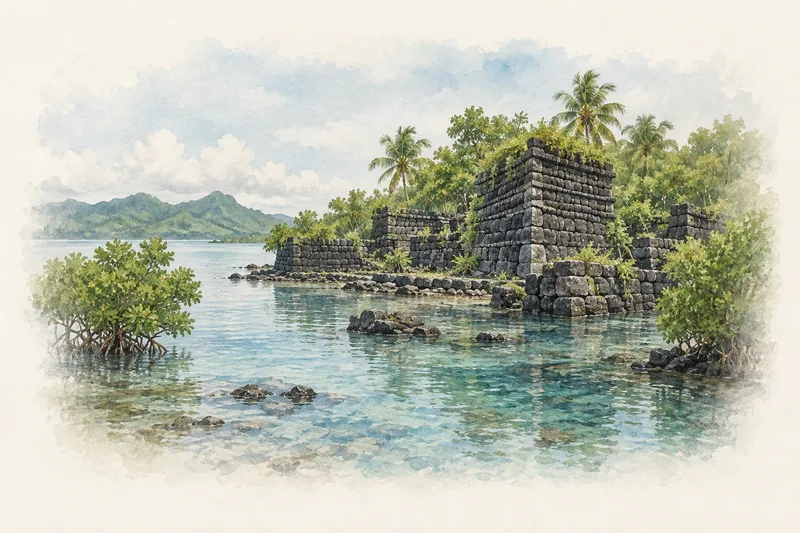
Nan Madol situates food within Pohnpeian political history. UNESCO records monumental islets that served chiefly and ceremonial functions, context for understanding tribute, prestige yams and communal labour. [9]
Starch trees and pits turn seasonal harvest into dependable food.
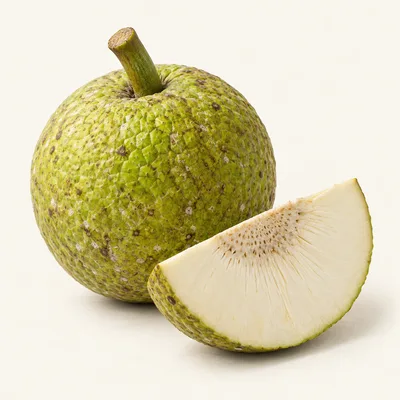 TREE STARCHBreadfruit
Roasted, boiled or fermented for later use
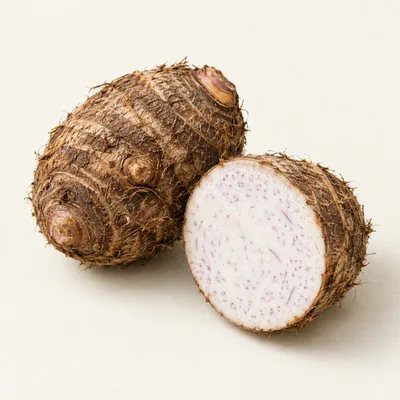 WETLAND CROPTaro
Baked, boiled or pounded across island meals
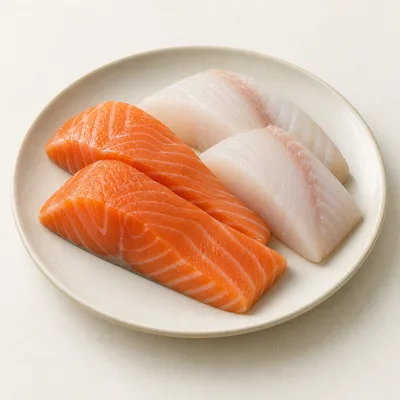 OCEAN PROTEINReef fish
Grilled, baked, boiled or eaten fresh
 PALM CROPCoconut
Flesh and milk enrich starch, fish and sweets
Preservation is island engineering. Fermenting breadfruit in lined pits stores a glut through storm seasons and lean periods; the method and name vary by island. [10][8]
Sakau is Pohnpeian ceremonial knowledge. The pounded kava drink is prepared and served through protocols of title, gathering and respect; it should not be described as a casual cocktail. [9][7]
State and island are essential labels on every food story.
Imported and local food now coexist. Rice, ramen and canned meat may accompany breadfruit, taro and fish; transport cost and climate vulnerability shape what is available. [8][10]
Ask before documenting a feast or sakau gathering. Some foods, seating and serving orders communicate clan, chiefly or ceremonial relationships that a visitor should not treat as spectacle. [7][9]
Food-culture sources checked .
Pounded staples and coconut milk
FahFah Erah is described in Kosrae as a combination of pounded taro, banana and coconut milk, but this is an example rather than a fixed recipe. Ask what is added while pounding, whether seasoning or cooking liquid is used, and whether a sauce or topping comes later. Check whether the tool has contacted another food. Ask whether the coconut milk is incorporated during preparation or added separately, and whether your portion can be kept apart from shared serving utensils and accompanying dishes.
Root crops, fruit and breadfruit
Taro, yam, breadfruit and banana are listed as staple crops across Yap, Chuuk, Pohnpei and Kosrae, while many fruits are grown locally. Their appearance on a menu does not identify the full preparation. Ask whether the food is boiled, steamed, pounded, mashed, fried or served plain. Check the cooking water, oil, seasoning and sauce, and ask whether a separate portion can be prepared with clean equipment. Confirm whether the side dish, topping or cooking liquid has been shared with another recipe.
Seafood, pork and chicken
Fish, crabs and other shellfish are recorded alongside pork and chicken. First ask exactly which protein is used and whether several are combined. Then check marinades, stock or other cooking liquid, seasoning, oil, sauce and toppings. Ask whether the same pan, grill, fryer or serving utensil has been used for another dish. A side made from taro, yam, banana or breadfruit should also be checked separately, including whether it was cooked in the same water or served from a shared dish.
Local fruit and complete plates
Many fruits are grown locally, but a fruit’s name does not describe everything served with it. Ask whether it is fresh, cooked, mashed, mixed into a drink or included in a dessert, and check any liquid, sauce, topping or garnish. For a plate combining fruit with fish, shellfish, pork, chicken or a staple crop, ask about the complete recipe and shared preparation. Confirm whether your serving is assembled separately and whether spoons, knives, boards or containers have moved between dishes.
Ingredients worth recognising
Start with these ingredients, then follow their names and recorded food connections. Check the recipe and product actually used.
Coconut
Coconut may appear as milk, flesh or another preparation; coconut milk is part of the FahFah Erah example. Ask which form is used, whether it is mixed in or added at the end, and whether a packaged coconut product has further ingredients.
Taro
Taro is a recorded staple and is pounded in the FahFah Erah example. Ask whether it is boiled, pounded, mashed or served separately, what cooking liquid or seasoning is used, and whether the tool or serving spoon is shared.
Breadfruit
Breadfruit is listed among staple crops across the islands. Ask whether it is boiled, cooked in another way, mashed or served plain, and check any sauce, oil, cooking water or topping. Confirm whether your portion uses separate equipment.
Yam
Yam is recorded as a staple crop, but its form on a plate is not specified. Ask whether it is boiled, pounded, mashed or combined with another dish, and whether seasoning, sauce, cooking liquid, oil or shared utensils are involved.
Banana
Banana appears among the staple crops and is included with taro and coconut milk in the FahFah Erah example. Ask whether it is fresh, cooked, pounded or mixed into a recipe, and check accompanying sauces, toppings and utensils.
Fish
Fish is one of the recorded local proteins. Ask which fish preparation is served and whether it includes marinade, stock, seasoning, sauce or cooking oil. Check the pan, grill, fryer and serving utensil, especially where other seafood or meats are prepared.
How food labelling works
A current, country-specific allergen-labelling summary for Micronesia has not yet been verified for this guide. Do not transfer the list of regulated allergens or restaurant disclosure rules from your home country to this one.
Read the complete ingredients on the actual package and keep any local-language sticker with the original label. For imported products, compare the information on that pack rather than a photograph of the brand sold elsewhere. Ask the manufacturer or seller to clarify an unfamiliar term.
For loose food or meals prepared to order, ask who can check the recipe and the labels on bought-in ingredients. Explain every food you avoid, including ingredients outside familiar allergy groups; a short symbol chart may not cover your list.
Language and communication
English is an official and common language. Prepare your written explanation in English first, naming the ingredients and the preparation you need checked. Ask the person taking the order to confirm the complete recipe rather than relying on a dish name.
Trukese, Pohnpeian, Yapese, Kosrean, Ulithian, Woleaian, Nukuoro and Kapingamarangi are also spoken. Language use may differ between islands and communities, so use the relevant local language where you have reliable help, and request confirmation from the cook.
Eating in different settings
Food stall or market counter
Ask about the complete serving rather than only naming the fish, chicken or staple crop you can see. For taro, yam, breadfruit or banana, check cooking water, oil, seasoning, sauce and serving utensils. Ask whether coconut milk is mixed in or added separately. If the counter serves several dishes from shared containers, ask whether a separate portion can be assembled with clean equipment.
Restaurant meal
Explain your concern before ordering and ask the cook to check the full recipe. For fish, crabs, shellfish, pork or chicken, ask about marinades, stock, sauces, seasoning and cooking fat. Check whether the same pan, grill, fryer or utensils are used for another dish. Ask whether your portion can be prepared separately, including its side dish, cooking liquid and toppings.
Shared meal
Identify each dish before serving and ask how it was prepared. Check whether FahFah Erah or another pounded staple shares a tool with other foods, and whether serving spoons or sauces move between dishes. Ask about the cooking water and preparation surface for root crops, fruit, seafood and meats. Keep questions focused on the complete recipe rather than the dish name alone.
Packaged-food shop or accommodation
Read the complete ingredient list and any allergen information on the actual product, including packaged coconut products and prepared foods. Ask about unclear ingredients rather than relying on the front label or product name. If food has been opened, mixed, transferred or cooked, check the ingredients of the full preparation and ask whether containers, spoons or cooking equipment have been shared.
Before you travel
Review your personal plan
Discuss your travel plans with your clinician and keep your prescribed medicines and emergency instructions accessible. Tell companions where these are and how to follow your plan.
Check your medicines before entering Micronesia
The legal status and regulation of some medicines prescribed or bought in the UK can differ in other countries. Before travelling, read the TravelHealthPro best-practice guidance for travelling with medicines and check the medicine’s position with the relevant authority.
Make the first meals easier to organise
Contact your accommodation and transport providers in advance. Save your written food list, menu questions and destination address offline. Check entry restrictions before packing backup food, and plan how you will check meals during arrival and onward journeys.
Plan access to medical help
Medical facilities in the Federated States of Micronesia are described as limited but adequate for uncomplicated treatment. More serious or complicated problems may require evacuation to Guam or Australia. Check that travel insurance and accessible funds cover treatment abroad, repatriation and possible air-ambulance evacuation.
Emergency resources
For a suspected severe allergic reaction, follow your prescribed emergency plan and seek urgent medical help. Give your exact location clearly.
Ambulance and urgent medical help
Call 911 and ask for an ambulance.
Explore next
Your allergy in Micronesia
Choose a food concern for the country notes and questions relevant to it.
Dishes in Micronesia
Follow the ingredients and cuisine connections in individual dish records.
Your own food list
Combine allergy groups and individual ingredients in one guide, with local names where recorded.
Allergy cards
Prepare the information you need to explain your food requirements.
FAQs, sources and review dates
Could FahFah Erah contain more than taro, banana and coconut milk?
Yes. Those three ingredients are described for one Kosrae example, but the description does not establish a fixed recipe. Ask whether the cook adds seasoning, stock, sauce or topping, whether the mixture is pounded with a shared tool, and whether your serving can be prepared and served separately.
How should I check a fish or shellfish dish?
Ask which seafood is used and whether fish, crabs or other shellfish are combined or cooked separately. Then ask about marinade, stock or cooking liquid, seasoning, oil, sauce and toppings. Check the pan, grill, fryer and serving utensils, including contact with pork, chicken or another seafood dish.
What should I ask about banana when it is served alone?
Ask whether the banana is fresh, cooked, pounded, mashed or mixed into another preparation. Check whether it has a sauce, topping, seasoning or cooking liquid, and whether the knife, board, container or serving utensil has been shared. If it is part of a plate, ask about every accompanying dish as well.
Sources checked: . This researched draft is awaiting editorial review. Practical questions apply the sources below to local food settings; they do not confirm any individual meal's ingredients or preparation.
Sources & references (10)
- FCDO · Micronesia health and medical assistance
Emergency contact details, local healthcare and medicine guidance. UK-specific eligibility does not apply to every visitor.
- FSM Tourism · Local food and drink
Tourism authority examples of local foods and dining settings. Does not establish an individual recipe or allergy suitability.
- FARE · Dining out
General recipe and preparation questions, applied here to country-specific food examples.
- FARE · Travelling with food allergies
General preparation, written communication and access to prescribed medicines. Not country-specific import permission.
- PlateSafe · Micronesia recorded food connections
Existing draft dish and ingredient records, used as examples to investigate. These are not independently verified recipes or suitability assessments.
- Unicode CLDR · Territory language data
Language suggestions. Regional language needs must be confirmed with the particular food provider.
- Visit Micronesia — Official tourism portal
- FAO — Micronesia country profile
- UNESCO World Heritage Centre — Nan Madol
- US Library of Congress — Federated States of Micronesia engagement with the outside world