
BEFORE YOUR FIRST MEAL
Navigating food allergies in Mozambique
Mozambican food varies between coastal seafood cooking and inland maize-based meals, with Portuguese influence visible in breads, pastries and meat dishes. Matapa may combine seafood, cassava leaves, rice and ground peanut, while piri-piri appears in marinades and sauces. Recipes can vary, so identify every ingredient, coating, stock and cooking surface rather than relying on a dish name.
What to know first
Coastal dishes can combine several concerns
Matapa may include dried shrimp and ground peanut, while seafood dishes may be served with rice or other accompaniments. Ask for the complete recipe, not only the main ingredient.
Piri-piri is more than fresh chilli
Camarão à Piri-Piri and other seafood may use a marinade or sauce with piri-piri, garlic, onion, lemon and vinegar. Check whether the sauce is made separately and what else it contains.
Explain the whole requirement before ordering
Give a written Portuguese explanation of the ingredients you must avoid, then ask staff to confirm the recipe, stock, sauce, toppings, oil and utensils for your particular serving.
Pastry and bread need separate checks
Chamussas, Pão de Coco and Rissóis de Camarão may involve wheat flour, egg, milk-based filling or enriched dough. Ask about batter, brushing, breading and frying oil.
Read complete ingredient lists
Read the complete ingredients and allergen information on the actual product. If you avoid a food that is not highlighted, ask the producer or food provider to check it specifically.
Understanding the food
Cassava, maize, rice, cowpea, coconut, groundnut, leafy greens, chilli, fish and shellfish carry Makhuwa, Sena, Tsonga, Yao and many other community traditions. Indian Ocean trade and Portuguese rule added ingredients and forms, but Zambezia, the north, central river valleys and Maputo’s south remain distinct.
Coast, Zambezi basin and southern cities combine staples differently.
| Region or setting | Food landscape | Examples to explore |
|---|---|---|
| Maputo & south | Maize, cassava, peanuts, peri-peri and South African links | Xima, grilled chicken, crab stew and matapa |
| Inhambane coast | Coconut, cassava, fish and cashew | Xiguinha, galinha cafreal and coconut seafood |
| Zambezia & central coast | Rice, coconut, beans, chicken and prawns | Mucapata, galinha à zambeziana and curries |
| North & islands | Cassava, seafood, Swahili and Indian Ocean exchange | Cassava dishes, fish, coconut sauces and spiced rice |
The official tourism guide identifies coast-specific dishes. It maps mucapata and coconut chicken to Zambezia, xiguinha and cafreal chicken to Inhambane, and crab stew to the south. [7][9]
Agriculture remains broader than the seafood image. FAO profiles cassava, maize, pulses and smallholder farming alongside fisheries, while climate shocks alter availability across the country. [10][8]
Coconut, peanut and piri-piri turn mild starch into a complete meal.
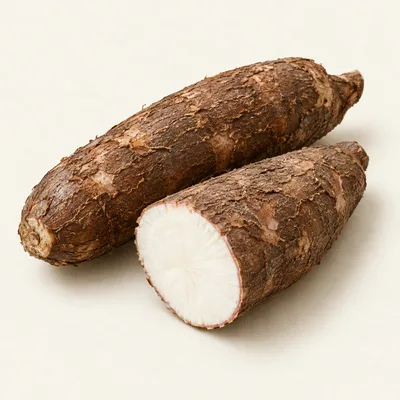 STAPLE ROOTCassava
Flour, boiled roots and pounded leaves
 COASTAL RICHNESSCoconut
Milk and grated flesh in rice, chicken and seafood
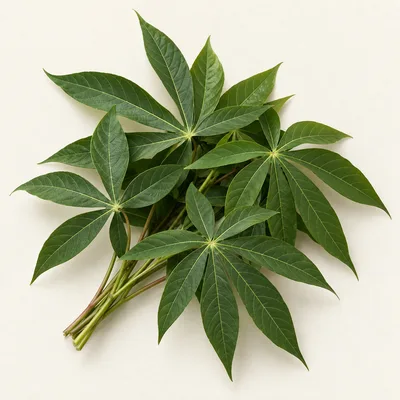 LEAF CROPCassava leaves
Pounded for matapa with peanut and seafood
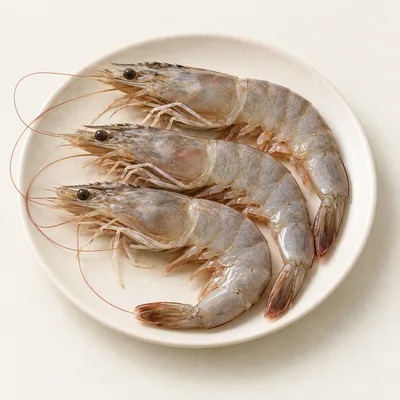 OCEAN CATCHPrawn
Grilled, curried or cooked with piri-piri
Matapa is a slow-cooked leaf preparation. Pounded cassava leaves simmer with groundnut and coconut, often with crab or prawn, producing a rich sauce for xima or rice. [7]
Xima and upshwa name the staple relationship. Firm maize or cassava porridge is shaped to carry fish, meat or vegetable sauce, with grain choice changing by region and household. [7][10]
A barraca, market or family restaurant reveals more range than a beach grill alone.
Seafood is strongest when linked to its coast. Prawn, lobster, crab, squid and fish appear in different sauces from Maputo Bay to the northern islands; ask for the local preparation rather than only the species. [7][8]
Portuguese influence should not erase African and Indian Ocean authorship. Bread rolls, garlic and peri-peri sit within older cassava, millet, bean, coconut and fishing systems maintained by Mozambican communities. [9][10]
Food-culture sources checked .
Coastal seafood and piri-piri
The coastal food examples centre on prawns, crayfish and other seafood. Camarão à Piri-Piri and Camarão National are associated with piri-piri, while the recorded marinade example also includes garlic, onion, lemon and vinegar. Ask whether the seafood is marinated before cooking, whether sauce is added later, and whether the same tongs, grill or pan handle other seafood or foods.
Matapa, rice and cassava leaves
Matapa is described as a stew of cassava leaves with seafood such as clam, crab or prawn, generally served over rice. The recorded Matapa connection also includes dried shrimp and ground peanut. Ask which seafood or dried seafood is present in this batch, whether peanut is ground into the stew, and whether the rice is cooked or served with stock, sauce or shared utensils.
Breads, pastries and fillings
Pãozinho is a floury, often semi-sweet roll that may be served with meat; Prego no pão and bifana connect the roll with beef or fried pork. Chamussas and Rissóis de Camarão may also raise questions about pastry or breading. Ask about wheat flour, egg wash, milk-based filling, shared frying oil and whether the bread is assembled on a shared board.
Inland staples and local variation
Maize-based porridges are inland staples, while Kakana is a bitter local vegetable. Peanut appears in versions of Caril de Amendoim and Xiguinha de Mandioca. Ask what grain, vegetable, oil, seasoning or ground ingredient is used today, and whether a named dish follows the cook’s own recipe rather than a fixed formula.
Ingredients worth recognising
Start with these ingredients, then follow their names and recorded food connections. Check the recipe and product actually used.
Wheat flour
Wheat flour appears in Chamussas, Bolo de Castanha de Caju, Pão de Coco and Rissóis de Camarão. Check pastry, breading, cake and thickening ingredients, including whether flour is added to a sauce or handled on shared surfaces.
Peanut
Peanut is a defining ground ingredient in Caril de Amendoim and a recorded core ingredient in Matapa and Xiguinha de Mandioca. Ask whether it is ground into the sauce, sprinkled later, or present in a shared cooking paste.
Prawns
Prawns define Camarão à Piri-Piri, Caril de Camarão and Rissóis de Camarão, and are among the seafood associated with Matapa. Confirm the seafood itself, dried seafood in stock, and contact from shared pans, grills, oil or serving utensils.
Butter
Butter is recorded in Bolo Polana and Bolo de Castanha de Caju. Ask whether the cake uses butter, another milk-derived ingredient or a mixed fat, and whether icing, fillings or the greasing fat have a separate recipe.
Egg
Egg is recorded in Bolo Polana and Bolo de Castanha de Caju, and may enrich Doce de Coco or Pão de Coco. Rissóis de Camarão may use egg for coating. Ask about batter, glaze, dough and the frying step separately.
Cashew
Cashew is the principal nut ingredient recorded for Bolo Polana and Bolo de Castanha de Caju. Ask whether it is ground into the batter, used as a topping or present in another dessert component, rather than inferring from the cake name alone.
How food labelling works
A current, country-specific allergen-labelling summary for Mozambique has not yet been verified for this guide. Do not transfer the list of regulated allergens or restaurant disclosure rules from your home country to this one.
Read the complete ingredients on the actual package and keep any local-language sticker with the original label. For imported products, compare the information on that pack rather than a photograph of the brand sold elsewhere. Ask the manufacturer or seller to clarify an unfamiliar term.
For loose food or meals prepared to order, ask who can check the recipe and the labels on bought-in ingredients. Explain every food you avoid, including ingredients outside familiar allergy groups; a short symbol chart may not cover your list.
Language and communication
Portuguese is Mozambique’s official language and is used as a lingua franca or second language by speakers of various native languages. Prepare a written explanation in Portuguese naming the ingredients and forms you need to avoid, then ask for confirmation of the full recipe.
Language access varies by location: English is described as more likely in Maputo and tourist areas, while Portuguese may be limited in more rural areas. Swahili is relevant in the far north near Tanzania, Nyanja near Malawi and Zambia, and some Shona words near Cabora Bassa; use regional support where relevant and still seek staff confirmation.
Eating in different settings
Coastal seafood counter
For prawns, crayfish or a seafood plate, ask whether piri-piri marinade, garlic, onion, lemon or vinegar is added before cooking. Confirm the pan, grill, tongs, oil and serving utensils are not shared with an ingredient you avoid, and ask about dried shrimp in sauces.
Bakery or pastry stall
With Pãozinho, Pão de Coco, Chamussas or Rissóis de Camarão, ask what flour, egg wash, milk-based filling and fat are used. Confirm whether breading and pastries share oil, trays, benches or utensils, and whether a topping or filling is made separately.
Restaurant or shared meal
For Matapa, Caril de Amendoim or Xiguinha de Mandioca, ask for every ground ingredient, stock, sauce and garnish. Confirm whether peanut or dried shrimp is cooked into the whole pot, and whether rice, serving spoons and preparation surfaces are shared.
Accommodation or packaged-food shop
Ask the cook or seller to show the complete ingredient list for cakes, coconut sweets and packaged foods. Check unfamiliar oils, flavourings, fillings and precautionary wording, and ask whether an item was made beside wheat, peanut, cashew, milk, egg or seafood.
Before you travel
Review your personal plan
Discuss your travel plans with your clinician and keep your prescribed medicines and emergency instructions accessible. Tell companions where these are and how to follow your plan.
Check your medicines before entering Mozambique
Medicine regulations in Mozambique may differ from those in the UK, including for medicines prescribed or bought in the UK. Check TravelHealthPro guidance before travel and ask the relevant Mozambican authority or your prescriber what requirements apply.
Make the first meals easier to organise
Contact your accommodation and transport providers in advance. Save your written food list, menu questions and destination address offline. Check entry restrictions before packing backup food, and plan how you will check meals during arrival and onward journeys.
Plan access to medical help
FCDO lists medical providers in Mozambique, and some staff may speak English. Hospital facilities are described as lower-standard than in the UK, especially in the north; serious illness or injury may require evacuation to South Africa or the UK. Arrange adequate insurance and accessible funds, and check eligibility and regional cover with your insurer.
Emergency resources
For a suspected severe allergic reaction, follow your prescribed emergency plan and seek urgent medical help. Give your exact location clearly.
Ambulance and urgent medical help
Call 848888 or 823388 and ask for an ambulance.
Explore next
Your allergy in Mozambique
Choose a food concern for the country notes and questions relevant to it.
Dishes in Mozambique
Follow the ingredients and cuisine connections in individual dish records.
Your own food list
Combine allergy groups and individual ingredients in one guide, with local names where recorded.
Allergy cards
Prepare the information you need to explain your food requirements.
FAQs, sources and review dates
Could Matapa be free from seafood if it is served with rice?
Not necessarily. The food description associates Matapa with seafood and the recorded recipe connection includes dried shrimp, while ground peanut is also recorded. Ask whether this batch contains seafood, dried seafood or peanut, whether stock was used, and whether rice was cooked separately.
Does piri-piri identify every ingredient in the sauce?
No. Piri-piri identifies the chilli element, not the whole recipe. One Camarão National version combines it with garlic, onion, lemon and vinegar. Ask whether the sauce or marinade contains stock, seafood extracts, oil, prepared seasoning or another ingredient not visible on the plate.
What should I ask about coconut if it is not one of my usual allergy groups?
Ask whether coconut is in the dough, filling, topping or syrup, and whether egg is also used. The recorded Doce de Coco connection notes that some versions use egg, while Pão de Coco may include egg and wheat flour; confirm the actual recipe rather than assuming from its name.
Sources checked: . This researched draft is awaiting editorial review. Practical questions apply the sources below to local food settings; they do not confirm any individual meal's ingredients or preparation.
Sources & references (10)
- FCDO · Mozambique health and medical assistance
Emergency contact details, local healthcare and medicine guidance. UK-specific eligibility does not apply to every visitor.
- Wikivoyage contributors · Mozambique
Community-edited culinary context only; not an allergy or medical authority. Brief food-context adaptations, CC BY-SA 4.0: https://creativecommons.org/licenses/by-sa/4.0/. Recipe questions also use PlateSafe’s draft records.
- FARE · Dining out
General recipe and preparation questions, applied here to country-specific food examples.
- FARE · Travelling with food allergies
General preparation, written communication and access to prescribed medicines. Not country-specific import permission.
- PlateSafe · Mozambique recorded food connections
Existing draft dish and ingredient records, used as examples to investigate. These are not independently verified recipes or suitability assessments.
- Unicode CLDR · Territory language data
Language suggestions. Regional language needs must be confirmed with the particular food provider.
- Visit Mozambique — Gastronomy
- Visit Mozambique — About Mozambique
- Visit Mozambique — Culture and gastronomy guide
- FAO — Mozambique country profile