
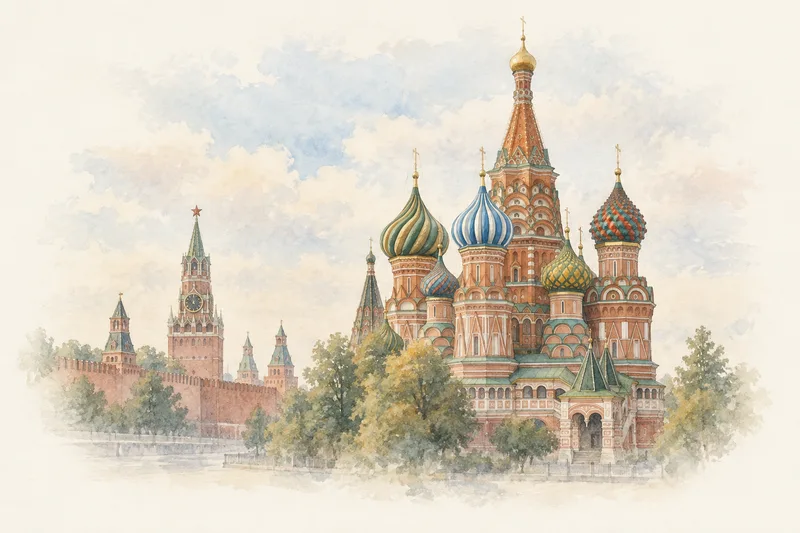
BEFORE YOUR FIRST MEAL
Navigating food allergies in Russia
Russian food ranges from grain-based pancakes and dumplings to soups, salads, pastries and fish dishes. Wheat, rye, buckwheat, dairy, eggs and broths appear in many versions, but recipes vary between regions and kitchens. A familiar name is not a complete recipe: confirm fillings, coatings, accompaniments, shared cooking equipment and the exact packaged ingredients before ordering.
What to know first
Pancakes and pastries
Blini may use wheat flour, milk and egg, while pirozhki, pelmeni and regional pastries can have different doughs, fillings and finishing ingredients. Ask about the complete recipe.
Soups and salads
Borscht, shchi, okroshka, Olivier and herring under a fur coat can include separate garnishes, cultured dairy, egg or mayonnaise. Check what is mixed in and added at serving.
Explain the concern
Give a written explanation in Russian, naming the ingredient and asking staff to confirm the full recipe, stock, sauce, topping and preparation method rather than relying on a dish name.
Ask about preparation
For fried buns, cutlets, dumplings and pancakes, ask about shared oil, pans, water, utensils and surfaces. Confirm whether a separate preparation is possible before placing the order.
Read the whole label
Read the complete ingredients and allergen information on the actual product. If you avoid a food that is not highlighted, ask the producer or food provider to check it specifically.
Understanding the food
Rye, wheat, buckwheat, potato, cabbage, mushroom, dairy, freshwater fish, salmon, game and berries are only a starting point. Russian, Tatar, Bashkir, Chuvash, Udmurt, Komi, Karelian, Buryat, Sakha, Chechen, Dagestani and many Indigenous and national communities maintain distinct food traditions across an immense federation.
Climate zone and community make a single “Russian cuisine” inadequate.
| Region or community context | Food landscape | Examples to understand |
|---|---|---|
| European north & northwest | Rye, forest, lakes, Baltic and White Sea with Karelian, Komi and Pomor traditions | Kalitki, fish soups, cloudberry, mushrooms and salted fish |
| Volga-Ural | Grain, honey, dairy and Tatar, Bashkir, Chuvash, Udmurt and Mari foodways | Echpochmak, chak-chak, horse meat, noodles and fermented drinks |
| Caucasus & southern steppe | Wheat, maize, orchard crops, sheep and many republic cuisines | Dagestani khinkal, Ossetian pies, Circassian cheese and Kuban produce |
| Siberia, Arctic & Far East | Reindeer, river fish, taiga foods, Pacific seafood and Indigenous knowledge | Frozen or dried fish, venison, berries, Buryat buuz and Kamchatka salmon |
The official regional-brand map records scale. Rospatent lists more than two hundred protected food and drink products across dozens of regions, from northern fish and Karelian baking to Caucasus produce and Far Eastern seafood. [7]
Agricultural abundance is geographically uneven. FAO identifies Russia as a major producer of grain, oilseed, fish and livestock products, while climate and distance create radically different local pantries. [8][10]
Fermentation, drying and the forest carry food through long winters.
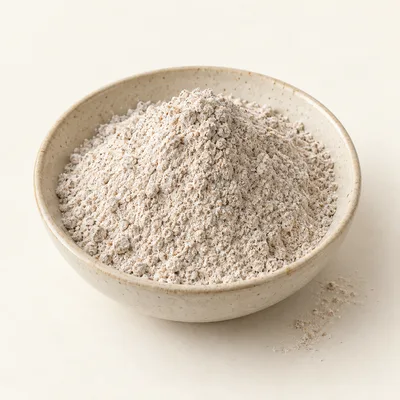 BREAD GRAINRye
Dark loaves, kvass and sour soup traditions
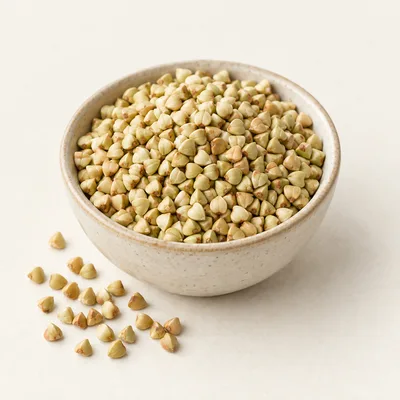 GROATBuckwheat
Kasha, fillings and flour across household cooking
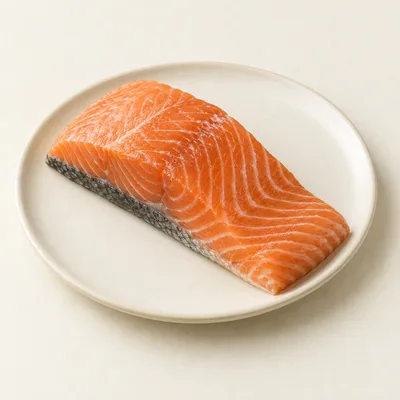 PACIFIC & RIVER FISHSalmon
Fresh, salted, smoked, dried or frozen by region
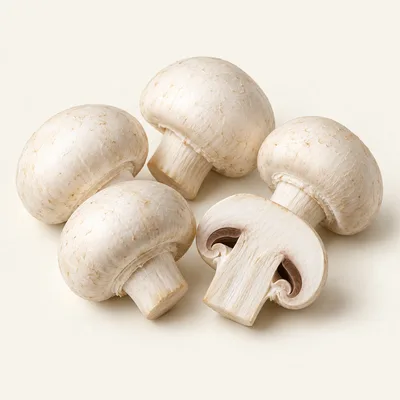 FOREST HARVESTMushroom
Fried, dried, salted, pickled and folded into pies
Pelmeni does not belong to one origin story. Filled dumplings connect Siberian, Uralic and wider Eurasian traditions; fillings, broth, shape and service differ between communities and regions. [7][9]
Northern fish is highly place-specific. Murmansk cod, Sosva tugun, Taimyr whitefish and Far Eastern salmon or herring are identified as distinct regional products rather than generic cold-water fish. [7]
Canteen, market, national-republic restaurant and family dacha represent different food worlds.
Name the cuisine more precisely than the state. A Tatar, Buryat, Dagestani or Karelian venue should be understood through that community’s history and language, not absorbed into a broad Russian restaurant category. [7][9]
Regional certification is useful but not the whole story. Protected product names verify geographic production, while household preservation, Indigenous subsistence and migrant city cooking may remain outside formal branding. [7][8]
Food-culture sources checked .
Grains, doughs and pancakes
Some versions use several grains, not one universal flour. Blini may be made with white wheat flour or buckwheat; black bread is rye-based, while pelmeni and many pastries use wheat dough. Ask whether a pancake is thin or thick, what flour is used, and whether the same griddle, oil or utensils are used for other batters.
Soups, broths and cold dishes
Soups and cold preparations can differ substantially. Okroshka may use kefir or sour milk and boiled egg; borscht commonly comes with sour cream; rassolnik may contain pearl barley. Ask for the broth and all garnishes separately, and check whether sour cream, egg, barley or another grain is added after cooking.
Fish, meat and composed meals
Fish occurs in ukha, botvinya, kulebyaka and rasstegai, while herring under a fur coat combines herring with egg and often mayonnaise. Olivier includes potato, peas, meat, egg, carrots and pickles in the recorded example. Confirm the species, filling, dressing and any coating rather than assuming a named version is fixed.
Ingredients worth recognising
Start with these ingredients, then follow their names and recorded food connections. Check the recipe and product actually used.
Wheat flour
Wheat flour forms the dough or batter in blini, pelmeni, pirozhki, syrniki and many regional pastries; it may also bind sauces or mixtures. Ask whether the recipe contains wheat flour, breadcrumbs or semolina, and whether shared flour-covered surfaces are used.
Rye bread
Rye bread is the customary solid component of tyurya and is also associated with black bread and kvass. Some rye-bread formulations include wheat flour. Ask which bread or malt is used, especially in drinks and soaked dishes.
Cow Milk
Cow's milk or milk-derived ingredients appear in blini, enriched doughs, custards and drinks; some versions of Baursak and Napoleon cake include them. Ask about milk, butter, cream, condensed milk and cultured dairy in both the recipe and the finish.
Egg
Egg may bind or enrich blini, pastries, dumplings, cakes, salads and cutlets. It can also appear as a topping or wash. Ask about batter, pastry, mayonnaise, breading and shared pans, not only whether a visible egg is served.
Fish
Fish is central to ukha and appears in recorded versions of botvinya, kulebyaka, rasstegai and solyanka; species may vary. Ask which fish is used, whether stock contains fish, and whether fish is prepared in shared oil, water or utensils.
Mustard Paste
Mustard is used in some Beef Stroganoff sauce variations and in the recorded vinegret context. Ask whether mustard paste, prepared dressing or a sauce containing mustard is included, and request the complete recipe rather than judging the dish by its name.
How food labelling works
A current, country-specific allergen-labelling summary for Russia has not yet been verified for this guide. Do not transfer the list of regulated allergens or restaurant disclosure rules from your home country to this one.
Read the complete ingredients on the actual package and keep any local-language sticker with the original label. For imported products, compare the information on that pack rather than a photograph of the brand sold elsewhere. Ask the manufacturer or seller to clarify an unfamiliar term.
For loose food or meals prepared to order, ask who can check the recipe and the labels on bought-in ingredients. Explain every food you avoid, including ingredients outside familiar allergy groups; a short symbol chart may not cover your list.
Language and communication
Russian is the main language and uses Cyrillic, which matters for menus, labels and ingredient lists. Prepare a written explanation in Russian that names the concern and asks staff to confirm the complete recipe, broth, sauce, topping and preparation method.
Russia also has many indigenous and minority languages, with regional languages particularly relevant in areas where they are used locally. Tatar-related dishes appear in the recorded food examples, but Russian remains the practical first language for checking recipes; ask a local speaker to review written wording where needed.
Eating in different settings
Stolovaya or cafeteria counter
For borscht, shchi, rassolnik, Olivier or buckwheat kasha, ask what is already mixed into each tray or bowl. Check broth, sour cream, egg, barley, butter and shared serving utensils, and ask whether a plain portion can be assembled separately.
Bliny or street kiosk
Before ordering blini, ask whether the batter uses wheat flour, buckwheat, milk and egg, and whether fillings or toppings are added on the same griddle. Confirm shared batter tools, oil and surfaces, including for pirozhki or belyashi.
Restaurant meal
For Beef Stroganoff, fish pies, ukha or herring under a fur coat, ask for the exact sauce, stock, filling, dressing and garnish. Check mustard, sour cream, mayonnaise, breading and shared pans, and ask whether components can be served separately.
Café, bakery or packaged-food shop
For syrniki, Medovik, Napoleon cake, chocolate-coated goods or kvass, read the complete label or ask about every layer and coating. Check flour, milk, egg, soy-derived ingredients, nuts, rye or wheat bread, and preservatives where listed.
Before you travel
Review your personal plan
Discuss your travel plans with your clinician and keep your prescribed medicines and emergency instructions accessible. Tell companions where these are and how to follow your plan.
Check your medicines before entering Russia
For medicines containing narcotic or psychoactive substances, the official guidance says to carry a prescription in your name translated into Russian and notarised. Check the medicine’s status and current entry requirements with the relevant Russian authority and your prescriber before travel; do not change prescribed treatment.
Make the first meals easier to organise
Contact your accommodation and transport providers in advance. Save your written food list, menu questions and destination address offline. Check entry restrictions before packing backup food, and plan how you will check meals during arrival and onward journeys.
Plan access to medical help
Russia has no reciprocal health agreement with the UK, and EHIC or GHIC cards are not valid there. Foreign nationals have a legal right to free care in life-threatening circumstances, while other care may require payment. Check comprehensive insurance, eligibility and available providers before travelling, especially outside major areas.
Emergency resources
For a suspected severe allergic reaction, follow your prescribed emergency plan and seek urgent medical help. Give your exact location clearly.
Ambulance and urgent medical help
Dial 112 and ask for an ambulance.
Explore next
Your allergy in Russia
Choose a food concern for the country notes and questions relevant to it.
Dishes in Russia
Follow the ingredients and cuisine connections in individual dish records.
Your own food list
Combine allergy groups and individual ingredients in one guide, with local names where recorded.
Allergy cards
Prepare the information you need to explain your food requirements.
FAQs, sources and review dates
Could buckwheat kasha be suitable if wheat is a concern?
The recorded example identifies buckwheat and notes butter as an optional finish, but that does not establish a universal recipe. Ask whether wheat flour, breadcrumbs or a wheat-containing broth is added, and whether the kasha shares utensils or cooking water with wheat dishes.
What should I check in herring under a fur coat?
The recorded version has a herring layer, egg and often egg-based mayonnaise, with vegetables in the salad. Ask which fish is used, whether the mayonnaise contains egg, what dressing is present, and whether the salad is assembled with shared spoons or containers.
Is honey or another individual ingredient always obvious in a dish?
No. A named dish may contain a topping, sauce, filling or packaged component that is not visible. For example, ask what is added to a pastry, sweet, drink or sauce, and request the complete ingredient list rather than relying on appearance or a dietary label.
Sources checked: . This researched draft is awaiting editorial review. Practical questions apply the sources below to local food settings; they do not confirm any individual meal's ingredients or preparation.
Sources & references (10)
- FCDO · Russia health and medical assistance
Emergency contact details, local healthcare and medicine guidance. UK-specific eligibility does not apply to every visitor.
- Wikivoyage contributors · Russia
Community-edited culinary context only; not an allergy or medical authority. Brief food-context adaptations, CC BY-SA 4.0: https://creativecommons.org/licenses/by-sa/4.0/. Recipe questions also use PlateSafe’s draft records.
- FARE · Dining out
General recipe and preparation questions, applied here to country-specific food examples.
- FARE · Travelling with food allergies
General preparation, written communication and access to prescribed medicines. Not country-specific import permission.
- PlateSafe · Russia recorded food connections
Existing draft dish and ingredient records, used as examples to investigate. These are not independently verified recipes or suitability assessments.
- Unicode CLDR · Territory language data
Language suggestions. Regional language needs must be confirmed with the particular food provider.
- Rospatent — Gastronomic map of regional Russian products
- FAO — The Russian Federation at a glance
- National Centre RUSSIA — Western regional food traditions
- FAO — Russian plant genetic resources