
BEFORE YOUR FIRST MEAL
Navigating food allergies in United Arab Emirates
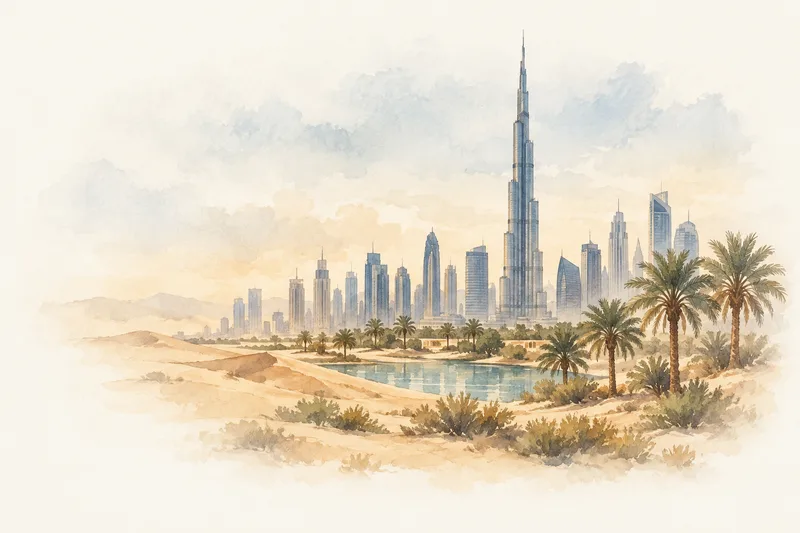
The United Arab Emirates combines Emirati and Eastern Arabian dishes with Indian, Pakistani, Persian, Lebanese and many other cuisines. Traditional plates may centre on rice, meat or fish, while snacks and desserts often bring wheat, milk, butter, ghee, egg, sesame or nuts into the recipe. Ask about the complete preparation rather than relying on a dish name, dietary label or familiar appearance.
What to know first
Rice platters vary
Machboos can include fish, while traditional platters may feature lamb, camel meat, chicken or fish. Ask which protein, stock, sauce and finishing ingredients were used today.
Dough and desserts matter
Luqaimat, regag, khubz al khameer and chebab can involve wheat flour; milk, butter, egg or sesame may also appear in particular recipes.
Explain the whole recipe
Ask in advance about every ingredient, including stock, sauces, toppings and garnishes. Confirm whether the answer applies to the dish as served, not merely its main ingredient.
Check preparation separately
Ask whether shared oil, water, pans, boards or utensils are used, and whether toppings or finishing fats are added after cooking. Request clear separation only if the kitchen can describe it.
Read the full label
For packaged food, read the complete ingredient list each time, including on camel-milk products, desserts, oils, broths and sauces. Do not infer suitability from a front-of-pack description.
Understanding the food
Rice, wheat, date, fish, lamb, camel, dairy, dried lime, saffron and cardamom shape harees, machboos, madrooba, breads and sweets. Dubai and Abu Dhabi dining makes almost every global cuisine visible, but Emirati household food, mountain and oasis production, and long-standing South Asian, Iranian and Arab migration need separate attention.
Coast, oasis, mountain and metropolitan migration produce different food settings.
| Setting | Food history | Examples to understand |
|---|---|---|
| Abu Dhabi & Al Ain | Coastal pearling and fishing linked to Liwa and oasis date agriculture | Fish machboos, harees, dates, camel products and khameer |
| Dubai & Sharjah | Creek trade, merchant communities and dense global migration | Emirati rice dishes beside Iranian, Indian, Pakistani, Arab and East African foods |
| Northern emirates & Hajar foothills | Mountain farming, fishing ports and Oman-facing exchange | Honey, dates, goat, fish, flatbreads and seasonal crops |
| Desert & Bedouin settings | Mobile pastoralism, preserved food and coffee hospitality | Camel milk, dates, meat, bread, ghee and Arabic coffee |
Trade is foundational, not a recent garnish. Dried lime, rice and spices arrived through Gulf and Indian Ocean networks, while fish, date and pastoral products rooted dishes in local coast, oasis and desert ecologies. [7][9]
The resident majority expands the national food landscape. South Asian, Iranian, Levantine, Filipino, East African and other communities sustain cafeterias, bakeries and restaurants that are part of daily UAE life even when they are not labelled Emirati cuisine. [10][9]
Rice and wheat absorb dried lime, cardamom, saffron and long-cooked meat or fish.
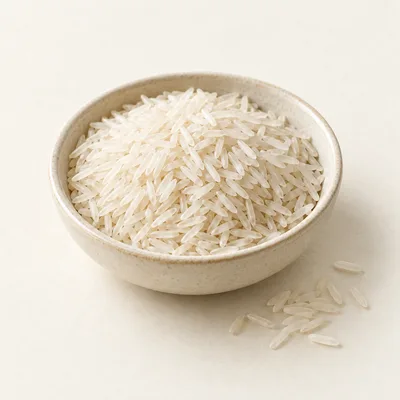 FEAST GRAINRice
Machboos, biryani, fish and meat platters
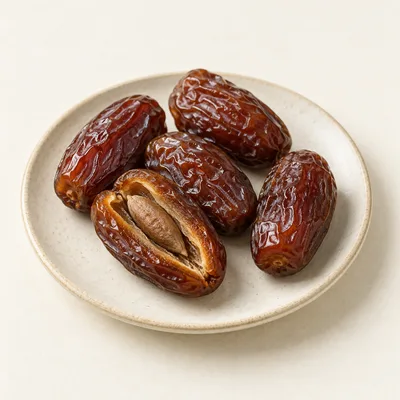 OASIS FRUITDate
Hospitality, syrup, sweets and everyday nourishment
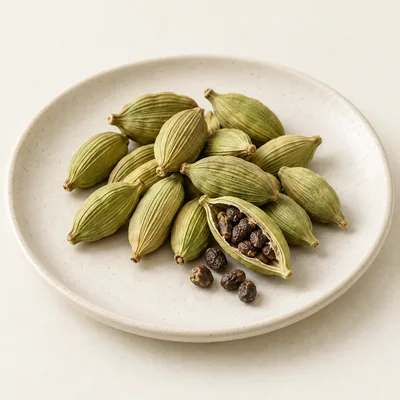 AROMATIC SPICECardamom
Coffee, tea, breads, rice and desserts
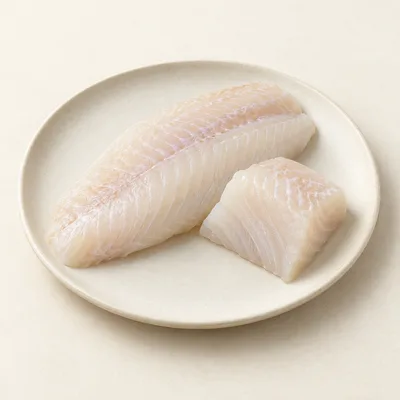 GULF CATCHFish
Machboos, madrooba, grilling, salting and drying
Harees transforms grain and meat into one texture. Wheat and meat cook for hours until smooth, then receive ghee; it is especially associated with Ramadan, weddings and communal distribution. [7][8]
Loomi creates depth without visible citrus. Whole or ground dried lime brings sour, fermented and aromatic notes to machboos and stews, often alongside cinnamon, cardamom and saffron. [7][9]
Heritage restaurant, mall food court, cafeteria and majlis follow different social scripts.
Coffee service is an act of welcome. Arabic coffee is poured in small amounts and repeatedly offered with dates; accepting, returning and signalling completion form part of the exchange. [7][8]
A global menu may still be locally specific. Old Dubai cafeterias and neighbourhood restaurants reflect decades of labour and merchant migration, while hotel “Emirati nights” present a curated heritage format. [10][9]
Food-culture sources checked .
Rice, meat and fish plates
Traditional Emirati food is described around fragrant rice topped with slow-roasted lamb, camel meat, chicken or fish. Machboos has a recognised fish variation, while Samak Mashwi is centred on fish. Ask whether stock, spice mixtures, butter, ghee or a separate sauce was added, and whether the fish or meat was cooked on shared equipment.
Wheat-based breads and dumplings
Wheat appears in regag, thareed, margooga, khubz al khameer and luqaimat. Thareed uses regag flatbread, while luqaimat is a fried dumpling made from wheat flour. Ask whether dough is prepared in the same area as other flour products, what oil is used, and whether sesame is added before serving.
Sweet and savoury batters
Aseeda uses wheat flour and may be finished with butter; chebab can contain milk, wheat flour and egg. Balaleet combines wheat vermicelli with butter and may have an egg omelette topping. Khanfaroosh can combine wheat and rice flour with cow milk and egg, so ask about batter and finishing ingredients.
Porridges, stews and variations
Harees is based on wheat berries and may be finished with ghee; madrouba can contain cow milk or other dairy and has a recognised fish variation. Saloona may use fish, and broth or stock can have different formulations. Ask which recipe is being served, especially for family meals or seasonal menus.
Ingredients worth recognising
Start with these ingredients, then follow their names and recorded food connections. Check the recipe and product actually used.
Wheat flour
Wheat flour is used in chebab, luqaimat, khubz al khameer, margooga and other doughs. Ask whether it is present in batter, bread, thickening or garnish, and whether the recipe also includes milk, egg or sesame.
Cow Milk
Cow milk may enrich chebab, khubz al khameer, khanfaroosh, madrouba and other creamy preparations. Ask whether milk is in the batter, porridge, drink or dessert, and whether butter, ghee or another dairy ingredient is added separately.
Egg
Egg is the defining ingredient in Beidh wa Tomat and may bind chebab or khanfaroosh; it can also accompany balaleet or regag. Ask whether egg is mixed into the dish, cooked as a topping, or handled on the same pan.
Almond
Almond may be used as the customary garnish for ghuzi and may garnish some khabees recipes. Ask whether it is scattered over the finished plate, included in a dessert mixture, or replaced by another nut, and whether utensils are shared.
Fish
Fish is the defining protein in Samak Mashwi and a recognised variation in machboos, madrouba and saloona; traditional jasheed uses shark. Ask which fish is present, whether fish stock is used, and how the cooking surface and oil are shared.
Sesame Seed
Sesame can garnish batheetha, khubz al khameer and luqaimat, sometimes only at the final stage. Ask whether sesame is in the dough, sprinkled on top, or present in a sauce, and whether the same trays or tongs handle other items.
How food labelling works
A current, country-specific allergen-labelling summary for United Arab Emirates has not yet been verified for this guide. Do not transfer the list of regulated allergens or restaurant disclosure rules from your home country to this one.
Read the complete ingredients on the actual package and keep any local-language sticker with the original label. For imported products, compare the information on that pack rather than a photograph of the brand sold elsewhere. Ask the manufacturer or seller to clarify an unfamiliar term.
For loose food or meals prepared to order, ask who can check the recipe and the labels on bought-in ingredients. Explain every food you avoid, including ingredients outside familiar allergy groups; a short symbol chart may not cover your list.
Language and communication
Arabic is the official language, and Gulf Arabic is the dialect associated with Emiratis. Prepare a written explanation in Arabic for the full ingredient and preparation questions you need answered. Dish names can help recognition, but they are not a complete allergy request; ask staff to confirm the actual recipe and toppings.
English is widely used in the UAE, alongside Arabic, but staff members may have different levels of English. Keep a written explanation available and ask for confirmation of stock, sauces, shared utensils and finishing ingredients. In restaurants serving Indian, Pakistani or other cuisines, confirm that the person answering has checked with the cook.
Eating in different settings
Emirati restaurant or iftar meal
For machboos, harees, madrouba or luqaimat, ask which recipe is being served today and whether stock, dairy, wheat, egg, fish or toppings are included. At a shared iftar or feast, ask before food is plated whether a separate portion can be prepared and how serving utensils are managed.
Majlis or home invitation
A majlis may offer dates, Arabic coffee and other food, while a home meal may place several dishes on one platter. Explain your requirements before accepting food. Ask which dishes contain wheat, dairy, egg, fish, nuts or sesame, and request that someone identify the complete recipe and serving utensils.
Bakery, dessert counter or café
Ask about chebab, khubz al khameer, balaleet, khabees, batheetha and luqaimat by naming each ingredient you need checked. Confirm the flour, milk, butter, ghee, egg, sesame and nut garnish, then ask whether the same oil, griddle, tray or tongs are used for other products.
Supermarket or packaged-food shop
Camel milk is sold in supermarkets in several described flavours, and packaged sweets or drinks may have changing formulations. Read the complete ingredient list and ask a member of staff about unclear terms rather than relying on the product name. Check sauces, broth, oils, desserts and toppings separately.
Before you travel
Review your personal plan
Discuss your travel plans with your clinician and keep your prescribed medicines and emergency instructions accessible. Tell companions where these are and how to follow your plan.
Check your medicines before entering United Arab Emirates
Some medicines prescribed or bought in the UK may be controlled substances in the UAE. Check the UAE Ministry of Health approval process before travel, including whether an application is needed and its current processing requirements. Review TravelHealthPro guidance and carry out the relevant medicine and document checks in advance.
Make the first meals easier to organise
Contact your accommodation and transport providers in advance. Save your written food list, menu questions and destination address offline. Check entry restrictions before packing backup food, and plan how you will check meals during arrival and onward journeys.
Plan access to medical help
Healthcare facilities are described as similar to those in the UK, but access may depend on travel insurance or the ability to pay. Check your insurer’s UAE terms, accessible funds and possible repatriation cover before travelling. If you need a provider, consult the FCDO list and confirm regional availability and payment arrangements.
Emergency resources
For a suspected severe allergic reaction, follow your prescribed emergency plan and seek urgent medical help. Give your exact location clearly.
Ambulance and urgent medical help
Dial 998 and ask for an ambulance.
Explore next
Your allergy in United Arab Emirates
Choose a food concern for the country notes and questions relevant to it.
Dishes in United Arab Emirates
Follow the ingredients and cuisine connections in individual dish records.
Your own food list
Combine allergy groups and individual ingredients in one guide, with local names where recorded.
Allergy cards
Prepare the information you need to explain your food requirements.
FAQs, sources and review dates
Could a dish called machboos be fish-free?
It may be, because fish is a recognised variation rather than the only recorded form. Ask whether this serving uses fish, meat or another protein, then check the rice, stock, spice mixture, cooking fat and garnish. Confirm whether the same pot or utensils were used for another version.
What should I ask about vegetable oil?
The recorded ingredient is generic vegetable oil, and its source is unspecified. Ask which oil is actually used, whether it is shared with other fried foods, and whether a separate pan and utensil are possible. Do not assume that the word vegetable identifies a particular plant or guarantees suitability.
How should I check balaleet?
Balaleet commonly uses wheat vermicelli, with butter used to fry or finish it, and an egg omelette may be served on top. Ask whether the omelette is included, whether butter is used in the vermicelli, and whether the pan, oil or serving utensils are shared.
Sources checked: . This researched draft is awaiting editorial review. Practical questions apply the sources below to local food settings; they do not confirm any individual meal's ingredients or preparation.
Sources & references (10)
- FCDO · United Arab Emirates health and medical assistance
Emergency contact details, local healthcare and medicine guidance. UK-specific eligibility does not apply to every visitor.
- Wikivoyage contributors · United Arab Emirates
Community-edited culinary context only; not an allergy or medical authority. Brief food-context adaptations, CC BY-SA 4.0: https://creativecommons.org/licenses/by-sa/4.0/. Recipe questions also use PlateSafe’s draft records.
- FARE · Dining out
General recipe and preparation questions, applied here to country-specific food examples.
- FARE · Travelling with food allergies
General preparation, written communication and access to prescribed medicines. Not country-specific import permission.
- PlateSafe · United Arab Emirates recorded food connections
Existing draft dish and ingredient records, used as examples to investigate. These are not independently verified recipes or suitability assessments.
- Unicode CLDR · Territory language data
Language suggestions. Regional language needs must be confirmed with the particular food provider.
- Experience Abu Dhabi — Emirati cuisine
- Experience Abu Dhabi — Emirati dishes to try
- Visit Dubai — Discover Emirati cuisine
- Visit Dubai — Flavours of Old Dubai