
DISH RESEARCH · Dessert
Aletria
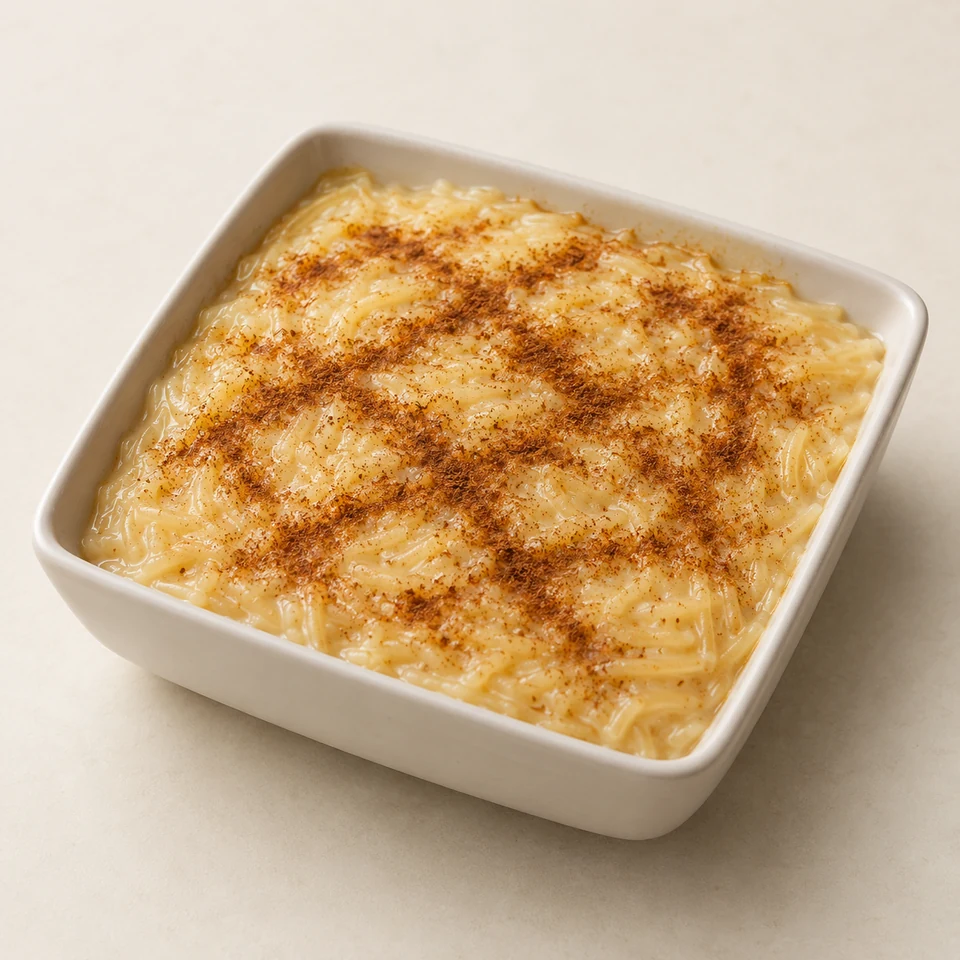
Sónia and Diogo’s aletria for Continente cooks broken pasta in a sweetened soy drink with cinnamon, lemon peel and butter, thickens it with egg yolks and decorates it with ground cinnamon.
About Aletria
Research draft based on the references below. These notes describe particular recipes and presentations; ingredient connections are still being reviewed.
Continente credits this creamy aletria to Sónia and Diogo of The Healthy Sins. It presents aletria as a Portuguese sweet associated with Christmas, while noting that it can be enjoyed throughout the year.
This particular recipe uses a soy plant drink, rather than a generic milk version. Cinnamon sticks, lemon peel, butter and white sugar are added to the drink and brought to a boil.
Broken aletria pasta is stirred into the boiling liquid and cooked in it. The source keeps the pasta in the same fragrant, sweetened mixture.
Beaten egg yolks are added in a thin stream while the mixture is stirred until thickened. The aletria is then poured into an earthenware bowl and its surface smoothed.
Ground cinnamon decorates the finished surface. The cinnamon sticks in the cooking liquid and the powdered finishing cinnamon are separate uses within this selected recipe.
Ingredients in Aletria
Recorded ingredient connections, rather than a complete recipe. Explore an ingredient for more detail.
- Wheat vermicellibase
- Cow Milkbase
- Sugarsweetener
- Lemon Peelseasoning
- Cinnamongarnish
- Eggbinder
Ingredient connections awaiting review. Versions and preparation vary.
Origins & food traditions
Explore the countries and cooking traditions associated with this dish. These connections do not establish a single birthplace or limit where the dish is eaten today.
Countries
Cuisines & regions
Associations in the cited sources
These describe source-specific cultural or geographic connections. Catalogue links may still need review.
- Cooking traditions
- The Healthy Sins Portuguese-style aletria
AI-generated illustration of one possible presentation. Recipes and ingredients vary; the image does not establish allergen content.