
DISH RESEARCH · Bread
Bogirsok
Also known as: Bo'g'irsoq
Bogirsok in an Uzbek recipe lead. Ipargul Islamova’s Bogirsok recipe on Chakchak mixes flour, salted water, melted margarine and yeast into a dough, rests it, then fries small pieces in a kazan. This profile selects her stated cottonseed-oil preference. A separate Tashkent Hayit baking report documents Bogirsok by name; Kyrgyz or Tajik boorsok formulas are not substituted.
About Bogirsok
Research draft based on the references below. These notes describe particular recipes and presentations; ingredient connections are still being reviewed.
Bogirsok in an Uzbek recipe lead. Ipargul Islamova’s Bogirsok recipe on Chakchak mixes flour, salted water, melted margarine and yeast into a dough, rests it, then fries small pieces in a kazan. This profile selects her stated cottonseed-oil preference. A separate Tashkent Hayit baking report documents Bogirsok by name; Kyrgyz or Tajik boorsok formulas are not substituted.
A personal dough choice, with finished taste unspecified. Ipargul says she changed from a crumbly, somewhat hard dough to an airier, doughnut-like dough after her parents’ complaints. That is her stated recipe choice. She does not describe the finished bread’s sweetness, saltiness or oil flavour, and those characteristics are not inferred from flour, margarine or frying.
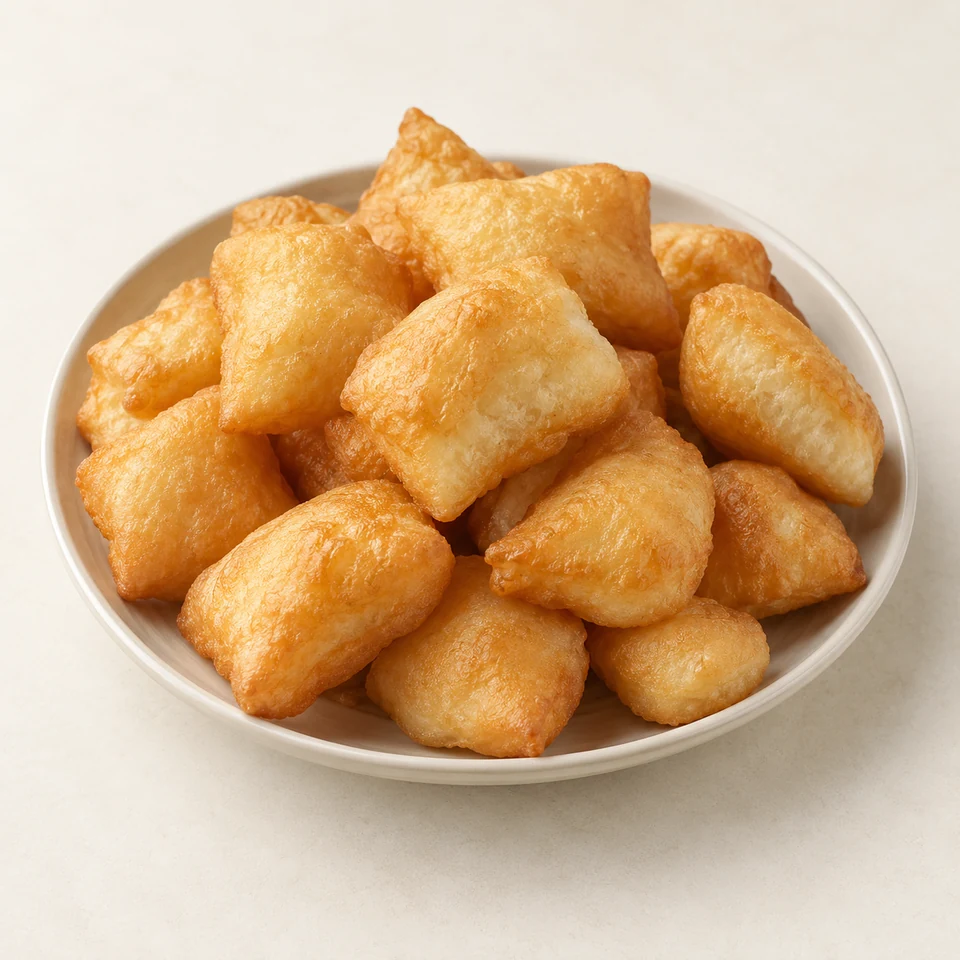
Small shell-shaped pieces, fried until golden. The rested dough is formed into ropes about 3–5 cm across and cut at roughly 3–5 cm intervals. Ipargul presses the pieces against a colander to form shell shapes, then fries and removes them when golden. The source gives this shape and colour, but no precise finished crust, interior texture or texture contrast.
Ingredients in Bogirsok
Unspecified flour, water, salt, yeast and melted margarine for the dough; the selected cottonseed oil for frying. The ingredient list omits frying oil, but Ipargul’s method explicitly calls for at least one litre. Jam and tomato juice are offered for serving, with no product or formula selected.
Source limits: Flour grain, yeast product, margarine full formula and oil refinement/declaration unspecified. No sugar, milk or egg is added from another regional dough recipe.
- flour[1]Recipe ingredientSource-specific formulation remains unresolved.
- Water[1]Recipe ingredient
- Salt[1]Recipe ingredient
- Yeast[1]Recipe ingredientSource-specific formulation remains unresolved.
- Margarine[1]Recipe ingredientSource-specific formulation remains unresolved.
- cottonseed oil[1]Cooking mediumSource-specific formulation remains unresolved.
These foods describe the cited recipe. Ask the kitchen about its version and any additional ingredients or handling.
Origins & food traditions
Explore the countries and cooking traditions associated with this dish. These connections do not establish a single birthplace or limit where the dish is eaten today.
The actual primary recipe is named Bogirsok and attributed to Ipargul Islamova. Zira’s own Tashkent report documents Bogirsok among baking sold for Hayit in 2020, supporting an Uzbek cultural setting without proving exclusive invention or that Ipargul’s household formula is universal.
Source limits: Exclusive invention, universal holiday use and a single national dough formula not established.
Countries
Cuisines & regions
Associations in the cited sources
These describe source-specific cultural or geographic connections. Catalogue links may still need review.
- Countries & places
- Uzbekistan
- Cooking traditions
- Uzbek Cuisine
AI-generated illustration of one possible presentation. Recipes and ingredients vary; the image does not establish allergen content.
Sources & references
Ipargul Islamova / Chakchak, “Богирсок”, 28 September 2015, selected yeast/margarine and cottonseed-oil branch. Zira, “Где в Ташкенте заказать выпечку на хайит”, 21 May 2020, separately documents named Bogirsok in Tashkent Hayit baking; its shop products are not formula evidence for Ipargul’s recipe.