
DISH RESEARCH · Other
Dinka Cuin
Also known as: Cuin, Dinka Thick Sorghum Porridge
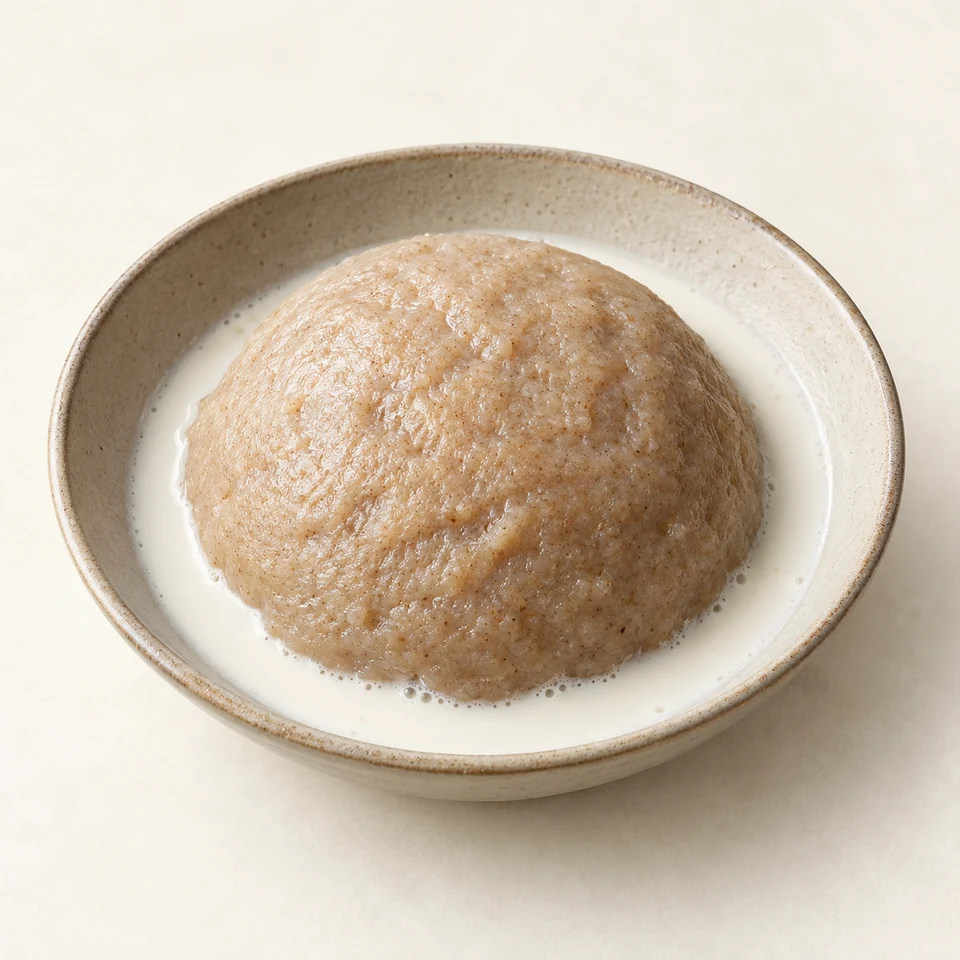
Elizabeth Nyibol describes Dinka cuin as a thick porridge cooked from kech flour and eaten with milk or another sauce in her account of South Sudanese grain traditions.
About Dinka Cuin
Research draft based on the references below. These notes describe particular recipes and presentations; ingredient connections are still being reviewed.
Elizabeth Nyibol describes Dinka cuin as a thick porridge cooked from kech flour and eaten with milk or another sauce in her account of South Sudanese grain traditions.
This profile follows Nyibol’s April 2020 briefing, Migrating with Seeds, centred on the experience of her aunt Mary Ajok Wetkwuot from Rumbek, Lakes State. Nyibol identifies kech as sorghum associated with Dinka communities in the former Lakes State. The particular described cuin uses kech flour; no different grain blend is silently substituted.
The account establishes cooking kech flour into thick porridge and serving it with milk or another sauce. It is not a measured cooking recipe: the liquid, ratio, stirring method, duration and finished portion shape are absent. Thick porridge is the sourced texture description, while sweetness, sourness, seasoning and aroma are not described for this specific preparation.
Nyibol places cuin in Aweir-piu, a ceremony introducing a bridegroom to the bride’s family. Her account separately names cuin amok hoong, a ghee-cooked thick porridge preferred for a newborn naming ceremony. That attributed version is distinct from the milk-or-sauce serving described for cuin. The raw seeds used in other ritual actions are not added to the porridge ingredient list.
Milk or another unspecified sauce accompanies the cuin in this account; it is not described as the porridge’s cooking liquid. No milk species, sauce formula, serving vessel or whole-dish temperature is given. The larger RVI report repeats the description within Lakes State Dinka grain traditions, without establishing one recipe for every Dinka community.
Before you order, ask which flour and grain variety the kitchen uses and what liquid, seasoning or fat goes into its porridge. Confirm whether it is ordinary cuin or the ghee-cooked naming-ceremony version, and check the milk or sauce served alongside. The source does not supply those product formulas or cooking details, so a local name alone cannot resolve the meal’s ingredients or allergy safety.
Ingredients in Dinka Cuin
Recorded ingredient connections, rather than a complete recipe. Explore an ingredient for more detail.
- Sorghum Flourbase
- Watercooking medium
- Milksauce
Ingredient connections awaiting review. Versions and preparation vary.
Origins & food traditions
Explore the countries and cooking traditions associated with this dish. These connections do not establish a single birthplace or limit where the dish is eaten today.
Countries
Cuisines & regions
Associations in the cited sources
These describe source-specific cultural or geographic connections. Catalogue links may still need review.
- Countries & places
- South Sudan
- Cooking traditions
- South Sudanese Cuisine
AI-generated illustration of one possible presentation. Recipes and ingredients vary; the image does not establish allergen content.