
DISH RESEARCH · Main dish
Giezm
Also known as: Tigrayan Giezm
Salted chopped sheep meat in an intestinal casing, cooked by steaming.
About Giezm
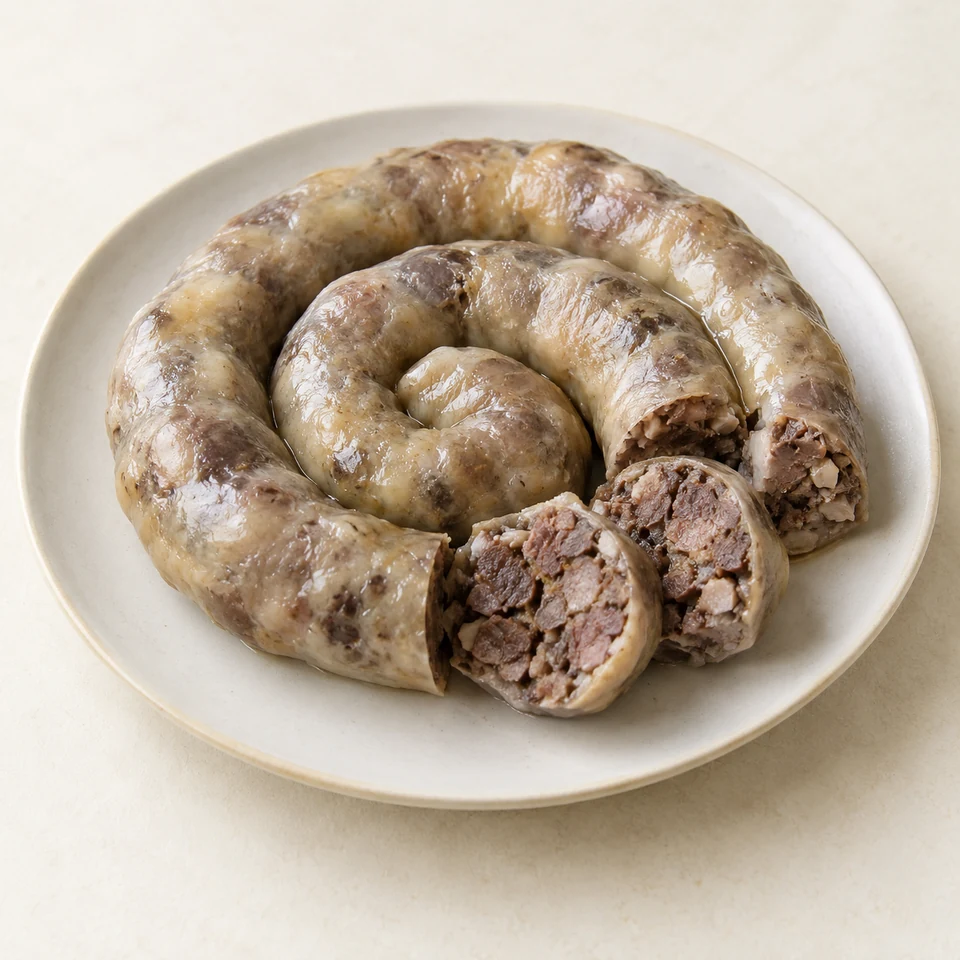
Giezm is a traditional meat preparation recorded among households in Eastern Tigray. The sheep version consists of chopped meat and table salt enclosed in a cleaned intestinal casing.
Its flavour centres on the sheep meat, with salt as the stated seasoning. The casing contains the filling and its meat juices within a compact preparation.
Small meat pieces form a packed filling inside a tubular casing. This meat-filled shape distinguishes Giezm on the plate; the surveyed communities associate it with celebrations, including the Erob district where it is especially popular.
Allergens in this recipe
Allergen details are not yet confirmed.
Ingredients vary by restaurant. Confirm your allergens with staff before ordering.
Ingredients in Giezm
Eastern Tigray household Giezm with sheep meat.
Ingredient details & uncertainties
Allergen information is incomplete. Unconfirmed details do not establish that an allergen is absent.
- Sheep meat: . First sheep branch selected before goat; animal age and exact cut are unspecified.
- Sheep intestinal casing: . The source calls the organ both colon and small bowel. Exact intestinal segment remains unresolved.
- Table salt:
- Water: . Used to wash the casing and for the boiling-water steaming process.
Origins & food traditions
A 2020 Ethiopian Biodiversity Institute household study records Giezm in Eastern Tigray and identifies it as a popular traditional celebration food in Erob.
Countries
- Ethiopia
- EthiopiaCatalogue link pending review
Cuisines & regions
- Eastern Tigray
- Tigrayan CuisineCatalogue link pending review
AI-generated illustration of one possible presentation. Recipes and ingredients vary; the image does not establish allergen content.