
Treat a recipe as a question map
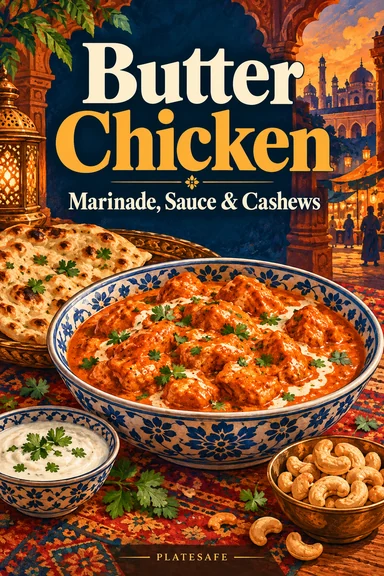
Food writer Swasthi Shreekanth’s published butter chicken recipe uses yoghurt in the chicken marinade, butter or ghee in the sauce, cashews or extra cream for body, and cream at the finish. The author describes alternatives within her own recipe. It shows why several components need checking; it does not establish what a restaurant uses. [1]
Ask for the kitchen’s recipe for the exact butter chicken on the menu. Is the chicken marinated? Is the sauce made in-house or from a bought-in base? Is the garnish added after plating? A dish name alone cannot answer any of these questions.
The India destination guide gives broader travel context. If a menu translation is uncertain, show staff your allergy card and seek a direct answer from the cook about the actual preparation.
The marinade can contain milk before the sauce does
The example recipe marinates chicken with yogurt and seasonings. Removing cream from the final sauce would not remove milk from chicken that has already been marinated in yoghurt. ASCIA’s milk guide lists yoghurt among milk-containing foods to avoid for confirmed cow’s milk protein allergy. [1, 2]
Ask whether the chicken arrives pre-marinated or is prepared on site. If it comes from a supplier, ask to see the current product ingredient statement. A request for ‘no cream’ should trigger a new question about the marinade, cooking fat and any premade base.
A substituted protein or tofu version may have a different marinade and sauce. Check that version as a separate recipe rather than borrowing the answer for chicken.
Cashews may be blended into a smooth sauce
In the cited recipe, cashews are blended with tomatoes to thicken the gravy, with cream offered as an alternative. They may not be visible in the served sauce. ASCIA identifies cashews as tree nuts and flags Indian dishes and restaurant food as categories that need checking. Neither source means every butter chicken contains cashew. [1, 3]
Ask whether this batch contains whole nuts, ground nuts, nut paste or a purchased sauce with nuts. If staff say they can leave out a garnish, ask whether nuts are already blended into the base. Ask whether a nut-free version would use a separate sauce and clean equipment.
If you avoid a particular tree nut, use the exact nut name. Other tree nuts and peanuts are separate questions according to your own clinical advice. [3]
Finish with fat, garnish and sides
The example recipe includes butter or ghee during cooking and cream in the sauce. Some meals also arrive with bread, rice, chutney or a dessert; these are not verified by the curry answer. [1, 2]
Ask which fat is used at the start and whether butter or cream is added at the end. Check the side dishes and any shared tandoor, pan, blender, ladle or service spoon that matters to your allergy. The restaurant questions guide can help you ask clearly.
If the restaurant cannot confirm its base sauce, marinade or handling, the meal remains unverified. Follow your own clinician’s action plan rather than relying on how the curry looks or tastes. [2, 3]
Sources & references
Source pages checked 18 October 2026. Confirm the exact current recipe and preparation with the venue.