
Name the seafood you need to avoid
ASCIA’s shellfish guide includes prawns, shrimp, crab, lobster and crayfish among its shellfish examples. It also lists molluscs such as oysters and squid. Australia and New Zealand’s current allergen rules declare crustaceans and molluscs separately, so a general ‘shellfish’ conversation may need a more precise follow-up. [1, 2]
Begin with the crustacean allergy guide and use your clinician’s exact avoidance instructions. A person may need to ask about one or several seafood groups. Do not infer from this page that all fish, crustaceans and molluscs are interchangeable diagnoses.
On applicable Australian packaged foods, look for the required crustacean declaration in the ingredient list and ‘Contains’ summary. In other markets, look up the local labelling format and read the actual pack. [2]
Paste and dried seafood can disappear into a recipe
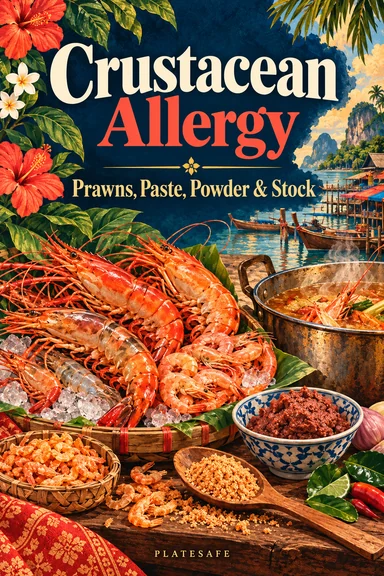
A restaurant might use shrimp paste, dried shrimp, prawn stock or a bought-in seasoning. The crustacean can be blended into a curry base or broth and leave no visible prawn on the plate. ASCIA flags Asian soups and dishes, seafood flavourings and prawn crackers as foods to check. [1]
Ask which paste, stock or seasoning is used and request the label or recipe for that batch. A menu listing only ‘coconut curry’ or ‘vegetables’ cannot tell you what is in a premade base. If a paste is changed to another brand, check the new one independently.
For a fried snack or noodle dish, ask about the flour or cracker mix as well as any dipping sauce. Removing a whole shrimp garnish does not remove shrimp powder or paste already cooked into the food.
Ask about the work area and the service step
ASCIA notes that fish-and-chip-shop food may be cooked in oil contaminated by shellfish. Other shared fryers, pans, ladles and tongs can make a recipe-only answer incomplete. Ask how the order is prepared and plated among crustacean-containing foods. [1]
A short question is: ‘Does this exact dish or any paste, stock, powder, sauce or garnish contain prawn, shrimp, crab, lobster or another crustacean? What equipment and utensils are used?’ Use the restaurant questions guide to record the answer.
If staff cannot confirm a bought-in ingredient or cross-contact control, leave the dish unverified. An allergy card can support a conversation, but it cannot certify a meal.
When a dish changes, start the questions again
A different paste, stock cube or supplier can change the allergen answer even if the menu name stays the same. If a cook offers a version without visible prawns, ask whether the base sauce and shared equipment also change. Keep the answer attached to the venue and date rather than treating it as a universal rule. [1]
On a packaged product, compare the current ingredient list with the ‘Contains’ declaration under the local rules. A precautionary ‘may contain’ statement addresses possible unintended presence rather than an intentionally added ingredient; FSANZ describes such statements as voluntary in Australia and New Zealand. [2]
If your clinician has advised avoiding both crustaceans and molluscs, ask both questions. If not, do not invent extra dietary restrictions from a broad ‘seafood’ label; seek advice for your own diagnosis.
Sources & references
Source pages checked 18 October 2026. Confirm the exact current recipe and preparation with the venue.