
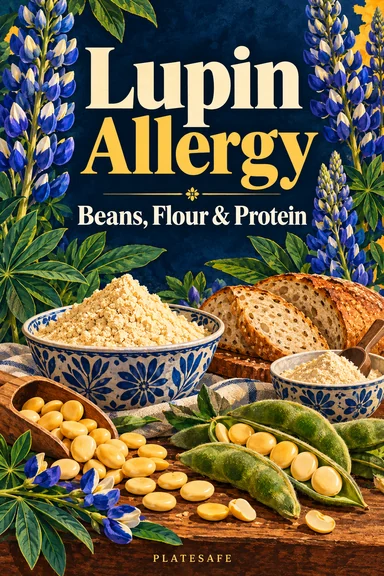
Recognise the ingredient, not just the bean
ASCIA describes lupin as a legume and lists lupin flour, flakes, lupine, lupini and Lupinus as names to recognise. Lupin protein isolates are also a documented ingredient form. A whole bean may be obvious; fine flour or a protein addition in a mix will not be. [1, 3]
The lupin ingredient record and lupin flour record explain how those terms relate. Use them to form a question, then read the current pack or ask the maker for the exact recipe.
For example, ask whether a bread contains lupin flour, whether a burger uses lupin protein, and whether a sauce has a prepared thickener. These are plausible uses described by ASCIA, not claims that every such food contains lupin. [1]
Where a hidden addition can change the answer
ASCIA points to breads, pastries, pasta, noodles, sauces and vegetarian products as foods to check. It also warns that some gluten-free or soy-free products may use lupin. A front-of-pack claim about a different allergen therefore gives no lupin clearance. [1]
In a bakery, ask about the flour blend, premix, topping and shared preparation. In a restaurant, ask for the actual ingredient list of a bought-in bun or plant-based patty. The restaurant questions guide helps turn a general concern into a question about this order.
A named recipe or an online menu may lag behind a supplier substitution. Recheck when the product, venue or ingredient brand changes.
Read the declaration in its market
In Australia and New Zealand, lupin is among the allergens that must be declared when present in applicable packaged foods. FSANZ's plain English rules help readers find the declared name, while unpackaged food requires information to be displayed or supplied on request. Check the current label or ask the food business; do not treat an old label photograph as the current recipe. [2]
Peanut and lupin are both legumes. ASCIA notes that some people with peanut allergy may also react to lupin, but this is not true for everyone. A peanut allergy does not diagnose lupin allergy, and tolerating peanut does not verify a lupin-containing product for a person with diagnosed lupin allergy. Follow the individual's specialist advice. [1]
If staff cannot confirm the flour blend, protein addition or food preparation, do not treat the meal as checked. The lupin allergy guide is a starting point for a fuller conversation.
Sources & references
Source pages checked 18 October 2026. Confirm the exact current recipe and preparation with the venue.