
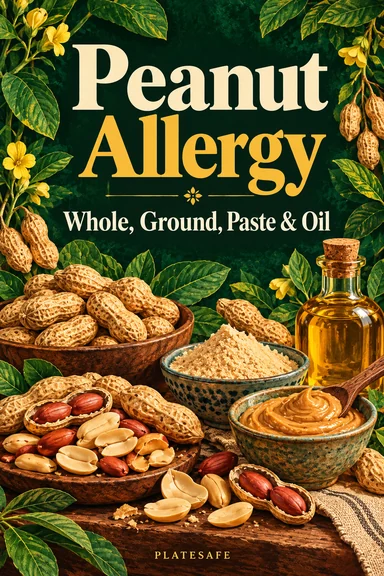
One food, several ingredient names
ASCIA’s peanut guide lists groundnuts, arachis oil, peanut flour, peanut butter, peanut sauce and satay among names and foods to recognise. Peanut flour and paste can disappear into a dressing, dessert or thick sauce, so a seed-free-looking plate gives no answer about its recipe. [1]
Use the existing peanut allergy guide as a starting point, then read the current pack or ask for the actual kitchen recipe. A general peanut ingredient record explains the connection; it does not verify a brand.
Ask about bought-in spice mixes and sauces as separate ingredients. ASCIA flags curry pastes, vegetarian foods, bakery items and takeaway meals as categories to check, not as products that always contain peanut. [1]
Oil requires a more exact answer
ASCIA says highly refined peanut oils are unlikely to cause a reaction for people with peanut allergy, while advising avoidance of cold-pressed, expressed or expelled peanut oil. A later ASCIA FAQ notes that it can be difficult to guarantee that all peanut protein was removed in a given oil and advises avoiding peanut oil in restaurants. These statements describe different circumstances; neither clears an unknown fryer for an individual. [1, 2]
If peanut oil is listed, ask the maker about its exact processing and your allergy specialist about your personal plan. For a restaurant, ask which oil is in the fryer or wok today, whether it is reused, and what foods have been cooked in it.
Do not assume ‘vegetable oil’ identifies its source or that a restaurant’s earlier answer still applies. An oil change, supplier change or shared fryer can change the answer.
Check sauce, equipment and serving separately
A kitchen may be able to leave off a peanut garnish while still using peanut paste in the sauce. Ask whether the base, marinade, dressing or dipping sauce contains peanut, then ask how the pan, utensils and service area are cleaned between orders. FARE describes allergen transfer through shared equipment, surfaces and oils. [1, 3]
Try: ‘I have a peanut allergy. Could you check this exact sauce and every prepared component for peanut, groundnut, peanut flour, paste or oil? What equipment will be used for my order?’ The restaurant questions guide can help keep the conversation specific.
Peanut is a legume, while tree nuts are a different group. ASCIA says most people with peanut allergy can tolerate other legumes, but someone may have more than one diagnosed allergy. Use the person’s individual plan, not a blanket rule about all beans or nuts. [1]
Sources & references
Source pages checked 18 October 2026. Confirm the exact current recipe and preparation with the venue.