
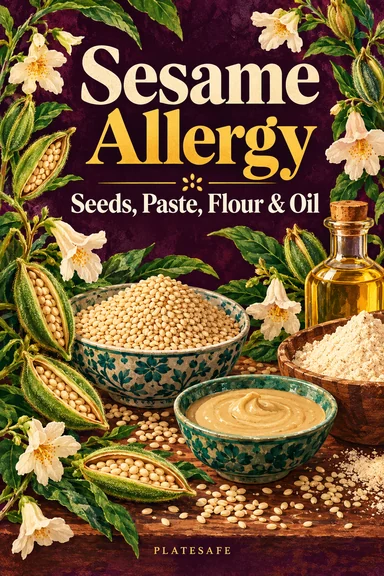
Start with sesame, then look for its other names
ASCIA's sesame dietary guide lists sesame seed, sesame oil, tahini or sesame paste, benne, gingelly, sim sim and til or teel among names and foods to recognise. Its list is a prompt for checking labels and recipes, not a complete dictionary of every language or product. [1]
When an unfamiliar name appears, check what plant or prepared ingredient it refers to. Platesafe's sesame ingredient record gives the starting point; tahini and sesame-tahini show why a paste may need its own question. A name on a research page is not the label of the jar you are holding.
Ask for the actual product name and ingredient statement when a restaurant uses a bought-in sauce or paste. If staff use a translated name, confirm the original packaging or recipe rather than relying on a menu translation alone.
Check the form, not just visible seeds
A food can contain sesame without a seed garnish. ASCIA identifies sesame oil and tahini as sesame-containing forms and advises people with confirmed sesame allergy to avoid all forms unless their clinical immunology or allergy specialist advises otherwise. [1]
Check sesame flour in baking mixes, sesame oil in dressings or finishing oil, and paste in dips. These ingredient pages explain forms in general; the current product label or kitchen recipe determines what is actually used.
Do not treat a restaurant's offer to remove a visible seed topping as an answer about paste in a sauce, oil in a dressing, or flour in a bread. Ask about each component before it is prepared.
Use food examples as questions, not predictions
ASCIA flags bakery foods, breads, dips, marinades, dressings, salads, Asian foods and Middle Eastern foods as categories to check. It specifically notes that sesame seed and oil can be less obvious in restaurant stir-fries and curries. These examples do not mean that every item in a category contains sesame. [1]
For a dip, ask whether hummus contains tahini in the version being served. For a sweet, ask whether halva is sesame-based and whether other nuts are present. Check dressings and bread separately even when they arrive with the same plate.
Record a specific answer with the restaurant, menu item and date. A remembered answer about another brand or another visit is a lead to recheck, not confirmation for today's product.
Read the full label in its market
Australia and New Zealand's plain English allergen labelling rules name sesame among allergens that must be declared when present and require a nearby 'contains' summary for applicable packaged foods. US FDA rules also require sesame to be identified as a major food allergen on covered packaged foods, though US labels can identify the source in the ingredient list or in a 'Contains' statement. These are market-specific rules, not a promise about every imported or unpackaged food. [2, 3]
Read the complete current pack, including the ingredient list and any allergen statement. Labels and formulations can change. For food prepared or sold without a package, ask the supplier for the relevant ingredient information rather than assuming the packaged-food layout will appear on a menu. [2]
A sesame allergy hub may help organise your questions. For personal avoidance decisions, use advice from your allergy specialist; this draft does not set an individual threshold or approve a product. [1]
Ask how shared food is handled
ASCIA identifies unpackaged bakery foods and some restaurants as settings where sesame cross-contact needs attention. Food Allergy Research & Education explains that allergens can transfer through utensils and surfaces and that cooking does not remove this concern. [1, 4]
Ask who will prepare and serve the order, whether clean equipment will be used, and how sesame toppings are kept from the food you receive. A quick removal of crumbs or seeds from a finished plate does not answer how the food was prepared. [4]
If staff cannot establish the ingredient or preparation details you need, leave the answer as unconfirmed and choose a different option.
A short question to take to the counter
You can ask: 'I have a sesame allergy. Could you check whether this exact item, its sauce, dressing, bread or topping uses sesame in any form—including tahini, oil or flour—and explain how it is prepared and served around sesame-containing foods?'
Use the restaurant question guide and an allergy card to keep the conversation clear. Neither is a certification of a meal. If you have a prescribed action plan or adrenaline injector, follow the instructions from your treating clinician. [1]
Sources & references
Source pages checked 18 October 2026. Confirm the exact current recipe and preparation with the venue.