
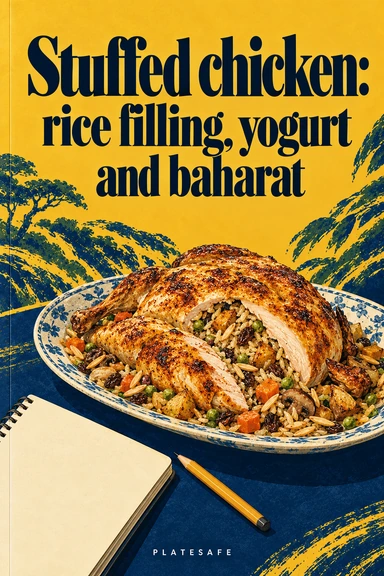
Choose a source before describing the stuffing
A stuffed chicken can carry much more information than the word “stuffed” suggests. Nawal Nasrallah’s dijaj mahshi account describes a method she learned from friends in Mosul in northern Iraq. She recalls seeing a plump bird at dinner and initially thinking it was a duck. The preparation puts filling into both the ordinary cavity and a space beneath the skin. That firsthand account gives this guide a specific recipe and setting, rather than a formula assembled from unrelated stuffed-chicken dishes. [1]
Her published quantities can be used for a large chicken or a small turkey. This article follows the chicken choice while preserving that distinction. The Platesafe dajaj mahshi guide provides a dish reference you can compare with a menu. If another kitchen uses only the cavity, a different grain or a different bird, record its version separately. Similar names and similar photographs are useful clues, but they do not prove that the ingredients or filling technique are identical.
Understand the rub, filling and coating as separate parts
The selected recipe has several ingredient phases. A vinegar, lemon and spice preparation is used for the bird; the filling combines cooked rice with vegetables, raisins, almonds and seasonings; yogurt coats the outside before roasting. Potatoes are browned before entering the filling. These roles matter when you ask what a served chicken contains. An ingredient used on the surface remains relevant even when it is not visible inside a carved portion, and a grain filling does not describe the rub or coating. [1]
For someone comparing options, a useful first question is whether the rice is a separate side or actually fills the bird. In Nasrallah’s method it is cooked first, folded with the vegetable mixture and placed in the cavity and under the skin. Her serving instruction also places remaining stuffing around the carved bird on a platter. The recipe therefore describes both an interior filling and a surrounding presentation. Ask whether a restaurant serves those same elements, because “with rice” can mean several different arrangements. [1]
Baharat is a component with its own recipe
The stuffing list offers two teaspoons of baharat or garam masala. Nasrallah links a separate page for her baharat formula and explains there that regional and household blends vary. That is important: the word baharat does not identify a universal ingredient list. Her linked mixture includes black pepper, cumin, coriander, allspice, cinnamon, cardamom, cloves, nutmeg, chilli and ginger, with optional turmeric and dried rose petals. It is a ten-spice base with two optional additions, rather than a blend limited to the first eight items on the page. [1, 2]
The blend’s complete batch and the amount entering the chicken are different quantities. The linked page makes a supply of ground spice mixture; the main chicken recipe uses only its stated small dose. Listing every component helps explain what that dose can contain, but it does not mean the whole spice batch enters one bird. The main filling also lists several spices separately. Those repeated names represent different recipe roles and amounts, rather than accidental duplication to delete. This is why a component recipe should retain its own source and attribution. [1, 2]
What the author directly says about flavour and texture
Nasrallah calls the stuffing aromatic and describes the skin as crisp and flavourful. These are useful finished sensory descriptions from the actual selected source. They give you a firmer basis for a menu decision than inventing a detailed taste from the spices alone. She also instructs that the rice grains should still be firm and separate before folding them into the filling. That rice description concerns a preparation stage; it should not automatically become a claim about the exact texture of every cooked serving after roasting. [1]
If crisp skin is a reason you are choosing the dish, ask how the restaurant prepares and serves it. A portion held under a sauce, a carved plate or a whole bird presented immediately can be described differently by that kitchen. Likewise, the presence of raisins and several spices does not establish an exact sweetness level or chilli intensity. You can ask whether the filling is mild, strongly spiced or noticeably sweet without claiming that all versions share one balance. Keep the author’s supported description and the restaurant’s reply distinct.
Ask about almonds, yogurt and the actual spice blend
The selected published chicken recipe contains almonds in the filling and yogurt in the coating. Those are concrete ingredient findings, not guesses based on a photograph. The Food Standards Agency lists almonds within its tree-nut examples and milk among its allergen categories. At a restaurant, ask what yogurt and other dairy ingredients are used, and whether nuts enter the filling, garnish or spice product. A kitchen’s substitution changes its version and needs its own explanation; the published recipe does not answer that question for it. [1, 3]
For a purchased baharat or garam masala, ask for the actual product or full ingredients rather than assuming it matches Nasrallah’s linked recipe. Her own discussion explicitly permits variation. Ask also about cooking fat, the pan coating and any accompanying sauce if these matter to your requirement. The useful distinction is between a known ingredient in this source and an unknown formulation in another kitchen. Naming a seasoning is the beginning of the enquiry, not a complete answer about everything that seasoning may contain. [2, 3]
Use the recipe as a conversation map
A practical order enquiry can follow the bird from outside to inside: “What is used to rub or coat it?”, “What is in the filling?”, “Which spice blend do you use?”, and “What is served around it?” This sequence is easier for the kitchen to answer than a broad question about whether stuffed chicken is suitable. If you have an allergy requirement, say which ingredient you need to discuss and ask to speak with someone who knows the preparation. Consumer advice also emphasizes equipment, handling and substitutions. [3]
This guide describes a particular attributed recipe; it does not certify a restaurant’s current dish or provide a universal cooking protocol. The historic source discussion is not needed to identify today’s ingredients, so the focus here remains on Nasrallah’s firsthand meal account and actual published components. Save the restaurant’s answer with the name of the dish and any agreed changes. That record helps preserve the differences between chicken and turkey, cavity-only and under-skin stuffing, and a house spice blend and the linked formula. [1, 2, 3]
Sources & references
Source pages checked 10 October 2026. Confirm the exact current recipe and preparation with the venue.