
Broken rice
Broken rice consists of rice grains fractured during milling and is commonly cooked as a grain or used in porridges and rice dishes.
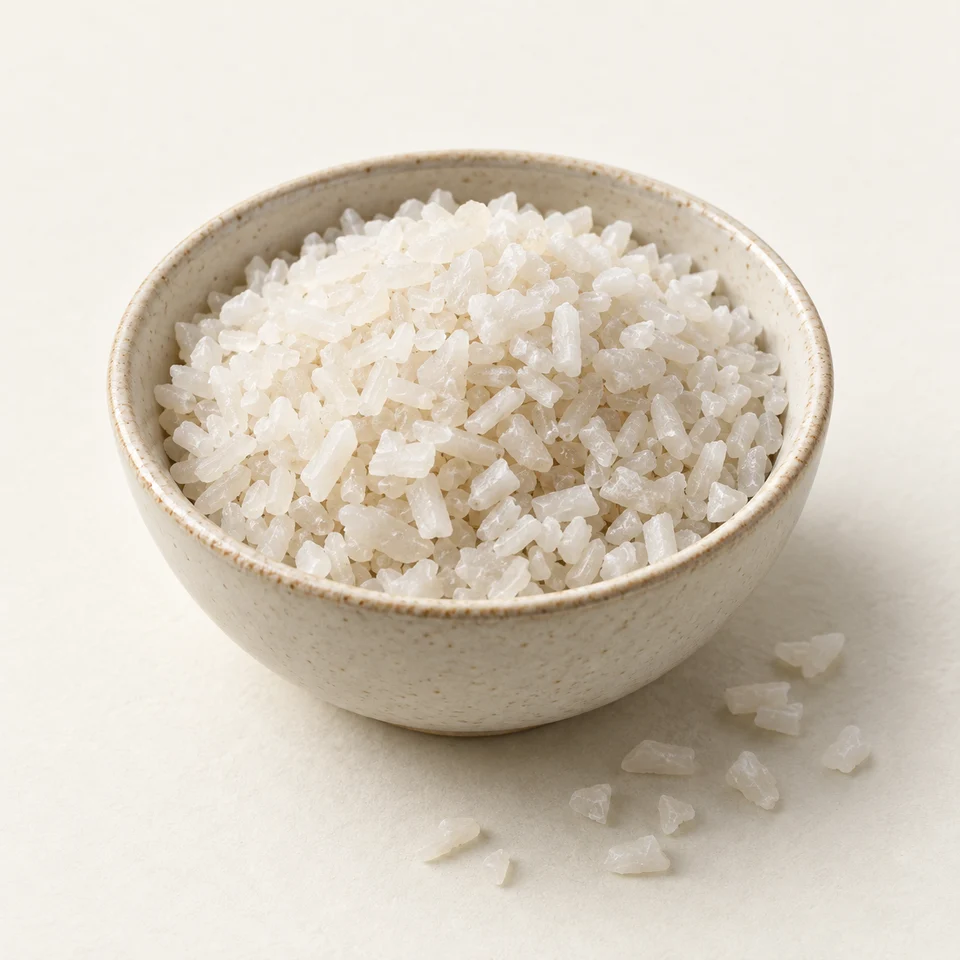
About Broken rice
Broken rice consists of rice kernels fractured during harvesting, handling, or milling, producing pieces smaller than whole grains. It remains rice rather than a separate grain variety and is used as a table grain, in porridges, and in regional rice dishes.
Its flavour follows the original rice, ranging from neutral and mildly sweet in polished white rice to nuttier in brown rice. The smaller pieces generally absorb water quickly and cook softer and more cohesively than intact grains, though the result depends on rice type and method.
Broken rice is sold dry as white or brown grain, with pieces ranging from coarse fragments to fine chips. Washing, soaking, and boiling can produce loose grains, clumps, or a creamy porridge. It may also be steamed, simmered, or combined with meat and vegetables.
- Ingredient type
- whole food
FOLLOW IT TO THE PLATE
Where will you meet it?
Explore the dishes that use this ingredient and their country and cuisine connections.
Explore linked dishesON A MENU OR LABEL
Find local names and written forms to help recognise this ingredient.
See local namesWhere broken rice appears
2 linked foodsFind foods to recognise by country and type. Recipes and products vary; these are recorded ingredient connections.
Showing 1–2 of 2
Main dishes

Rice dishes
Ingredient connections awaiting review · Coverage is still growing, including packaged snacks.
Name examples awaiting language review. Confirm the specific food or product.
Local names for broken rice
Names and romanised forms to recognise on menus and labels.
gạo tấm
tấm
碎米
suì mǐ
riz brisé
Broken rice
broken rice
arroz partido
arroz quebrado
riso spezzato
Bruchreis
breukrijst
ข้าวหัก
khâao hàk
អង្ករបាក់
âṅkâr băk
beras pecah
beras hancur
砕米
saimai
싸라기
ssaragi
أرز مكسور
aruzz maksūr
برنج شکسته
berenj-e shekasteh
kırık pirinç
mchele uliovunjika
saimai
Romanised form
âṅkâr băk
Romanised form
aruzz maksūr
Romanised form
ssaragi
Romanised form
suìmǐ
Romanised form
berenj-e shekasteh
Romanised form
khâao hàk
Romanised form
Available names only. Languages may be spoken in other countries; a name alone does not identify every ingredient in a dish.
Name not available yet.
A name in English has not been added for broken rice. Choose another language to see its available names.
Broken rice nutrition & diet
Broken rice nutritional value
Reference: Long grain rice
Per 100 g of 100 g edible portion in the named official reference form.
- Calories
- 355kcal
- Protein
- 7.8g
- Carbs
- 77.4g
- Fat
- 0.9g
Official national food-composition reference. The displayed food form is part of the estimate; cultivar, recipe, brand, processing and preparation can change values.
Portions & preparation
Broken rice should be identified as milled rice fragments rather than a distinct grain species. Record the dry grain or cooked portion, cooking water, and any oil or seasoning; porridge, steamed rice, and formed dishes can differ substantially in moisture and recipe composition.
Compare the right form: Match the reference to the relevant rice type and degree of breakage, measured dry or cooked, with porridge or dish additions excluded or specified.
Diet considerations
Broken rice is plant-derived cereal grain. Compatibility changes with meat stock, dairy, egg, seafood, sauces, or fried coatings. As porridge or cooked rice, its carbohydrate pattern depends strongly on portion size and dilution; mixed dishes may also contain legumes, vegetables, or other cereals.
AI-authored reading notes · Awaiting editorial review. Measured values, where available, have a separate source above.
Dietary compatibility
- VeganTypically compatible
- VegetarianTypically compatible
- PescatarianTypically compatible
- KetoDepends on the version
- PaleoTypically incompatible
- Low-carbDepends on the version
- HalalNot established
- KosherNot established
What these diet assessments mean
- Vegan · Typically compatible
- The plain ingredient profile is plant, fungal or mineral based. Added ingredients in a prepared product need a separate check.
- Vegetarian · Typically compatible
- The plain ingredient profile is plant, fungal or mineral based. Added ingredients in a prepared product need a separate check.
- Pescatarian · Typically compatible
- The plain ingredient profile is plant, fungal or mineral based. Added ingredients in a prepared product need a separate check.
- Keto · Depends on the version
- Compatibility depends on the portion and preparation. A sourced carbohydrate amount for a defined serving is not available.
- Paleo · Typically incompatible
- This profile falls outside the conventional paleo pattern used here (grains and pseudograins, legumes, dairy or refined sugar).
- Low-carb · Depends on the version
- Compatibility depends on the portion and preparation. A sourced carbohydrate amount for a defined serving is not available.
- Halal · Not established
- Sourcing, processing and any applicable certification have not been verified. A food name alone does not establish halal status.
- Kosher · Not established
- Sourcing, processing and any applicable certification have not been verified. A food name alone does not establish kosher status.
For the plain ingredient · Awaiting review. Diet compatibility is not allergy suitability or halal/kosher certification. Keto and low-carb depend on the portion.
AI-generated illustration for visual context. It does not identify a particular product or establish allergen content.
Sources & review
Nutrition reference: Taiwan FDA Nutrition Information Database — A05001 ↗. Values are scaled from 100 g of the recorded edible form. Individual portions have no assumed fixed weight.
Expanded overview, name examples and nutrition notes are database drafts awaiting editorial review. Numeric nutrition values, where shown, have their own source and food-form reference.
The ingredient description and dish connections come from the draft catalogue and may change after review.
Last recorded verification: .