
Corn Dough
Corn dough is a pliable dough made from processed corn, commonly used for tortillas, tamales, and related foods.
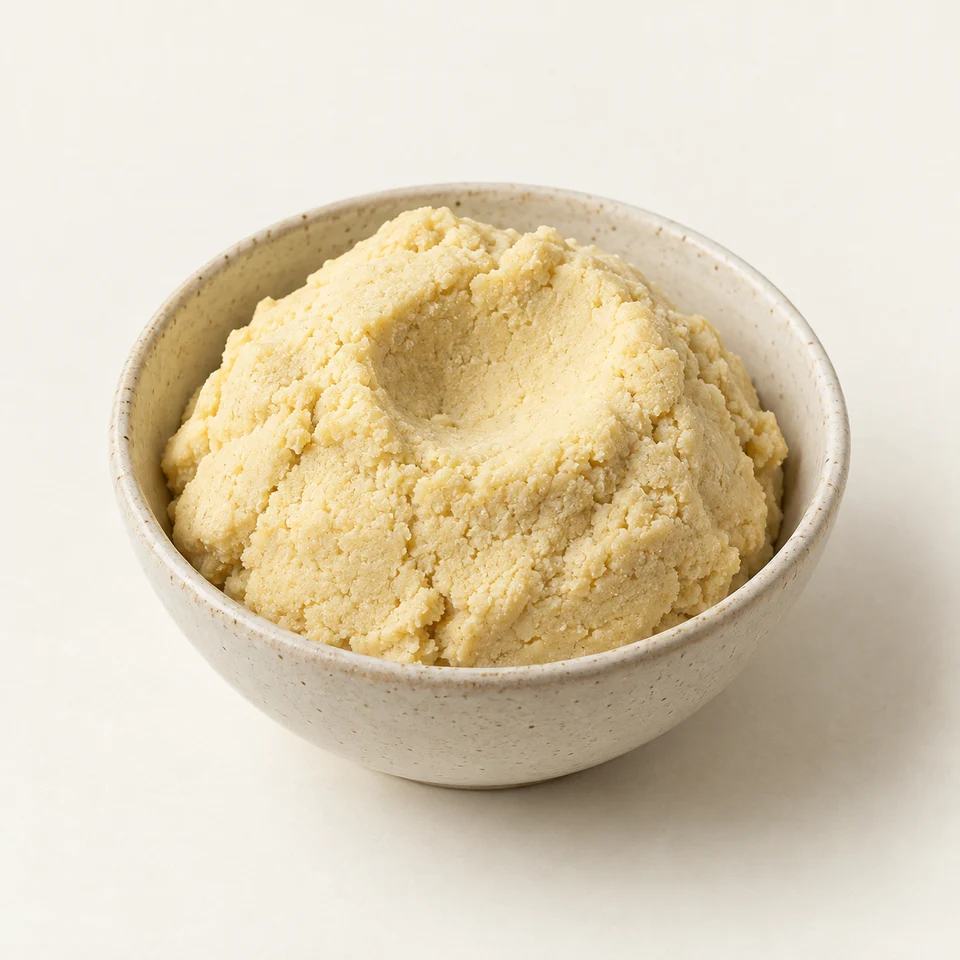
About Corn Dough
Corn dough is a pliable mixture made from processed corn and water, but the term does not identify one single standardized product. It is used for tortillas, tamales, arepas, dumplings, and related corn foods, with composition varying by culinary practice and product.
Its colour ranges from pale yellow to cream, and its texture is soft, moist, and moldable rather than pourable. Sensory properties depend on whether it is made from finely ground corn, reconstituted corn flour, or another corn-based meal, and whether salt or fat is included.
Fresh corn dough is usually sold or used moist, while dried mixes are rehydrated before shaping. The dough may be griddled, steamed, boiled, or baked; these methods set and firm it, while the exact result depends on the formulation and finished food.
- Ingredient type
- compound ingredient
Forms & related ingredients
FOLLOW IT TO THE PLATE
Where will you meet it?
Explore the dishes that use this ingredient and their country and cuisine connections.
Explore linked dishesON A MENU OR LABEL
Find local names and written forms to help recognise this ingredient.
See local namesWhere corn dough appears
1 linked foodsFind foods to recognise by country and type. Recipes and products vary; these are recorded ingredient connections.
Showing 1–1 of 1
Breads

Ingredient connections awaiting review · Coverage is still growing, including packaged snacks.
Name examples awaiting language review. Confirm the specific food or product.
Local names for corn dough
Names and romanised forms to recognise on menus and labels.
Corn Dough
corn dough
masa de maíz
pâte de maïs
Maisteig
impasto di mais
massa de milho
massa de blat de moro
maïsdeeg
ciasto kukurydziane
kukuřičné těsto
kukuričné cesto
kukoricatészta
aluat de porumb
кукурузное тесто
kukuruznoye testo
кукурудзяне тісто
kukurudziane tisto
mısır hamuru
عجينة الذرة
ʿajīnat adh-dhurra
玉米面团
yùmǐ miàntuán
トウモロコシ生地
tōmorokoshi kiji
옥수수 반죽
oksusu banjuk
मक्के का आटा
makke ka āṭā
ভুট্টার মণ্ড
bhuṭṭār maṇḍ
மக்காச்சோள மாவு
makkāccōḷa māvu
మొక్కజొన్న పిండి ముద్ద
mokkajonna piṇḍi mudda
adonan jagung
doh jagung
bột ngô nhào
donge la mahindi
tōmorokoshi kiji
Romanised form
makkāccōḷa māvu
Romanised form
ʿajīnat adh-dhurra
Romanised form
kukurudziane tisto
Romanised form
oksusu banjuk
Romanised form
bhuṭṭār maṇḍ
Romanised form
yùmǐ miàntuán
Romanised form
makke ka āṭā
Romanised form
kukuruznoye testo
Romanised form
mokkajonna piṇḍi mudda
Romanised form
Available names only. Languages may be spoken in other countries; a name alone does not identify every ingredient in a dish.
Name not available yet.
A name in English has not been added for corn dough. Choose another language to see its available names.
Corn Dough nutrition & diet
Corn Dough nutritional value
Product example: YELLOW CORN DOUGH FOR TORTILLAS (La Guadalupana Wholesale Co., Inc.)
Per 100 g of this specific product as recorded by USDA, per 100 g.
- Calories
- 100kcal
- Protein
- 3.3g
- Carbs
- 23.3g
- Fat
- 0.0g
A product-specific label example, not a generic average. Formulations can change; use the nutrition label on the product being eaten.
Portions & preparation
Identify whether the dough is fresh, refrigerated, frozen, or made from a dry mix before comparing entries. Record the edible dough amount separately from fillings, wrappers, sauces, and cooking fats. Preparation for tortillas or tamales can materially change the final serving composition.
Compare the right form: Match fresh processed-corn dough or a prepared dry-mix dough, including its treatment and moisture; the reference portion should exclude fillings and wrappers.
Diet considerations
Plain corn dough is plant-derived, but recipes may add lard, shortening, dairy, broth, or other animal ingredients. Wheat flour or cereal additives alter compatibility. As a corn-based dough, its carbohydrate pattern depends on the formed food, cooking method, and portion.
AI-authored reading notes · Awaiting editorial review. Measured values, where available, have a separate source above.
Dietary compatibility
- VeganTypically compatible
- VegetarianTypically compatible
- PescatarianTypically compatible
- KetoDepends on the version
- PaleoTypically incompatible
- Low-carbDepends on the version
- HalalNot established
- KosherNot established
What these diet assessments mean
- Vegan · Typically compatible
- The plain ingredient profile is plant, fungal or mineral based. Added ingredients in a prepared product need a separate check.
- Vegetarian · Typically compatible
- The plain ingredient profile is plant, fungal or mineral based. Added ingredients in a prepared product need a separate check.
- Pescatarian · Typically compatible
- The plain ingredient profile is plant, fungal or mineral based. Added ingredients in a prepared product need a separate check.
- Keto · Depends on the version
- Compatibility depends on the portion and preparation. A sourced carbohydrate amount for a defined serving is not available.
- Paleo · Typically incompatible
- This profile falls outside the conventional paleo pattern used here (grains and pseudograins, legumes, dairy or refined sugar).
- Low-carb · Depends on the version
- Compatibility depends on the portion and preparation. A sourced carbohydrate amount for a defined serving is not available.
- Halal · Not established
- Sourcing, processing and any applicable certification have not been verified. A food name alone does not establish halal status.
- Kosher · Not established
- Sourcing, processing and any applicable certification have not been verified. A food name alone does not establish kosher status.
For the plain ingredient · Awaiting review. Diet compatibility is not allergy suitability or halal/kosher certification. Keto and low-carb depend on the portion.
AI-generated illustration for visual context. It does not identify a particular product or establish allergen content.
Sources & review
Nutrition reference: USDA FoodData Central branded product — YELLOW CORN DOUGH FOR TORTILLAS ↗. Values are scaled from 100 g of the recorded edible form. Individual portions have no assumed fixed weight.
Expanded overview, name examples and nutrition notes are database drafts awaiting editorial review. Numeric nutrition values, where shown, have their own source and food-form reference.
The ingredient description and dish connections come from the draft catalogue and may change after review.
Last recorded verification: .