
Mochi
mochi
Chewy Japanese cake pounded from glutinous rice.
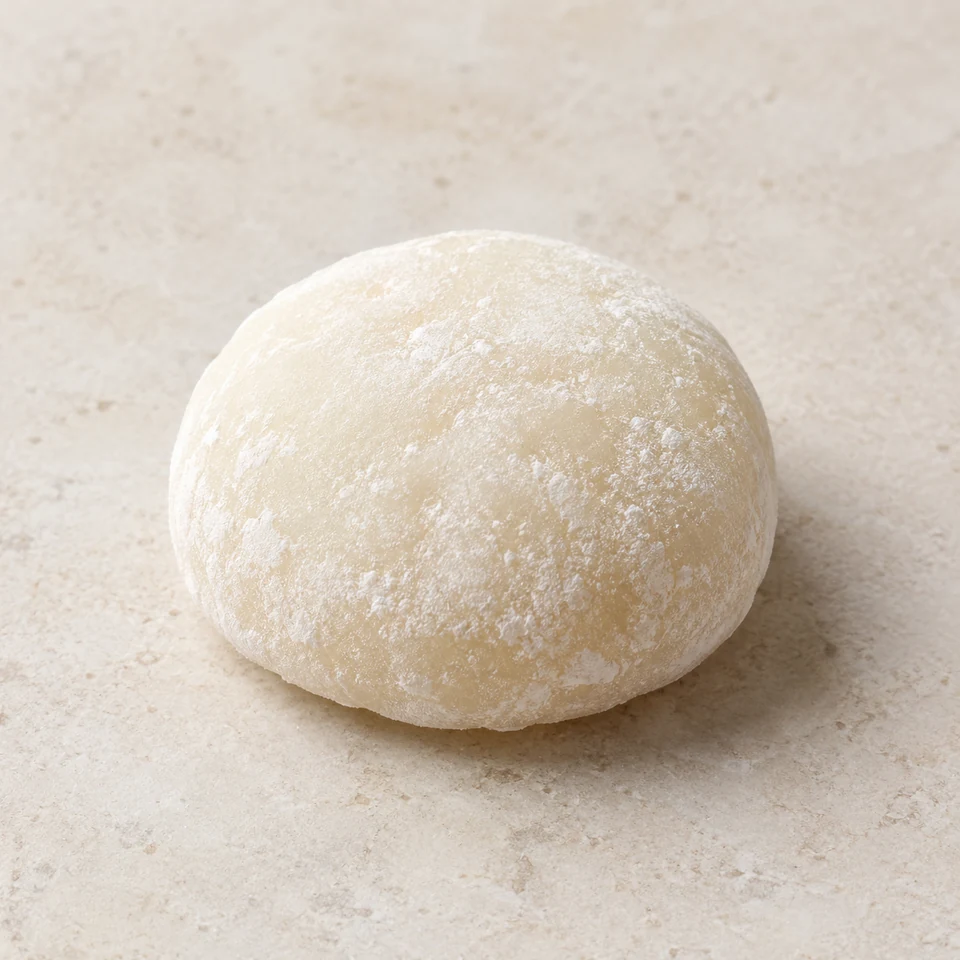
Mochi is a Japanese chewy cake made by pounding glutinous rice into a cohesive dough. It is eaten as a sweet or savoury food and may be served plain, filled, grilled, or incorporated into desserts and other dishes. The identity here is the rice-based cake, not a generic chewy confection.
Its flavour is mild and rice-like, allowing fillings, coatings, seasonings, or accompanying ingredients to provide much of the character. The texture is notably elastic, dense, and sticky when fresh, though the exact chew depends on preparation and handling. No particular filling, seasoning, or preparation is specified.
Mochi is commonly formed into small rounded or flattened pieces and may be sold fresh, packaged, frozen, or dried. Heating can soften it and make the interior more pliable, while grilling or toasting can create a firmer or lightly browned exterior. Drying produces a harder form that changes substantially when rehydrated or cooked.
FOLLOW IT TO THE PLATE
Explore the dishes that use this ingredient and their country and cuisine connections.
Explore linked dishesON A MENU OR LABEL
Find local names and written forms to help recognise this ingredient.
See local namesFind foods to recognise by country and type. Recipes and products vary; these are recorded ingredient connections.
No linked foods are available for this ingredient yet.
Name examples awaiting language review. Confirm the specific food or product.
Names and romanised forms to recognise on menus and labels.
Mochi
mochi
餅
mochi
Available names only. Languages may be spoken in other countries; a name alone does not identify every ingredient in a dish.
A name in English has not been added for mochi. Choose another language to see its available names.
Rice, glutinous rice products, rice cake — MEXT 01117
Per 100 g of the edible portion in the explicitly named reference form.
Per 100 g edible portion. Values use MEXT 2023 with March 2026 corrections; the English food name is matched by food code from the official English edition. Carbohydrate is total carbohydrate by difference. Values in parentheses in the source are estimates reported by MEXT. This reference does not cover other preparations or brands.
Establish whether mochi means plain pounded glutinous-rice cake or a filled, flavored, fried, or packaged confection. The edible wrapper and filling should be considered separately when present. Freshness, moisture, preparation, and serving size affect the form represented by a reference.
Compare the right form: Match plain or filled mochi made from glutinous rice, including filling, flavoring, cooking state, and edible portion; product labels matter.
Plain mochi is cereal-derived from glutinous rice; “glutinous” describes texture and does not identify a wheat ingredient. Compatibility changes with wheat-containing fillings, dairy, egg, gelatin, coatings, or shared recipe components. Sweetened, filled, fried, and savory versions should not be treated as plain rice cake.
AI-authored reading notes · Awaiting editorial review. Measured values, where available, have a separate source above.
For the plain ingredient · Awaiting review. Diet compatibility is not allergy suitability or halal/kosher certification. Keto and low-carb depend on the portion.
AI-generated illustration for visual context. It does not identify a particular product or establish allergen content.
Nutrition reference: MEXT Standard Tables of Food Composition in Japan, 2023 supplement, corrected March 2026 ↗. Values are scaled from 100 g of the recorded edible form. Individual portions have no assumed fixed weight.
Expanded overview, name examples and nutrition notes are database drafts awaiting editorial review. Numeric nutrition values, where shown, have their own source and food-form reference.
The ingredient description and dish connections come from the draft catalogue and may change after review.
Last recorded verification: .