Create allergy card
← Change your selections

YOUR PERSONALISED FOOD GUIDE · S1

Your wheat guide to Madagascar

Explore where wheat connect to local dishes and ingredients, recognise useful names and prepare questions for your next meal.

Your selectionsMadagascarAvoid wheat

Typical recipes and products vary. This guide supports your research and conversation; it does not verify an individual meal.

Understanding wheat in Madagascar

Read the complete meal: its base, sauces, stock, seasonings, coatings, garnishes and preparation. A familiar dish name does not establish the recipe used for the serving in front of you.

This guide keeps every selected food together. A recorded connection identifies something worth checking; a missing connection leaves the ingredient status unknown.

Three places your selected foods can appear

Part of the mealWhat to establish
The main ingredientsCheck the base, filling, noodles, dough, batter or primary protein against wheat.
What is mixed inCheck sauces, stocks, premixes, seasoning blends, marinades and bought-in components.
How it is preparedDiscuss shared oil, water, equipment, surfaces and utensils separately from recipe composition.

What the current records can establish

Your selectionTypeRecorded coverage
WheatAllergy or food groupNo local dish or ingredient connection is recorded. This is a coverage gap, not evidence of absence.

Relevant food context for Madagascar

Street snacks and sweet foods: Bananas and rice cakes are recorded as widely available street foods, while koba ravina has a recorded ground-peanut filling. Menakely and mofo akondro may involve wheat flour, with the latter commonly using it in batter. Ask about every flour, filling and topping, and whether a stall fries different snacks in the same oil.

Savoury filled dishes: Nem Malagasy can have seasoned fillings containing soy sauce, seafood or crustaceans, and some wrappers are wheat-based. Sambos are recorded with a wheat-flour pastry wrapper. Ask which filling is used today, what the wrapper contains, whether the dipping sauce is separate, and whether the same oil is used for other fried foods.

Wheat flour: Wheat flour is recorded in menakely dough, mofo akondro batter and sambos pastry, while some nem Malagasy wrappers may also use it. Ask whether flour is present in the wrapper, batter, filling or sauce, and whether frying equipment is shared.

Your starting question

TRY THIS

“I need to avoid wheat. Could you check the complete dish, including sauces, stock, seasonings and garnishes, and explain how it is prepared?”

Using this guide

Open Dishes to investigate recorded local connections, Ingredients & hidden sources to follow component paths, Shopping & labels for names and package checks, and Eating out for a complete kitchen conversation.

No recorded dish connection yet

The catalogue does not currently resolve a local dish for this selection. Keep every food on your list and ask about the actual recipe.

How to investigate another dish

Start with one exact menu item. Ask what its base, sauce, stock, seasoning, coating and garnish contain, then check the preparation against wheat.

A dish with no recorded connection is unresolved. Do not turn missing catalogue data into a claim that it excludes your selected foods.

No ingredient paths recorded yet

Keep the selected food explicit when checking a product or recipe. No catalogue path means the relationship has not been resolved.

Follow compound ingredients to the end

ComponentWhat to establish
Sauce, stock or dressingAsk for the complete recipe or original package, including sub-ingredients.
Premix or seasoningCheck every flour, flavouring, extract, carrier and blend component.
Replacement ingredientCheck the replacement against the complete avoidance list, not only the food it replaces.

Your selected foods in English

Use recorded words to recognise ingredients and ask a focused question. A word list is not a translated safety statement.

A repeatable package check

StepWhat to do
1 · Find every ingredient listRead the main product and every separate sauce, soup, topping or seasoning sachet.
2 · Check names and derivativesLook for wheat, recorded forms and compound ingredients.
3 · Read the wider declarationCheck allergen and shared-production wording, and confirm it applies to the exact product and size.
4 · Resolve uncertaintyAsk for the original package or contact the maker. If the information cannot be confirmed, keep the product unresolved.

Country-specific label context

Labelling rules vary by country and by how food is sold. A restaurant meal, loose bakery item or repacked food may not carry the same information as a sealed retail product.

Speak to the kitchen with one complete list

Conversation stepWhat to establish
Explain the complete listState wheat together and explain in your own words whether each is an allergy, intolerance or another requirement.
Check the recipeAsk a chef, manager or another person who can verify every ingredient and bought-in component.
Check preparationDiscuss shared oil, water, grills, utensils, work surfaces and substitutions where these matter to you.
Confirm the final orderRepeat the agreed version and ask who will verify it when the meal is served.

Shared preparation situations to ask about

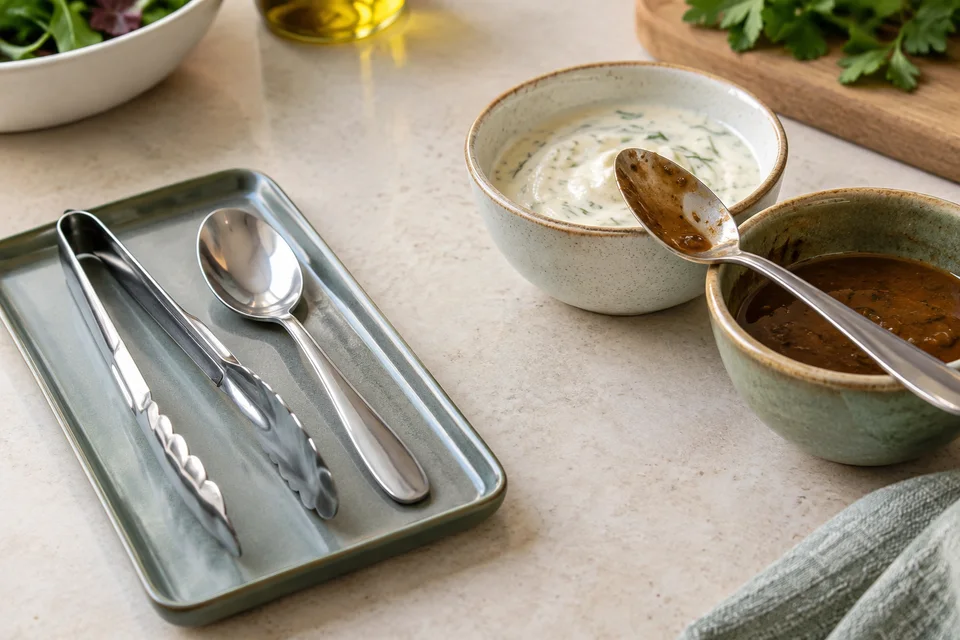
Kitchen utensils used during food preparation
01 · Potential risk

Utensils, surfaces and equipment

How gluten can transfer
Residue can move between recipes through knives, boards, pans, grills and serving tools.
What can address it
Ask what can be cleaned or kept separate for the actual serving.

A useful questionWhich equipment and utensils will be used for this order?

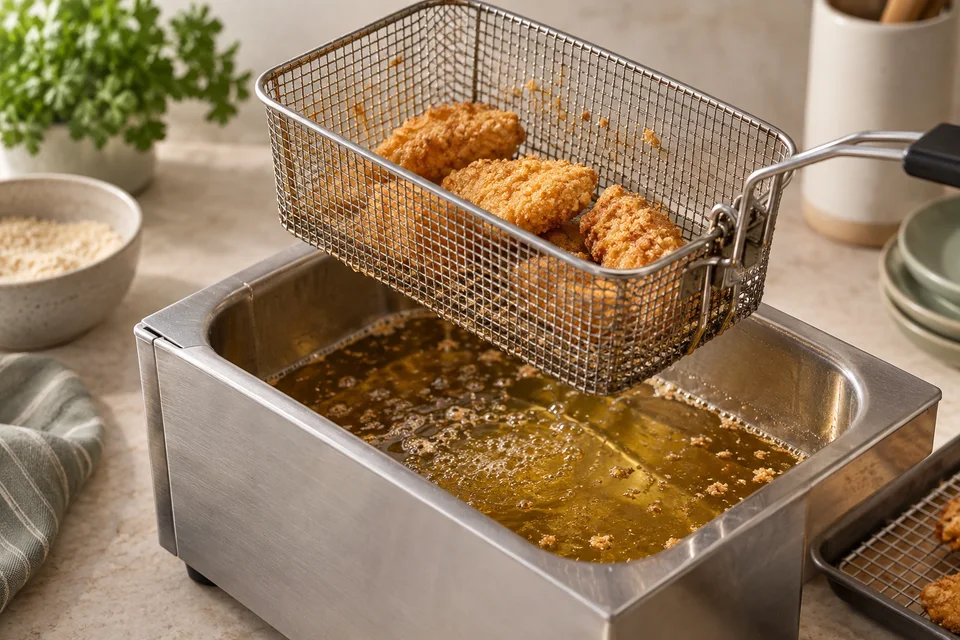
Food cooking in shared frying oil
02 · Potential risk

Shared oil and cooking water

How gluten can transfer
A fryer, pot or cooking water can be used for several foods even when the recipes are different.
What can address it
Ask what else is cooked in the same oil or water and whether a separate method is available.

A useful questionWhat else is cooked in this oil or water?

Ingredients stored in a working kitchen
03 · Potential risk

Premade and bought-in components

How gluten can transfer
Sauces, stocks, dressings, garnishes and premixes may arrive already combined.
What can address it
Ask staff to check the original package or supplier information instead of guessing from the product name.

A useful questionCan we check the ingredients in the prepared sauce, stock or mix?

A useful sentence to show staff

TRY THIS

“I need to avoid wheat. Could you check every ingredient in this dish, including sauces, stock, seasonings and garnishes, and tell me how it will be prepared?”

If the venue cannot confirm it

An honest inability to confirm is useful information. Ask which other item the kitchen can explain completely, or choose another venue or packaged product whose ingredients you can verify.

SOURCES & COVERAGE

What supports this guide.

The catalogue could not be reached for this result. The guide preserves every selection and the reusable checking process, but no ingredient or dish relationship can be confirmed.