
BEFORE YOUR FIRST MEAL
Navigating food allergies in Angola
Angolan food commonly brings together fish, cassava products, spicy stews and tropical produce. Recorded dishes vary from grilled mufete with sweet potatoes, onions, peppers and tomatoes to fish stews and peanut-based preparations. Ask about the complete recipe rather than relying on a dish name, especially where sauces, sides, seasonings or shared cooking equipment may change the ingredients.
What to know first
Fish may be central
Mufete, maboke, moamba de peixe, calulu de peixe and several other recorded dishes use fish as the defining or principal protein. Ask which species is present.
Peanut appears in named specialities
Ginguba means peanut, and it characterises moamba de ginguba. Peanut also defines kitaba and doce de ginguba, while kizaca may use peanut butter sauce.
Explain the whole recipe
In Portuguese, describe the ingredient to avoid and ask about the stew, sauce, stock, side, garnish, oil and shared utensils, rather than naming only the dish.
Check preparation separately
For grilled or steamed fish, ask whether the grill, wrapping, pan, oil, water and serving utensils are shared, and whether toppings are added after cooking.
Read complete labels
For packaged vinegar, wine, oil or other ingredients, read the full ingredient list each time. Do not assume that Angola has a national labelling rule.
Understanding the food
Cassava, maize, beans, leafy greens, fish, chicken and palm products meet Portuguese-speaking Atlantic influences. Funge is the familiar anchor, but its grain and its companions change with region and household.
The staple shifts as the landscape changes.
| Area | Recurring staple | Food context |
|---|---|---|
| North & northeast | Cassava | Cassava flour worked into funge beside sauces and stews |
| Central highlands | Maize | Maize meal, beans and highland crops |
| Dry south | Millet & sorghum | Drought-adapted grains alongside livestock and local produce |
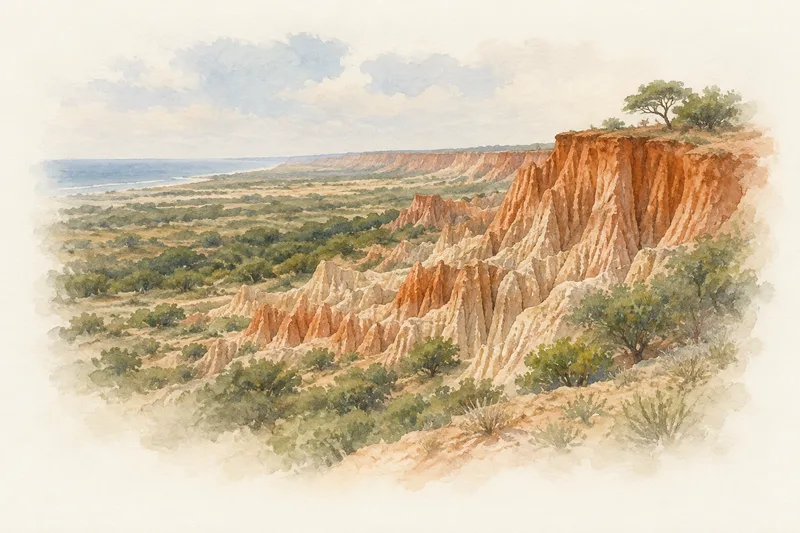
| Atlantic coast | Fish & seafood | Fresh and dried fish in grills, stews and calulu |
Angola does not have one universal starch. FAO reporting identifies cassava as especially important in the north and northeast, maize in the central highlands, and millet and sorghum in the drier south. The bowl beside the stew therefore tells a regional story. [9]
Funge is a method as well as a name. FAO places Angolan funge in a wider family of stiff preparations made by stirring cassava flour into hot water. In Angola, maize versions also exist, so the grain should not be assumed from the name alone. [8][9]
Sauces bring depth to the mild staple.
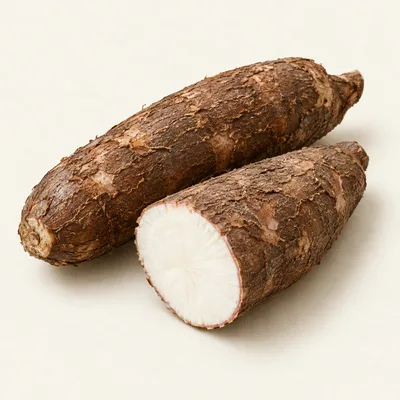 ROOTCassava
Flour for funge and leaves for savoury dishes
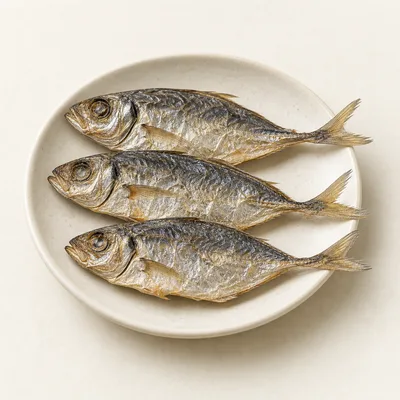 FISHDried fish
A concentrated component of calulu and other stews
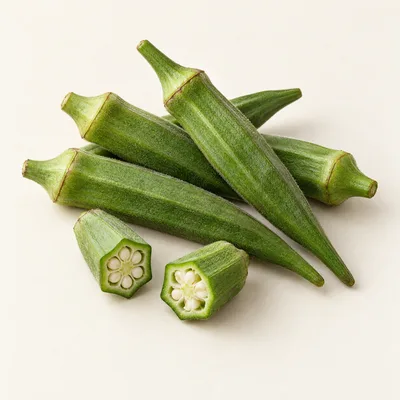 VEGETABLEOkra
Texture and body in slow-cooked sauces
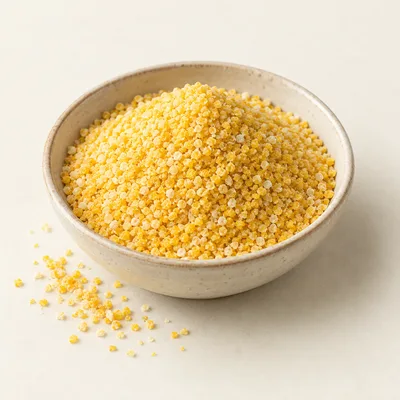 GRAINCornmeal
The base for maize funge and pirão
Three names open the door to the repertoire. Angola’s official tourism platform foregrounds muamba de galinha, calulu and funge. Government cultural material adds kizaca and other dishes, showing how chicken, fish, cassava leaves and sauces accompany the staple. [7][10]
Cassava is used in more than one form. Its flour can become funge, while its leaves appear in kizaca. Fish may be fresh, dried or combined in a stew; palm products, groundnuts, beans and okra add richness and texture in different preparations. [8][10]
Look at the relationship between bowl and pot.
The meal is often assembled through accompaniment. A relatively mild funge takes on the flavour of calulu, muamba, beans or another sauce served with it. Ask what the funge is made from and what has been cooked into the accompanying pot; neither half tells the whole story alone. [7][8]
Luanda and the coast add another dining lens. Urban restaurants and informal food businesses bring regional cooking into the capital alongside grilled fish, Portuguese-influenced dishes and contemporary interpretations. The named dish remains a starting point because household and restaurant versions can emphasise different sauces and staples. [7][10]
Food-culture sources checked .
Grilled fish and assembled sides
One version of mufete is grilled fish served with boiled sweet potatoes and finely chopped raw onions, peppers and tomatoes; beans may be added. Ask whether the fish is brushed with oil, rubbed with lemon or pepper, finished with sauce, or placed on a shared grill. Confirm that each side and topping is part of the same order, not an assumed accompaniment.
Fish stews and changing mixtures
Caldeirada de peixe is a fish-defined stew, and some variations add crustaceans. Calulu de peixe and moamba de peixe also centre fish, while local cooking includes spicy stews. Ask about every seafood item, thickener, stock, spice mixture and finishing oil rather than treating the stew name as a complete recipe.
Cassava and maize preparations
Pirão or funge is described as a polenta made from corn meal and cassava roots, and may be served as a main meal in homes during Christmas. Ask whether the portion is made from both ingredients, what liquid is used, and whether the spoon, pot or serving utensil is shared with a stew or other dish.
Peanut sauces and wrapped fish
Moamba de ginguba has peanut as its characteristic sauce base, while kizaca may contain peanut butter sauce. Maboke is fish wrapped and steamed. Ask whether a sauce is mixed into the dish or served separately, what the wrapping touches, and whether fish is prepared in the same steamer or pan as other foods.
Ingredients worth recognising
Start with these ingredients, then follow their names and recorded food connections. Check the recipe and product actually used.
Vinegar
Vinegar may appear in marinades, dressings or chopped vegetable accompaniments. The recorded formulation is unspecified: ask what type it is, whether it is malt-based, and whether the bottle or prepared sauce has a complete ingredient list. Check especially when a topping is made in advance.
Fish
Fish may be grilled, steamed in a wrapping, salted, or used in stews such as mufete, maboke and moamba de peixe. Ask for the species and whether stock, sauce, oil or seafood was added during cooking or at serving.
Salted fish
Salted fish is an intrinsic ingredient of makayabu com feijão, although the species is unspecified. Ask whether it was soaked or combined with another fish, and check the complete preparation for stock, seasoning, oil and shared serving utensils.
Egg
Some enriched Angolan cocada preparations use egg yolk. Ask whether the cocada is the enriched version, whether egg is mixed through the sweet, and whether it was prepared with other batches or utensils. Do not infer the recipe from the name alone.
Peanut
Peanut is the defining base of doce de ginguba and kitaba, and the characteristic sauce ingredient of moamba de ginguba. Ask whether peanut is whole, ground or made into a sauce, and whether toppings or utensils are shared.
Vegetable Oil
Vegetable oil may be used in grilling, stews, sauces or frying, but its plant origin may be unspecified. Ask what oil is used, whether it is a blend, and whether the pan, fryer or oil is shared with other foods.
How food labelling works
A current, country-specific allergen-labelling summary for Angola has not yet been verified for this guide. Do not transfer the list of regulated allergens or restaurant disclosure rules from your home country to this one.
Read the complete ingredients on the actual package and keep any local-language sticker with the original label. For imported products, compare the information on that pack rather than a photograph of the brand sold elsewhere. Ask the manufacturer or seller to clarify an unfamiliar term.
For loose food or meals prepared to order, ask who can check the recipe and the labels on bought-in ingredients. Explain every food you avoid, including ingredients outside familiar allergy groups; a short symbol chart may not cover your list.
Language and communication
Portuguese is Angola’s official language and is described as standard European Portuguese. Prepare a written explanation in Portuguese naming the ingredient to avoid and asking for the complete recipe, including sauce, stock, sides, toppings and preparation surfaces.
Umbundu, Kikongo and Kimbundu are also commonly spoken, although Portuguese use has grown among younger Angolans. Where communication is difficult, provide the same written explanation and ask a local speaker to confirm the full dish and preparation.
Eating in different settings
Beach restaurant or fish counter
When ordering mufete or another grilled fish, ask which species is available, what has been added before grilling, whether the grill and utensils are shared, and whether onions, peppers, tomatoes, beans or sauce are served separately.
Stew restaurant
For calulu, caldeirada or moamba, ask for every fish or crustacean in the pot, the stock or cooking liquid, any peanut sauce, and the ingredients of the side. Confirm whether a topping is added after cooking.
Market or informal food stall
If buying salted fish, cocada, kitaba or doce de ginguba, ask the seller to identify every ingredient and explain whether the item was made beside peanut, egg, fish or other batches. Request a sealed, labelled product where available.
Accommodation kitchen or shared meal
Before accepting funge, pirão or a home-style fish dish, ask who prepared it, what pot and spoon were used, and whether the stew, side and sauce share cooking water or utensils with other foods.
Before you travel
Review your personal plan
Discuss your travel plans with your clinician and keep your prescribed medicines and emergency instructions accessible. Tell companions where these are and how to follow your plan.
Check your medicines before entering Angola
The legal status and regulation of medicines prescribed or bought in the UK may differ in Angola. Before travel, ask the relevant Angolan authority about current medicine-import requirements and review TravelHealthPro guidance on travelling with medicines.
Make the first meals easier to organise
Contact your accommodation and transport providers in advance. Save your written food list, menu questions and destination address offline. Check entry restrictions before packing backup food, and plan how you will check meals during arrival and onward journeys.
Plan access to medical help
Private clinics in Luanda can charge high fees in advance, while healthcare outside Luanda is very limited. Arrange adequate travel health insurance and accessible funds, ask your insurer whether your policy covers local treatment and repatriation, and review the FCDO’s list of medical providers in Angola.
Emergency resources
For a suspected severe allergic reaction, follow your prescribed emergency plan and seek urgent medical help. Give your exact location clearly.
Ambulance and urgent medical help
Call 112 and ask for an ambulance.
Explore next
Your allergy in Angola
Choose a food concern for the country notes and questions relevant to it.
Dishes in Angola
Follow the ingredients and cuisine connections in individual dish records.
Your own food list
Combine allergy groups and individual ingredients in one guide, with local names where recorded.
Allergy cards
Prepare the information you need to explain your food requirements.
FAQs, sources and review dates
Could mufete contain something besides grilled fish?
Yes. The described plate includes boiled sweet potatoes and a mixture of raw onions, peppers and tomatoes, and beans may be added. Ask whether the fish was rubbed with lemon and pepper, what oil was used, and whether any sauce or shared grill was involved.
How should I approach a peanut-free order involving kizaca?
Ask whether the kizaca includes peanut butter sauce, whether that sauce is mixed into the dish or added separately, and whether the pan, spoon and serving area are shared. A dish name alone cannot establish the recipe or preparation conditions.
What should I ask about coconut-based cocada if coconut is my concern?
Ask for the complete cocada recipe and whether egg yolk is used in that preparation. Also ask about shared utensils and nearby batches. Coconut is not classified here into a legal or botanical allergen group, so do not rely on a label such as ‘cocada’.
Sources checked: . This researched draft is awaiting editorial review. Practical questions apply the sources below to local food settings; they do not confirm any individual meal's ingredients or preparation.
Sources & references (10)
- FCDO · Angola health and medical assistance
Emergency contact details, local healthcare and medicine guidance. UK-specific eligibility does not apply to every visitor.
- Wikivoyage contributors · Angola
Community-edited food and dining context, checked against the recorded food examples. This is not an allergy or medical authority. Brief food-context adaptations; CC BY-SA 4.0, https://creativecommons.org/licenses/by-sa/4.0/.
- FARE · Dining out
General recipe and preparation questions, applied here to country-specific food examples.
- FARE · Travelling with food allergies
General preparation, written communication and access to prescribed medicines. Not country-specific import permission.
- PlateSafe · Angola recorded food connections
Existing draft dish and ingredient records, used as examples to investigate. These are not independently verified recipes or suitability assessments.
- Unicode CLDR · Territory language data
Language suggestions. Regional language needs must be confirmed with the particular food provider.
- Visit Angola — Cultural heritage and gastronomy
- FAO — Traditional processing and use of cassava in Africa
- FAO/WFP — Angola crop and food assessment
- Angolan Government cultural magazine — Angolan gastronomy