
BEFORE YOUR FIRST MEAL
Navigating food allergies in Egypt
Egyptian meals range from slow-cooked fava beans and fried ta’ameya to fish, filled breads, pastries and rice-and-pasta dishes. Recipes and finishing ingredients can vary, so a familiar dish name is only a starting point. Check the complete preparation, including bread, stock, sauce, garnish, frying oil and shared utensils, and explain your requirements before ordering.
What to know first
Beans and fritters have different recipes
Ful medames is based on slow-cooked fava beans, while Egyptian ta’ameya is made from ground fava beans; ask about toppings, sauces, bread and frying arrangements separately.
Koshari is a mixed dish
Koshari commonly combines macaroni, lentils, rice and chickpeas with tomato sauce and fried onions. Ask whether every component, including the pasta and sauce, uses the expected ingredients.
Explain the whole preparation
Ask whether stock, sauce, bread, garnish, cooking fat and shared utensils are involved, rather than relying on a dish name or a verbal description such as vegetarian.
Pastries need several checks
For basbousa, kunafa, feteer meshaltet or kahk, ask about flour, semolina, butter or ghee, egg, dairy fillings and nut or sesame toppings individually.
Read complete ingredient lists
When buying packaged food, read the complete ingredient list for the exact product. Do not assume a familiar Egyptian food name or dietary description establishes its contents.
Understanding the food
Bread, fava beans, lentils, rice, onions, greens, dates and preserved vegetables support a largely plant-rich everyday cuisine, while the Mediterranean and Red Sea add seafood and Upper Egypt and oases maintain distinct breads, grains and meat traditions. Cairo’s street food is only one layer.
River, delta, coasts and desert settlements support different meals.
| Region or setting | Food landscape | Examples to explore |
|---|---|---|
| Cairo & Nile Delta | Street food, legumes, rice, bread and market vegetables | Koshari, ful, ta‘ameya, hawawshi and stuffed vegetables |
| Alexandria & Mediterranean | Fish markets, rice, tomato and coastal exchange | Grilled fish, seafood stews and sayadeya |
| Upper Egypt & Nubia | Hot-climate grains, bread, dried foods and river produce | Sun breads, lentil dishes, okra stews and local spice blends |
| Sinai, Red Sea & oases | Bedouin hospitality, dates, pastoral foods and seafood | Flatbreads, slow-cooked meats, dates and Red Sea fish |
Official tourism guidance foregrounds ancient continuity and everyday affordability. Legumes, grains, vegetables and bread create filling dishes eaten across social settings, while festive meals add meat, elaborate pastries and long-cooked preparations. [7][8]
Regional food is tied to very different water systems. The Nile valley and delta sustain intensive agriculture; Alexandria faces the Mediterranean; Red Sea towns depend on different fisheries; oases organise crops around springs and date palms. [8][10]
Beans and bread are central, not supporting characters.
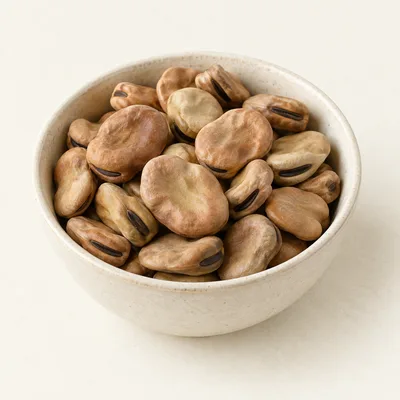 PULSEFava bean
Ful medames, ta‘ameya and home cooking
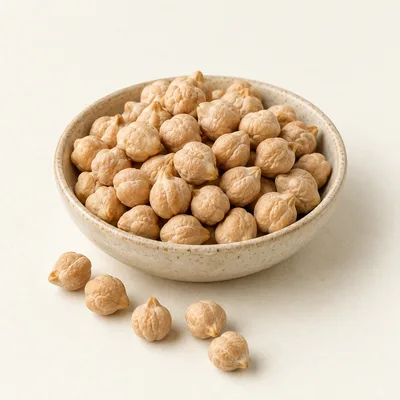 PULSEChickpea
Hummus, stews and koshari garnish
Baladi bread, pastries and festive baking
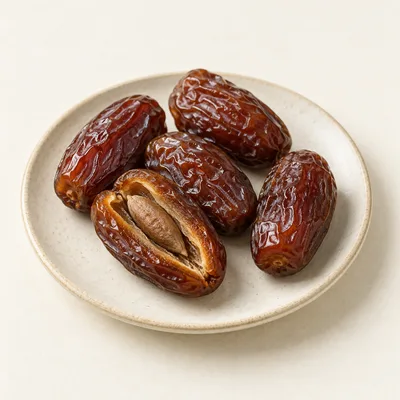 OASIS FRUITDate
Fresh, dried, stuffed or baked into sweets
Koshari is an urban system of textures. Rice, lentils and pasta are layered with chickpeas, tomato sauce, vinegar-garlic sauce and crisp onions. Each topping changes the balance, so the condiment station is part of the dish. [7]
Ta‘ameya is characteristically bean-based. Egyptian falafel is commonly made from split fava beans with herbs rather than chickpeas, producing a vivid green interior and a distinct texture. [7][8]
Specialist stalls make complex dishes easy to understand.
A short menu often signals repetition and expertise. Ful and ta‘ameya counters, koshari shops, grill houses, fish restaurants and pastry shops each reveal one preparation system more clearly than an all-purpose tourist menu. [7]
Hospitality and timing shape what is available. Breakfast favours beans, eggs and bread; the main cooked meal may come later; Ramadan evenings bring soups, juices, dates and sweets into a different public rhythm. [9][8]
Food-culture sources checked .
Beans, grains and mixed plates
Ful medames may be served with cumin, oil, parsley, onion, garlic, lemon juice, hot pepper and Egyptian or Levantine bread. Koshari is a mixture of macaroni, lentils, rice and chickpeas, topped with tomato sauce and fried onions. Ask whether bread, sauces and toppings are served separately, and whether the pasta, stock or oil has an additional formulation.
Fried foods and shared equipment
Ta’ameya is an Egyptian fava-bean fritter, commonly eaten as fast food, a snack or breakfast; some versions use sesame as a coating or garnish. Other fried dough examples include zalabya and mesh abek. Ask what is in the batter, whether egg is used, and whether the oil, draining tools or preparation surface are shared.
Fish markets and cooked seafood
Egypt has fish restaurants and markets where a chosen fish may be cooked at a nearby stall, often with shared tables. Possible dishes include samak mashwi, sayadiya, tagen with fish, renga made with herring and fesikh made with fermented fish. Confirm the species, seasoning, sauce, cooking fat and shared grill or pan.
Pastries, puddings and regional variation
Recorded Egyptian sweets include basbousa, kunafa, om Ali, mahalabia, roz bel laban, ghorayeba and kahk. Their examples connect wheat or semolina with dairy, egg, almonds, pistachios, ghee or sesame in differing combinations. Ask for the exact recipe and topping: a plain-looking pastry may still contain a filling, garnish, enriched dough or soaking mixture.
Ingredients worth recognising
Start with these ingredients, then follow their names and recorded food connections. Check the recipe and product actually used.
Pita Bread
Pita is commonly made with wheat flour, and some formulations include sesame as a topping or ingredient. For fatta, sandwiches or a bread side, ask whether this exact bread contains sesame and whether it shares a toaster, grill or serving basket.
Tahini
Tahini is directly derived from sesame and can appear as a topping or sauce, including recorded variations of fatta and ful medames. Ask whether it is included, what else is mixed into it, and whether the spoon or container is shared.
Butter
Butter is a milk-derived ingredient recorded in pastries such as basbousa and feteer meshaltet. Ask whether butter is in the dough, layers, filling or finishing, and whether a requested oil substitution would change the complete preparation.
Dried short pasta
Dried short pasta is commonly made from wheat flour or semolina, although the generic term does not require it; egg pasta is recognised but not universal. In koshari or macaroni dishes, check the exact pasta and cooking water.
Egg
Egg is an intrinsic ingredient in eggah and may bind meatballs, enrich pastries or appear in some pasta and béchamel preparations. Ask whether it is in the batter, binder, topping or finishing, rather than judging from the dish name.
Fish
Fish is the defining protein in samak mashwi and sayadiya, and is a recognised filling for some tagen. Ask which species is used, whether stock or sauce contains other seafood, and whether the fish shares a grill, pan or oil.
How food labelling works
A current, country-specific allergen-labelling summary for Egypt has not yet been verified for this guide. Do not transfer the list of regulated allergens or restaurant disclosure rules from your home country to this one.
Read the complete ingredients on the actual package and keep any local-language sticker with the original label. For imported products, compare the information on that pack rather than a photograph of the brand sold elsewhere. Ask the manufacturer or seller to clarify an unfamiliar term.
For loose food or meals prepared to order, ask who can check the recipe and the labels on bought-in ingredients. Explain every food you avoid, including ingredients outside familiar allergy groups; a short symbol chart may not cover your list.
Language and communication
Prepare a written explanation in Egyptian Arabic, the dominant everyday variety, and in Modern Standard Arabic for written or formal communication. State the ingredient, the complete dish and the required preparation questions, rather than naming only an allergy or diet.
Arabic varies by region: southern cities are associated with Sa’idi Arabic, while other areas have different speech varieties. Use the national language varieties first and ask for confirmation, especially outside major visitor areas. English may be useful in some service settings, but arrange the written explanation in advance. Dish and ingredient names are recognition aids, not a complete request.
Eating in different settings
Fish market or nearby cooking stall
If selecting fish for cooking, identify the exact species and ask what is added before and after cooking. Check seasoning, stock, sauce, oil, grill or pan use, and whether the same utensils or cooking surface handle other fish or seafood.
Fried-food counter
For ta’ameya, falafel-style snacks or zalabya, ask for the full batter ingredients, including egg or sesame. Ask whether the frying oil, scoop, draining rack and serving tools are shared with other foods, and whether toppings are added afterwards.
Bakery or dessert shop
For basbousa, kunafa, feteer meshaltet, kahk or om Ali, ask about wheat or semolina, butter or ghee, dairy, egg, sesame and nut toppings. Confirm the filling, syrup or garnish and whether products are cut with shared equipment.
Restaurant or accommodation meal
For ful medames, fatta, koshari or shakshouka, ask for each component separately: bread, beans, pasta, rice, lentils, chickpeas, sauce, stock, oil and toppings. Explain which ingredients must be excluded and ask how the meal is assembled and served.
Before you travel
Review your personal plan
Discuss your travel plans with your clinician and keep your prescribed medicines and emergency instructions accessible. Tell companions where these are and how to follow your plan.
Check your medicines before entering Egypt
Some prescription and over-the-counter medicines may be controlled in Egypt, and permission from Egypt’s Ministry of Health may be needed before arrival. Carry a GP letter stating the condition, quantity and personal-use status, and check requirements with the Egyptian Consulate General in the UK before travelling.
Make the first meals easier to organise
Contact your accommodation and transport providers in advance. Save your written food list, menu questions and destination address offline. Check entry restrictions before packing backup food, and plan how you will check meals during arrival and onward journeys.
Plan access to medical help
For treatment in Egypt, check the FCDO list of medical providers and confirm arrangements with your insurer. Some hotel doctors have overcharged for treatment and medicines; specialised psychiatric care may be limited or unavailable outside major cities, so verify suitable local access in advance.
Emergency resources
For a suspected severe allergic reaction, follow your prescribed emergency plan and seek urgent medical help. Give your exact location clearly.
Ambulance and urgent medical help
Call 123 and ask for an ambulance.
Explore next
Your allergy in Egypt
Choose a food concern for the country notes and questions relevant to it.
Dishes in Egypt
Follow the ingredients and cuisine connections in individual dish records.
Your own food list
Combine allergy groups and individual ingredients in one guide, with local names where recorded.
Allergy cards
Prepare the information you need to explain your food requirements.
FAQs, sources and review dates
Can I judge koshari from its name alone?
No. The recorded example usually combines macaroni, lentils, rice and chickpeas with tomato sauce and fried onions, but you should confirm the exact recipe. Ask about the pasta ingredients, cooking water, sauce, fried onion preparation and shared serving utensils before ordering.
What should I ask about an ingredient outside common allergy groups, such as vinegar?
Ask for the exact product and formulation rather than assuming generic vinegar is identical everywhere. The recorded ingredient may be malt-based or contain sulfites in some formulations. For a sauce, pickle or dressing, request the complete ingredient list and ask what was added during preparation.
Does a plain-looking sweet avoid nuts or dairy?
Not necessarily. Possible versions include basbousa with yogurt, butter and a possible almond garnish; kunafa with cheese, cream and pistachio; and om Ali with milk, cream, almonds and pistachios. Ask about batter, filling, soaking mixture, garnish and shared cutting tools.
Sources checked: . This researched draft is awaiting editorial review. Practical questions apply the sources below to local food settings; they do not confirm any individual meal's ingredients or preparation.
Sources & references (10)
- FCDO · Egypt health and medical assistance
Emergency contact details, local healthcare and medicine guidance. UK-specific eligibility does not apply to every visitor.
- Wikivoyage contributors · Egypt
Community-edited food and dining context, checked against the recorded food examples. This is not an allergy or medical authority. Brief food-context adaptations; CC BY-SA 4.0, https://creativecommons.org/licenses/by-sa/4.0/.
- FARE · Dining out
General recipe and preparation questions, applied here to country-specific food examples.
- FARE · Travelling with food allergies
General preparation, written communication and access to prescribed medicines. Not country-specific import permission.
- PlateSafe · Egypt recorded food connections
Existing draft dish and ingredient records, used as examples to investigate. These are not independently verified recipes or suitability assessments.
- Unicode CLDR · Territory language data
Language suggestions. Regional language needs must be confirmed with the particular food provider.
- Experience Egypt — Gastronomy
- Experience Egypt — Egypt tourism guide
- Experience Egypt — Culture
- FAO — Date palm production and heritage in Egypt