
DISH RESEARCH · Main dish
Bolivian Watia
Also known as: Andean Earth Oven, Huatia, Wathia
Identity. Verónica Avendaño’s La Región field account describes Watía in La Paz through the practice and recollections of María Jove, president of its defence and recovery committee. The article connects the dish with potato-harvest celebration and describes an oven made either by digging into earth or arranging stones as an igloo. It is a qualitative account with changing meat options, rather than a measured recipe. This draft follows that attributed field account and does not fill its missing quantities or condiments from a different earth-oven preparation.
About Bolivian Watia
Research draft based on the references below. These notes describe particular recipes and presentations; ingredient connections are still being reviewed.
Identity. Verónica Avendaño’s La Región field account describes Watía in La Paz through the practice and recollections of María Jove, president of its defence and recovery committee. The article connects the dish with potato-harvest celebration and describes an oven made either by digging into earth or arranging stones as an igloo. It is a qualitative account with changing meat options, rather than a measured recipe. This draft follows that attributed field account and does not fill its missing quantities or condiments from a different earth-oven preparation.
Source-described flavour. María Jove describes a ‘fiesta de sabores’ when explaining the experience of food cooked in the earth oven. That personal impression is the source’s tasting evidence. The article mentions seasoned meat but gives no seasoning ingredients, so an exact spice profile, heat level or smoky flavour cannot be supplied. Chicken, pork, rabbit and trout are listed as present-day alternatives, without establishing one combined four-meat recipe or the identity of every accompaniment.
Texture and appearance. The field method introduces accompaniments and seasoned meat wrapped in aluminium foil into the preheated oven, covers the oven and cooks for another hour. The foil and earth-or-stone construction are explicit physical details. The article’s phrase about meat juice is retained without changing it into a claim about retained juiciness. It does not directly describe the finished potato or meat texture, the exact cooked appearance or a serving plate, and those details remain unknown.
Ingredients in Bolivian Watia
Selected account: Verónica Avendaño’s La Paz report of María Jove’s Watía practice. Potato is explicit in its harvest and traditional-food description. Chicken, pork, rabbit and even trout are described as present-day options, not one mandatory combined formula. The method otherwise names only guarniciones and seasoned meat: the side identities, seasoning ingredients, amounts and exact meat choice remain unknown. Aluminium foil and earth/stones are contact materials; wood is fuel, not an ingredient. No maize, oca, squash, broad beans, sauces, oil or water is imported from another recipe or the protected catalogue description.
Source limits: Chicken, pork, rabbit and trout describe different present-day options; no four-meat combined formula claimed.
Source limits: Potato is explicit traditional base; guarniciones remain otherwise unnamed; seasonings composition and quantities unspecified.
Source limits: Pit OR stone igloo are alternative oven constructions; wood is fuel not ingredient.
Source limits: Author wording para que su jugo salga preserved; no claim foil retains juice inferred.
Source limits: Participant fiesta de sabores is an attributed experience, not a specified seasoning/flavour or mouthfeel profile.
Source limits: No finished-food texture, measured recipe, exact seasoning formula, service plate/tool or provider contact practice supplied.
- Potato[3]Recipe ingredient
- Chicken OR pork OR rabbit OR trout[3]Identity unresolved
- Unspecified guarniciones[3]Identity unresolved
- Unspecified meat condiments[3]Identity unresolved
These foods describe the cited recipe. Ask the kitchen about its version and any additional ingredients or handling.
Origins & food traditions
Explore the countries and cooking traditions associated with this dish. These connections do not establish a single birthplace or limit where the dish is eaten today.
The report connects Watía with the potato harvest and family sharing. At a historical November 2016 fair in La Paz’s Parque Urbano Central, practitioners from Zongo, Puerto Pérez and the Yungas said they learned from grandparents. María Jove recounts being fourteen when her grandfather taught the grandchildren to dig a hole and pile stones, and says she wants to pass that knowledge to her own grandchildren. These are directly attributed recollections; the fair’s date/prices are historical, not a current event recommendation. An exact invention date and a source-specific Quechua cuisine classification are unprovided.
Source limits: Chicken, pork, rabbit and trout describe different present-day options; no four-meat combined formula claimed.
Source limits: Potato is explicit traditional base; guarniciones remain otherwise unnamed; seasonings composition and quantities unspecified.
Source limits: Pit OR stone igloo are alternative oven constructions; wood is fuel not ingredient.
Source limits: Author wording para que su jugo salga preserved; no claim foil retains juice inferred.
Source limits: Participant fiesta de sabores is an attributed experience, not a specified seasoning/flavour or mouthfeel profile.
Source limits: No finished-food texture, measured recipe, exact seasoning formula, service plate/tool or provider contact practice supplied.
Countries
Cuisines & regions
Associations in the cited sources
These describe source-specific cultural or geographic connections. Catalogue links may still need review.
- Countries & places
- Bolivia
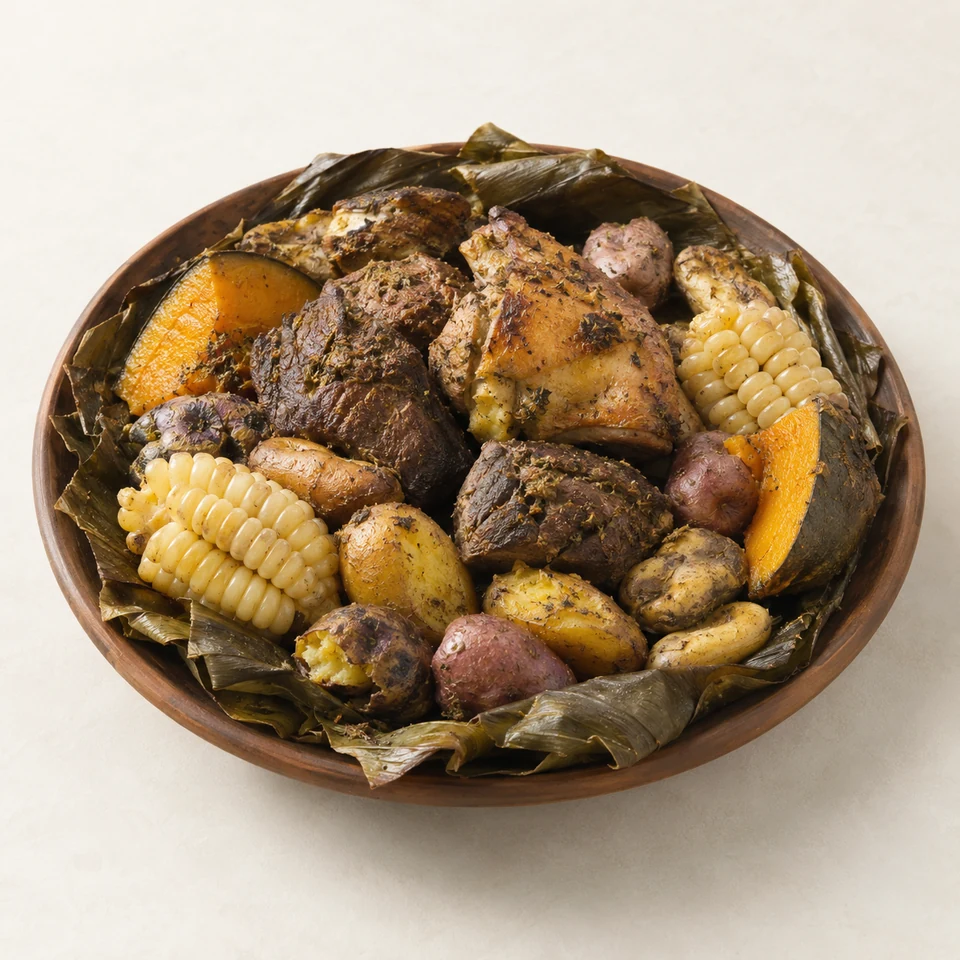
AI-generated illustration of one possible presentation. Recipes and ingredients vary; the image does not establish allergen content.
Sources & references
Selected primary field account: La Región La Paz, Watía, con el sabor de la tierra, 12 November 2016, text and photographs credited to Verónica Avendaño. María Jove supplies the direct taste and family-transmission account. The La Paz tourism lead failed acquisition and remains unverified. The FAO guide’s separate Puno/Yunguyo potato-wathiya example is not incorporated into this La Paz formula. Existing FSA context is generic; published photographs do not establish permission to reuse them.
Source limits: Chicken, pork, rabbit and trout describe different present-day options; no four-meat combined formula claimed.
Source limits: Potato is explicit traditional base; guarniciones remain otherwise unnamed; seasonings composition and quantities unspecified.
Source limits: Pit OR stone igloo are alternative oven constructions; wood is fuel not ingredient.
Source limits: Author wording para que su jugo salga preserved; no claim foil retains juice inferred.
Source limits: Participant fiesta de sabores is an attributed experience, not a specified seasoning/flavour or mouthfeel profile.
Source limits: No finished-food texture, measured recipe, exact seasoning formula, service plate/tool or provider contact practice supplied.