
DISH RESEARCH · Other
Emasi etinkhobe
Ground maize and sour milk, with the name carefully qualified. The in-country Borderline account describes Emasi etinkhobe temmbila as ground maize mixed with sour milk. The preparation detailed here is the IITA and Eswatini Ministry of Agriculture book’s specifically named “Unrefined crumbled porridge with sour milk”. The book does not itself label that recipe Emasi etinkhobe, so this pairing remains an explicitly qualified family comparison.
About Emasi etinkhobe
Research draft based on the references below. These notes describe particular recipes and presentations; ingredient connections are still being reviewed.
Ground maize and sour milk, with the name carefully qualified. The in-country Borderline account describes Emasi etinkhobe temmbila as ground maize mixed with sour milk. The preparation detailed here is the IITA and Eswatini Ministry of Agriculture book’s specifically named “Unrefined crumbled porridge with sour milk”. The book does not itself label that recipe Emasi etinkhobe, so this pairing remains an explicitly qualified family comparison.
Its precise finished flavour is not described. The selected book recipe names sour milk but gives no tasting description of the completed maize-and-milk mixture. A precise sourness, sweetness or maize flavour is therefore unknown. Its separate indigenous-emasi recipe also includes fresh milk; those ingredients have not been added to this version.
A crumbly maize preparation cooled before mixing. The method asks for a crumbly porridge, cooked until a golden-brown crust forms on the pot sides, then cooled and mixed with sour milk to the desired consistency. It does not specify how much crust reaches the served portion or a final grain-versus-milk texture contrast. The book’s plain whole-grain Tinkhobe is a separate recipe.
Ingredients in Emasi etinkhobe
The selected ground-maize recipe lists 550 g unrefined maize meal, 660 ml water, 7 g salt and 1,000 ml sour milk for four servings. It does not list fresh milk, beans, sugar or whole maize grains. Its neighbouring indigenous-emasi and plain Tinkhobe recipes are separate versions.
Source limits: The precise relationship between this cookbook title and Emasi etinkhobe naming is qualified rather than asserted as an exclusive alias. Sour-milk animal origin, preparation and supplier formula are unstated.
- Maize Meal[2]Recipe ingredient
- Water[2]Recipe ingredient
- Salt[2]Recipe ingredient
- Sour milk[2]Recipe ingredientSource-specific formulation remains unresolved.
These foods describe the cited recipe. Ask the kitchen about its version and any additional ingredients or handling.
Origins & food traditions
Explore the countries and cooking traditions associated with this dish. These connections do not establish a single birthplace or limit where the dish is eaten today.
The 2019 IITA/Eswatini recipe book was compiled from a national food-consumption survey and kitchen work with women from the country’s four regions. The separate 2015 Borderline account, written in Manzini, supplies the Emasi etinkhobe temmbila name for ground maize and sour milk. This guide does not turn either account into a universal recipe or a whole-kernel formula.
Source limits: The cookbook’s selected recipe title does not explicitly use Emasi etinkhobe.
Countries
Cuisines & regions
Associations in the cited sources
These describe source-specific cultural or geographic connections. Catalogue links may still need review.
- Countries & places
- Eswatini
- Cooking traditions
- Swazi Traditional Cuisine
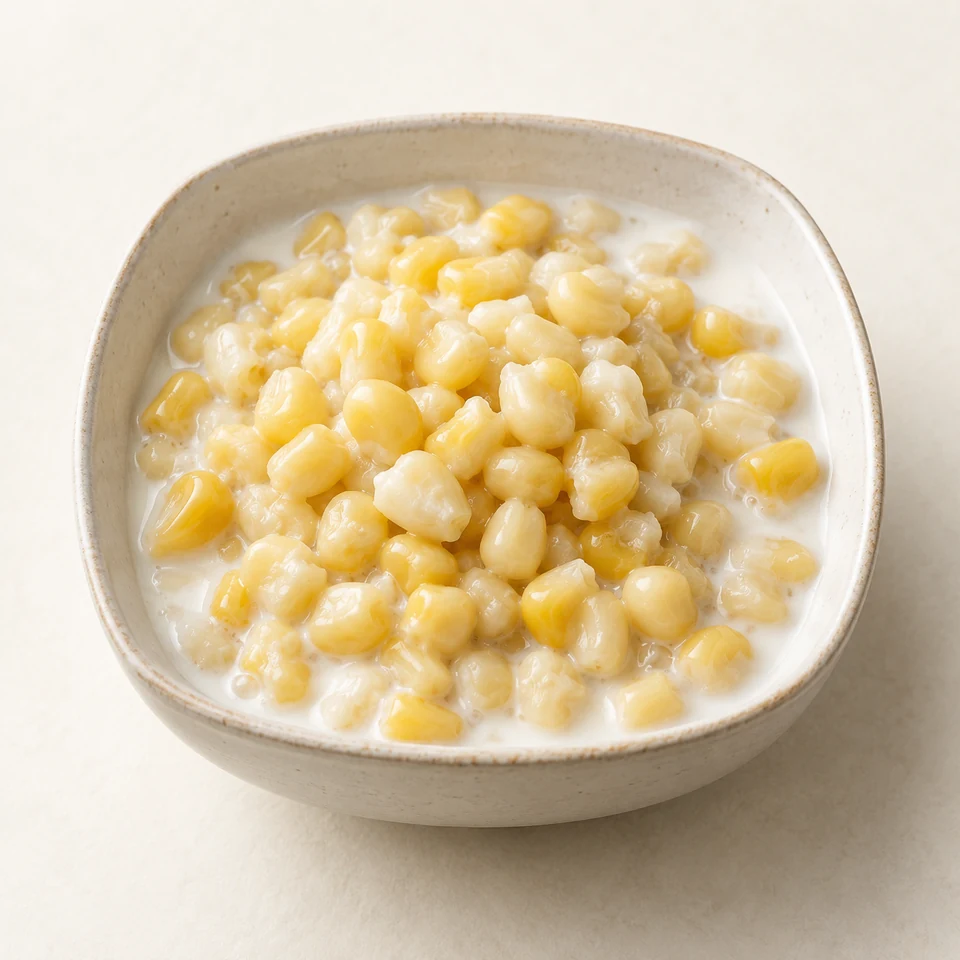
AI-generated illustration of one possible presentation. Recipes and ingredients vary; the image does not establish allergen content.
Sources & references
Maziya-Dixon and colleagues / IITA with the Eswatini Ministry of Agriculture, “Recipes for Commonly Consumed Foods in Eswatini” (2019), PDF38/printed29; and Borderline, “Traditional Swazi Food” (12 April 2015), published under Dr Alfred Prunesquallor.