
DISH RESEARCH · Main dish
Tarteletter med Honsekod og Asparges
Also known as: Tarteletter med hønsekød og asparges
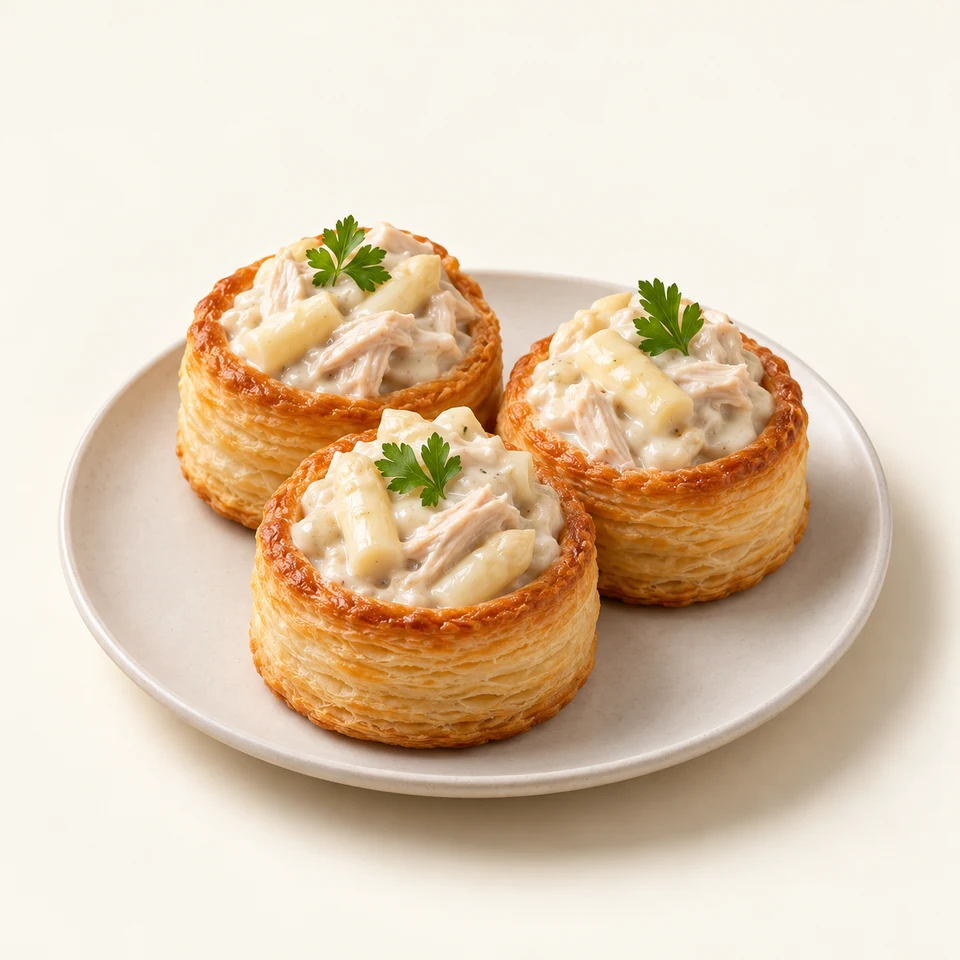
Arla’s tarteletter with chicken and asparagus boils and shreds a whole chicken, makes sauce with its own strained soup and canned asparagus liquid, fills warmed prepared shells and finishes with watercress for immediate serving.
About Tarteletter med Honsekod og Asparges
Research draft based on the references below. These notes describe particular recipes and presentations; ingredient connections are still being reviewed.
Arla’s tarteletter with chicken and asparagus fill prepared pastry shells with a creamy mixture made from a whole chicken, canned white asparagus and its own stock. Watercress finishes the selected version.
The chicken’s giblets are removed before it is cleaned, rinsed and brought to a boil in water. The soup is skimmed, then onion, carrot, leek, bay leaves and coarse salt are added for a covered simmer. The meat and vegetables are removed, and the strained soup is skimmed of fat.
The chicken cools slightly and is pulled into shreds with two forks. Butter and wheat flour form the sauce base; liquid from the same canned asparagus is added, followed by about three decilitres of the chicken’s own soup and the selected cooking cream.
The shredded chicken, white asparagus pieces, coarse salt and freshly ground pepper are stirred into the sauce. It cooks gently for about two minutes. The prepared shells are warmed according to their packet instructions.
About three quarters of a decilitre of filling is poured into each shell, then watercress is added and the tarteletter are served immediately. Arla describes this chicken-and-asparagus dish as a warm main course and a familiar part of Danish food culture.
Ingredients in Tarteletter med Honsekod og Asparges
Recorded ingredient connections, rather than a complete recipe. Explore an ingredient for more detail.
- Puff pastrybase
- Chickenprotein
- Asparagusfilling
- Chicken stocksauce
- Wheat flourbinder
- Creamsauce
- Pastrybase
- Buttercooking medium
Ingredient connections awaiting review. Versions and preparation vary.
Origins & food traditions
Explore the countries and cooking traditions associated with this dish. These connections do not establish a single birthplace or limit where the dish is eaten today.
Countries
Cuisines & regions
Associations in the cited sources
These describe source-specific cultural or geographic connections. Catalogue links may still need review.
- Cooking traditions
- Danish
AI-generated illustration of one possible presentation. Recipes and ingredients vary; the image does not establish allergen content.