
Start with one recipe, then check the actual kitchen
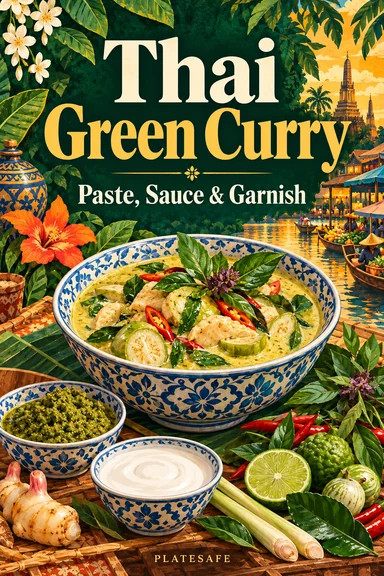
Thailand's Department of Agricultural Extension describes a green chicken curry with green chillies, garlic, shallot, galangal, lemongrass, coriander root, coconut milk, palm sugar, basil, lime leaves, eggplant and chicken. It also notes that pork or beef versions can be ordered. This is a documented version, not a standard ingredient list for every venue. [1]
Ask which green curry is on the menu today and whether the protein or vegetables can change. Compare the answer with the green curry dish record if available, but keep the venue's recipe as the decision point. The colour of a curry does not identify everything in its paste or seasonings.
Use the Thailand destination guide for trip context and save the restaurant name, exact item and date with any ingredient answer.
Find out what is in the curry paste
Curry paste can be made in-house or bought as a prepared product. A named Mae Ploy green curry paste listed by a Japanese importer includes shrimp paste; the Thai government recipe summary does not list shrimp paste. Those sources describe different preparations. Neither tells you what a particular restaurant uses. [1, 2]
Ask whether the kitchen uses a bought-in green curry paste, and request the current label or recipe. If crustaceans matter to you, ask specifically about shrimp paste and other shrimp ingredients. Product formulations and market labels can change, so the current pack matters more than a web listing. [2]
If staff offer a substitute paste, check that paste as a new ingredient and ask whether the wok, spoon and preparation area will also change. A substitution does not automatically answer the whole meal.
Check sauce and finishing seasonings separately
The official recipe describes coconut milk in the sauce. A packaged curry paste is only one component; a cook may add other seasonings after the paste is fried. Ask whether fish sauce or any bought-in seasoning is used in this particular curry, and check its product label when relevant. [1, 2]
Do not infer that a curry is milk-free, fish-free or free of another food from the word 'coconut' or from its appearance. Ask about the complete sauce, including a finishing drizzle or condiment at the table.
If you manage several allergies, list each one separately. The shellfish allergy guide and fish allergy guide can help frame different questions; they do not replace a current kitchen answer.
Check protein, vegetables, garnish and side
The cited Thai recipe uses chicken and eggplant; variations may change the protein or vegetable. Ask about the exact choice you will receive, then check any marinade, garnish and side dish as separate components. [1]
The Thai eggplant and Thai basil records can help you identify names you may hear. They are background references, not evidence about a restaurant's purchase or preparation.
If rice, noodles, a fried side or a condiment comes with the curry, include it in the enquiry. Ask whether the side has its own sauce or shared cooking equipment. If you avoid peanuts, ask about any nut garnish, paste, condiment and shared tools; the cited chicken-curry recipe does not answer those questions for this kitchen.
Ask how the order is prepared and served
Food Allergy Research & Education explains that an allergen can transfer through shared food, utensils and surfaces; cooking does not remove that risk. Ask the kitchen how it will handle the wok or pan, serving spoon, garnish and side for your order. [3]
A curry made with a different paste can still be exposed to a relevant ingredient during preparation or service. Ask what actually happens in this kitchen rather than assuming a change in one component covers the entire order.
For a restaurant conversation, Platesafe's question-list guide can help keep the steps short.
What to say before you order
You can ask: 'I have an allergy to [name your allergen]. Could you check the exact green curry paste and any added fish sauce or seasoning, confirm the protein, garnish and side, and tell me how the pan and utensils will be handled for my meal?'
Give the chef or manager time to check the current recipe and products. If an ingredient or preparation detail remains uncertain, do not treat the curry as confirmed for your needs. Use your own clinical advice and action plan for personal decisions.
Sources & references
Source pages checked 18 October 2026. Confirm the exact current recipe and preparation with the venue.