
Start with the flour, then identify the complete dish
Soba and udon are useful names for finding different noodle experiences, but they are not complete ingredient labels. Keep two questions separate: what the noodle itself is made from, and what is served with it. A cold plate with dipping sauce and a hot bowl with broth require different follow-up details even when the noodle name is the same.
Kikkoman’s ingredient glossary explicitly describes soba made entirely from buckwheat flour and soba made from buckwheat mixed with wheat flour. It gives several possible ratios rather than one universal blend.[1] That means a menu saying “buckwheat noodles” does not by itself establish the proportion of buckwheat or the absence of wheat.
For udon, a named homemade recipe gives a more concrete example than a general menu description. Nami’s Just One Cookbook recipe uses all-purpose flour, water and salt for the dough, with potato starch or cornstarch used to prevent sticking.[2] This is evidence for her version. It does not establish the formula of every dried, chilled, frozen or restaurant udon product.
How to read a soba flour description
A useful comparison starts with the actual noodle description. Record whether the source identifies all-buckwheat noodles, a buckwheat-and-wheat mixture, or merely soba. If a ratio is supplied, preserve it with its order: “buckwheat:wheat” is clearer than writing two unexplained numbers in a travel notebook.
Kikkoman lists examples such as 9:1, 8:2 and 5:5. Its separate nutrition discussion uses a particular 35% buckwheat and 65% wheat composition.[1] These examples show variation; the nutrition example should not become an assumed recipe for an unrelated packet or restaurant bowl.
When shopping, photograph or copy the current ingredient statement and exact product name together. Keep the pack size and any preparation directions attached to the same record. A front label may describe the noodle family while the ingredient statement explains the product you actually have. If the label is unreadable or the manufacturer has changed, keep that detail unresolved rather than borrowing the composition of a similar-looking package.
Udon: dough ingredients and handling ingredients
Nami describes her finished handmade udon as chewy, springy and toothsome, and elsewhere notes its neutral flavour.[2] Those are the author’s descriptions of this recipe. They make a useful culinary target for comparing versions, without promising that a shop’s udon will have the same texture.
The distinction between dough and handling matters. In this recipe the dusting starch is separate from the flour mixed into the dough. A short summary that mentions only the three dough ingredients would miss that preparation detail. For another version, the relevant question is which flour or starch touches the noodles during rolling, cutting, storing and cooking.
The recipe also gives a cooking and rinsing sequence before the noodles are used in a finished dish.[2] Follow the actual recipe or product directions when cooking at home; do not transplant the timing from a fresh homemade noodle to a different packaged product. If you are reading a restaurant menu, ask about the supplied noodle and its preparation rather than assuming that a handmade recipe describes the kitchen’s process.
Hot soup and a separate dipping sauce are different meals
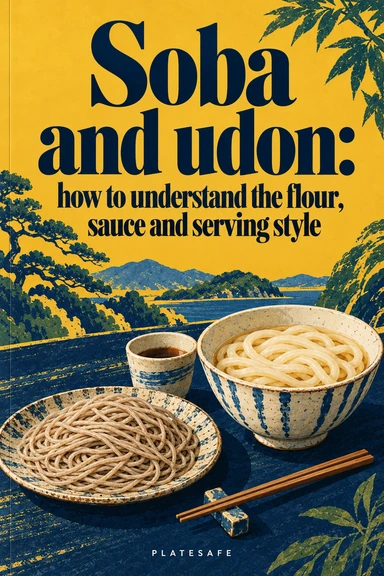
Japan National Tourism Organization distinguishes kake soba, served with soup in a bowl, from mori soba, where noodles and the dipping soup are served separately. It also describes zaru soba as a separate noodle-and-soup presentation.[3] These service descriptions help you understand what will arrive at the table.
For a hot bowl, make separate notes for noodles, broth, seasoning, finishing additions and toppings. For a cold presentation, make separate notes for noodles, dipping sauce and condiments. Keeping those parts apart is more useful than writing “soba ingredients” as if one answer settled the entire meal.
Think about what you want to compare as well. If you want to notice the noodle itself, a separate sauce presentation gives a different eating experience from noodles already sitting in soup. That is a planning distinction, not a claim that one presentation has a fixed flavour or is suitable for a particular food requirement. The actual sauce still needs its own description.
Regional broth descriptions give leads, not a universal formula
JNTO’s guide gives Kanto-style udon soup an example based on bonito dashi and stronger soy sauce, and Kansai-style soup an example based on kombu dashi and milder soy sauce.[3] Read these as the source’s regional descriptions, not confirmation of every bowl served in either region.
Use a regional name to decide what to investigate next: the kind of stock, the seasoning, the noodle and the way it is served. A geographic label is a useful route into food culture, but it cannot answer which stock ingredients a particular restaurant uses today. Equally, a kombu reference does not establish every ingredient in the completed soup.
Your comparison notes might therefore read “regional style described by the tourism guide” in one column and “current shop recipe confirmed by staff” in another. Keep a blank if the second answer is unavailable. This lets a food-focused itinerary stay interesting while preserving the distinction between general context and a specific meal.
Toppings and accompaniments deserve their own line
JNTO lists possible condiments and additions, including ginger, wasabi, green onion, shiso, radish, meat, vegetables, fish, fish paste and tempura.[3] This is a range of examples, not a list that belongs in every soba or udon dish. A topping shown in a menu photograph may also belong to a different option or set meal.
Before choosing, identify what is included in the base item and what is added through a separate selection. Then ask about the actual sauce, coating or mixture used for any selected addition. Removing a visible topping may leave other components unchanged, so the answer should refer to the completed version you are considering.
For a useful personal record, write the base item first, then your chosen additions and any side dish. Save the source of the answer and the date. This avoids turning a previous order, an optional recipe branch or a different menu photograph into a supposedly permanent ingredient list.
When a flour question is also a food-requirement question
If you need information about wheat, a buckwheat description is a reason to inspect the exact flour blend, not a substitute for checking it. Keep the noodle composition separate from sauces and the preparation environment. A recipe that uses one flour does not answer what another product contains or how a restaurant handles it.
The UK Food Standards Agency’s consumer guidance recommends checking allergen information, explaining the requirement clearly and asking about preparation and cross-contamination. It also warns that ingredients can change.[4] Those practical questions are useful when preparing a conversation; this article does not apply UK legal duties to a business in Japan.
Ask in concrete terms: “Which noodle product is used for this item?” “What does its ingredient statement say?” “What is in the dipping sauce or broth?” “What equipment and water are used to prepare it?” If a detail cannot be confirmed, keep it unknown. A missing ingredient on a general web page is not evidence that it is absent from the meal.
Build a shortlist you can actually use
Use Platesafe’s udon record as a dish reference and the buckwheat flour and wheat flour pages as starting points for ingredient research. Read the source attribution and research status on each page. These records do not identify the exact packet or kitchen used for your next order.
A useful shortlist contains the place, dish name, noodle description, service format, source URL and questions that remain open. Choose one or two differences you want to understand rather than trying to compare everything at once. For example, compare the noodle blend in two named products, or compare a separately served dipping sauce with a hot-broth presentation.
Keep that shortlist with the food-focused trip worksheet. Update it after a current answer from the relevant shop or manufacturer. The result is a more informative food plan: one that records what is known about each version and gives you a clear next question where the source stops.
Sources & references
Source pages checked 9 October 2026. Confirm the exact current recipe and preparation with the venue.