
Start with a named white-bean recipe
White-bean stew is a useful menu phrase, but it leaves several decisions open: which beans, which cooking liquid, whether meat is included, and how the bowl is served. Sawsan Abu Farha’s fasoolia baida recipe provides a concrete starting point. She introduces it as her mother’s white-bean stew and describes making it when she missed home. The page categorizes the recipe among Palestinian recipes while using a broader Middle Eastern title. Those are source attributions, rather than evidence that every country or household uses the same formula. [1]
This guide follows that particular version before considering what to ask about a restaurant’s own preparation. You can open the Platesafe fasolia bayda guide alongside a menu and compare actual ingredients. Treat the name as an invitation to investigate a dish, rather than a complete ingredient declaration. Even a fairly short recipe can contain distinct choices, such as beef versus goat, that matter to the diner and to the cook.
What this family version actually contains
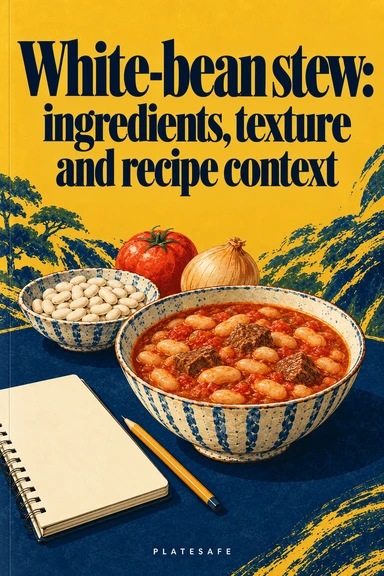
Abu Farha lists dried white beans, olive oil, chopped onion, tomatoes, water, meat and salt. The batch starts with 2½ cups of beans, 1 kg of tomatoes and 350 g of meat; she says beef or goat work well. The tomatoes are blended with two cups of water before joining the pot. This is a useful description of the sauce’s preparation: the liquid enters as a smooth tomato mixture, rather than chopped tomatoes left entirely intact. It does not establish a particular bean cultivar, cut of meat or finished degree of acidity. [1]
Notice how much information can be lost if that recipe is reduced to “beans in tomato sauce.” The onion and olive oil form an early cooking phase, and meat is cooked before the drained beans and tomato mixture are added. A restaurant might make a meatless preparation, use a different meat, or use stock instead of water, but those are questions about that kitchen. They should not be quietly inserted into this published family recipe, whose ingredient list specifically includes meat and water. [1]
Soaking and cooking belong to different phases
The source offers overnight soaking and an alternative in which the beans are covered generously with water, brought to a boil, then left covered for two hours after the heat is turned off. The later method uses soaked, drained beans. That distinction matters when describing the dish: soaking water belongs to preparation, while the two cups blended with tomatoes belong to the stew itself. Neither amount tells you how much liquid will remain in an individual serving. The recipe does not provide a final broth volume or a quantified sauce thickness. [1]
The main method uses a pressure cooker after sautéing onion and cooking the meat. Abu Farha also gives a regular-pot alternative, describing a longer cooking period until the beans are cooked through and soft. Her own instructions therefore support softness as a bean endpoint. They do not supply a detailed tasting account of the meat or describe a crisp element in the finished bowl. If your interest is texture, ask the kitchen whether its beans remain whole, break down into the sauce, or are deliberately mashed. Those are meaningful differences that the dish name alone cannot resolve. [1]
Separate a cooking endpoint from a tasting description
The author’s strongest personal description is emotional and contextual: a spoonful reminds her of her mother’s kitchen on a cold winter afternoon. That is valuable evidence about the recipe’s place in her family. It is not a measured claim that the stew is tangy, sweet, peppery or rich in a particular way. The page gives an explicit soft-bean endpoint and a smooth tomato mixture, but little finished flavour detail. Calling the result sharply acidic solely because it contains tomatoes would go beyond what the author actually says. [1]
You can still make a useful choice without pretending to have tasted it. Ask whether the restaurant’s sauce is mild or strongly seasoned, whether chilli is included, and whether the meat cooks in the bean pot or is added separately. If a menu photograph shows a red sauce, that can help with presentation, but it cannot identify every ingredient or seasoning. Write down the answer to the specific question you care about instead of treating colour, country or a familiar translated name as a full recipe.
A green-bean stew is a separate comparison
The Batata & Bundora sisters publish a Palestinian family version of fasolia khadra using green beans, beef or lamb, onion, tomatoes, oil, spices and water. It also has an explicitly separate meatless branch. This makes a useful comparison with Abu Farha’s white-bean stew, but it does not make the two recipes interchangeable. Dried beans that require soaking and green beans cut into short pieces create different preparation paths. The specific meat alternatives also differ between the two sources. [1, 2]
Open the fasolia khadra guide if both dishes appear on a menu. Compare the actual vegetable, the meat choice, the sauce and the accompaniment. The sisters serve their meat version with steamed rice and describe preferring pita with their meatless version; Abu Farha’s selected white-bean recipe does not specify that same pairing. Carrying a side dish across from one source to another would make the white-bean account look more complete, but less accurate. Ask what arrives with your order rather than assuming a regional staple is included. [2]
Build a short question list before ordering
For a straightforward enquiry, start with the variables that remain genuinely open: “Which meat is in this version?”, “Is the sauce made with water or stock?”, and “What comes on the side?” If you have a dietary restriction, name it clearly and ask about the full preparation, including seasonings and accompaniments. The Food Standards Agency’s consumer advice recommends speaking with someone who understands the ingredients and asking about handling as well as substitutions. Its legal discussion concerns the UK; the practical conversation prompts can help structure an enquiry elsewhere without assuming the same rules apply. [3]
For food allergy questions, the selected recipe is background information rather than a restaurant guarantee. A kitchen’s own ingredients, sauces, equipment and changes determine what is served there. Avoid turning an ingredient that is absent from one recipe into an assurance that it is absent from every bowl. Keep any reply attached to the restaurant, dish and date you asked about. That gives you a more useful record than a blanket statement about white-bean stew across a region. The goal is a clear, specific conversation about your order. [3]
Sources & references
Source pages checked 10 October 2026. Confirm the exact current recipe and preparation with the venue.