
Belgian Beer
Belgian beer is beer brewed in Belgian styles and is commonly enjoyed as a beverage or used in stews and sauces.
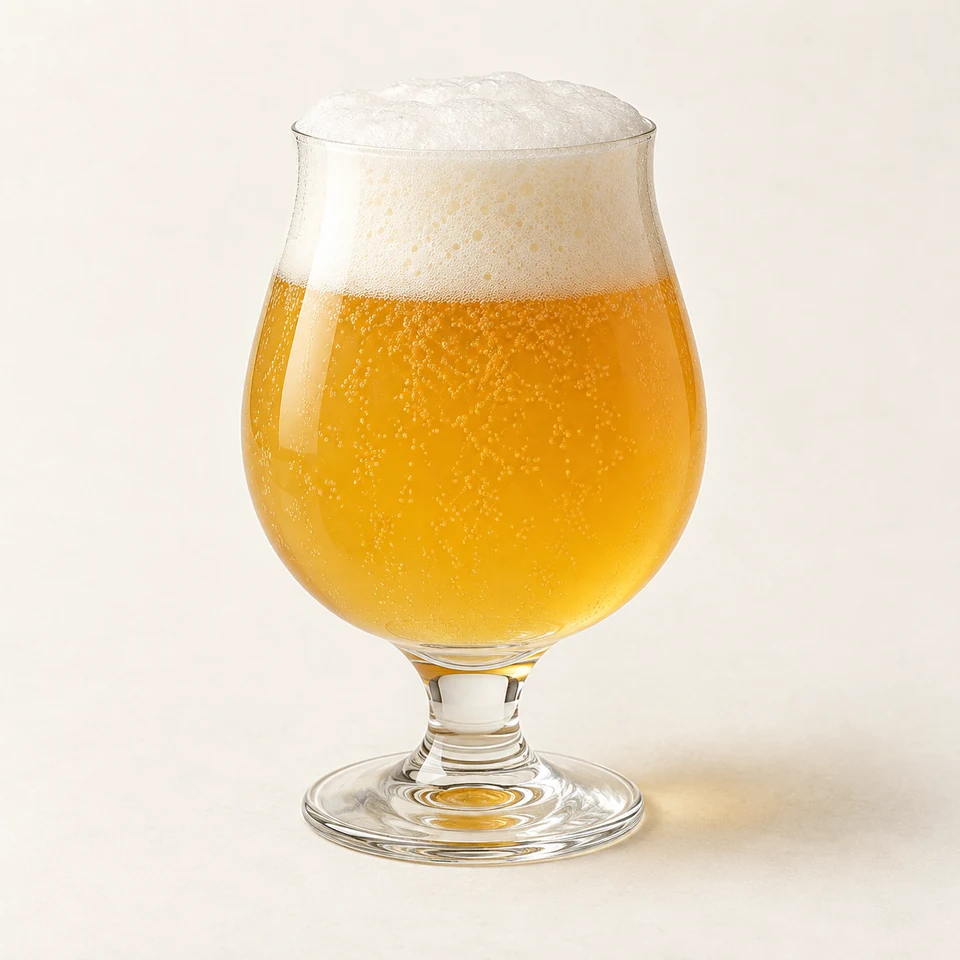
About Belgian Beer
Belgian beer is beer brewed in Belgium or made in a Belgian brewing style, encompassing varied ales, lagers, wheat beers, sour beers, and strong or specialty beers. It is primarily served as a beverage and is also used in stews, braises, sauces, batters, and marinades.
Its flavour and texture range from crisp and lightly bitter to fruity, spicy, sour, rich, or creamy. No single sensory profile applies because Belgian beer includes varied styles; alcohol level, sweetness, carbonation, filtration, and residual yeast also affect its drinking character.
Belgian beer may appear pale, amber, brown, or black and may be filtered or retain yeast, with carbonation varying by product. Style, cooking, reduction, and serving form change its colour, aroma, carbonation, concentration, and behaviour in recipes.
- Ingredient type
- derived ingredient
Forms & related ingredients
FOLLOW IT TO THE PLATE
Where will you meet it?
Explore the dishes that use this ingredient and their country and cuisine connections.
Explore linked dishesON A MENU OR LABEL
Find local names and written forms to help recognise this ingredient.
See local namesWhere belgian beer appears
1 linked foodsFind foods to recognise by country and type. Recipes and products vary; these are recorded ingredient connections.
Showing 1–1 of 1
Main dishes

Ingredient connections awaiting review · Coverage is still growing, including packaged snacks.
Name examples awaiting language review. Confirm the specific food or product.
Local names for belgian beer
Names and romanised forms to recognise on menus and labels.
bière belge
Belgisch bier
belgisches Bier
Belgian Beer
Belgian beer
cerveza belga
cerveja belga
birra belga
cervesa belga
cervexa belga
Belgikako garagardoa
piwo belgijskie
belgické pivo
belgické pivo
belgijsko pivo
белгијско пиво
belgijsko pivo
belgijsko pivo
bere belgiană
belga sör
belgiskt öl
belgisk øl
belgisk øl
belgialainen olut
Belgia õlu
beļģu alus
belgiškas alus
бельгийское пиво
belgiyskoye pivo
бельгійське пиво
belhiiske pyvo
βελγική μπύρα
velgikí býra
Belçika birası
بيرة بلجيكية
bīra baljīkiyya
בירה בלגית
bira belgית
比利时啤酒
Bǐlìshí píjiǔ
ベルギービール
Berugī bīru
벨기에 맥주
Belgie maekju
bia Bỉ
เบียร์เบลเยียม
bia bel-yiam
bir Belgia
bir Belgium
velgikí býra
Romanised form
Berugī bīru
Romanised form
bīra baljīkiyya
Romanised form
belhiiske pyvo
Romanised form
Belgie maekju
Romanised form
Bǐlìshí píjiǔ
Romanised form
belgiyskoye pivo
Romanised form
bira belgית
Romanised form
belgijsko pivo
Romanised form
bia bel-yiam
Romanised form
Available names only. Languages may be spoken in other countries; a name alone does not identify every ingredient in a dish.
Name not available yet.
A name in English has not been added for belgian beer. Choose another language to see its available names.
Belgian Beer nutrition & diet
Belgian Beer nutritional value
Reference: Beer, wheat, Belgian witbier style, alc. 5-6 % by vol.
Per 100 g of 100 g edible portion in the named official reference form.
- Calories
- 44.3kcal
- Protein
- 0.4g
- Carbs
- 3.3g
- Fat
- 0.0g
Official national food-composition reference. The displayed food form is part of the estimate; cultivar, recipe, brand, processing and preparation can change values.
Portions & preparation
Identify the specific Belgian beer style and serving form before using a reference, because fermentation, residual sweetness, strength, filtration, and flavor additions vary. A bottle or glass consumed as a beverage differs from beer reduced into a stew or sauce, where other ingredients also contribute.
Compare the right form: Reference the named Belgian beer style and exact beverage or cooking form, including alcohol content, sweetness, filtration, and any fruit, spice, or cereal additions.
Diet considerations
Belgian beer is brewed from plant-derived ingredients, commonly including cereal grains, hops, yeast, and water, but recipes vary. Compatibility changes with honey, dairy, animal-derived finings, or culinary additions. Cereal ingredients and serving size affect carbohydrate patterns; beer used in cooked dishes remains recipe-dependent.
AI-authored reading notes · Awaiting editorial review. Measured values, where available, have a separate source above.
Dietary compatibility
- VeganDepends on the version
- VegetarianDepends on the version
- PescatarianDepends on the version
- KetoNot established
- PaleoTypically incompatible
- Low-carbNot established
- HalalTypically incompatible
- KosherNot established
What these diet assessments mean
- Vegan · Depends on the version
- Production can involve animal-derived fining agents or other additions; check the producer and formulation.
- Vegetarian · Depends on the version
- Production can involve animal-derived fining agents or other additions; check the producer and formulation.
- Pescatarian · Depends on the version
- Production can involve animal-derived fining agents or other additions; check the producer and formulation.
- Keto · Not established
- A defined serving and sourced carbohydrate data are needed before assessing this dietary pattern.
- Paleo · Typically incompatible
- Recorded common ingredients: Barley. This profile falls outside the conventional paleo pattern used here (grains and pseudograins, legumes, dairy or refined sugar). Recipes and products can differ.
- Low-carb · Not established
- A defined serving and sourced carbohydrate data are needed before assessing this dietary pattern.
- Halal · Typically incompatible
- This profile identifies an alcoholic ingredient. Check the actual formulation and preparation against your halal requirements.
- Kosher · Not established
- Sourcing, processing and any applicable certification have not been verified. A food name alone does not establish kosher status.
For the plain ingredient · Awaiting review. Diet compatibility is not allergy suitability or halal/kosher certification. Keto and low-carb depend on the portion.
AI-generated illustration for visual context. It does not identify a particular product or establish allergen content.
Sources & review
Nutrition reference: Danish Food Composition Database, Frida 5.5 (2025) — 1915 ↗. Values are scaled from 100 g of the recorded edible form. Individual portions have no assumed fixed weight.
Expanded overview, name examples and nutrition notes are database drafts awaiting editorial review. Numeric nutrition values, where shown, have their own source and food-form reference.
The ingredient description and dish connections come from the draft catalogue and may change after review.
Last recorded verification: .