
Red Pepper
Red pepper is a ripe pepper used fresh, roasted, dried, or ground to add sweetness, color, or heat to savory dishes.
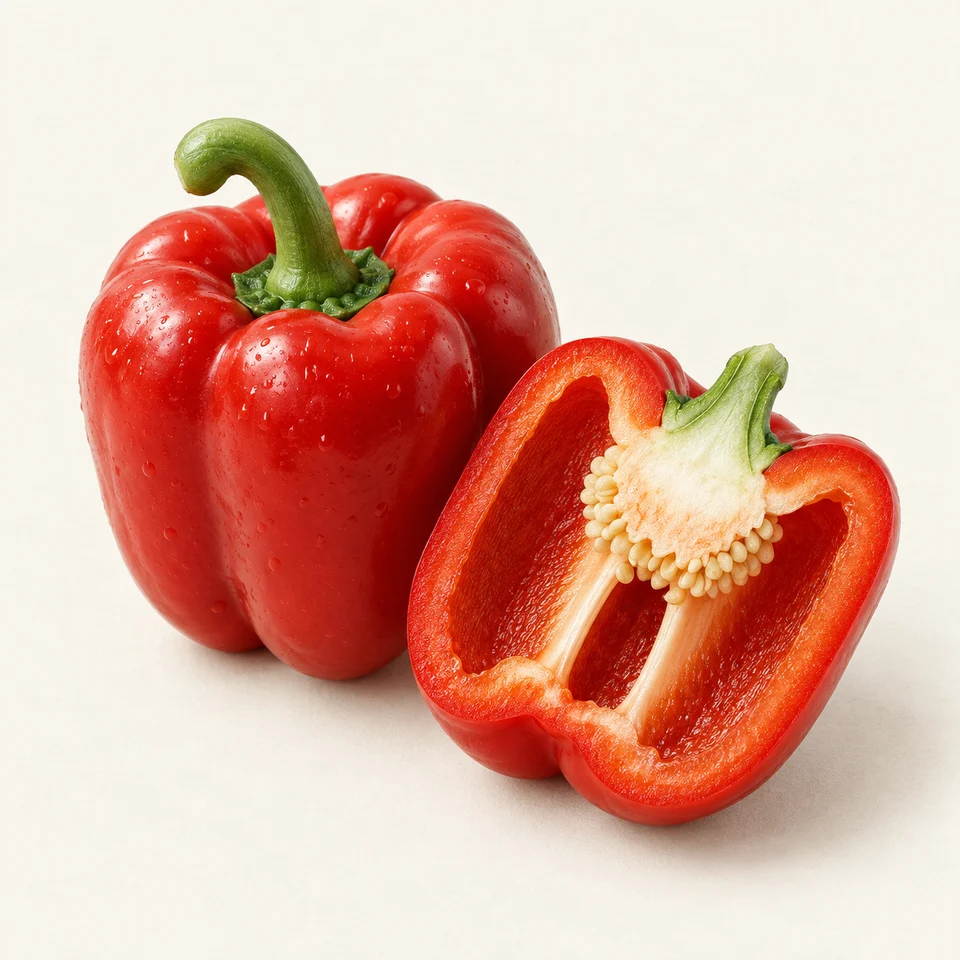
About Red Pepper
Red pepper is a mature pepper with red skin, used fresh in salads, sauces, salsas, stir-fries, and many other savory dishes. The name commonly covers either a sweet red bell pepper or a hot red chilli, so its culinary role ranges from vegetable ingredient to seasoning.
A sweet red pepper has thick, crisp, juicy flesh and a mild, fruity taste. A hot chilli usually has thinner flesh and may range from gently pungent to intensely hot. Both provide vivid red color, while ripeness, variety, and heat level determine the balance of sweetness and pungency.
Fresh peppers may be served raw, roasted, grilled, or cooked, with the stem and inner seed-bearing ribs removed as desired. Drying concentrates their flavor and makes the flesh leathery or brittle; dried peppers may be sold whole, as flakes, or ground into powder.
- Ingredient type
- whole food
Forms & related ingredients
FOLLOW IT TO THE PLATE
Where will you meet it?
Explore the dishes that use this ingredient and their country and cuisine connections.
Explore linked dishesON A MENU OR LABEL
Find local names and written forms to help recognise this ingredient.
See local namesWhere red pepper appears
3 linked foodsFind foods to recognise by country and type. Recipes and products vary; these are recorded ingredient connections.
Showing 1–3 of 3
Main dishes

Breads

Afar Wheat Pancakes
Optional additionIngredient connections awaiting review · Coverage is still growing, including packaged snacks.
Name examples awaiting language review. Confirm the specific food or product.
Local names for red pepper
Names and romanised forms to recognise on menus and labels.
red pepper
pimiento rojo
poivron rouge
peperone rosso
pimento vermelho
rote Paprika
rode paprika
czerwona papryka
červená paprika
červená paprika
piros paprika
ardei roșu
kırmızı biber
κόκκινη πιπεριά
kókkini piperiá
красный перец
krasnyy perets
червоний перець
chervonyi perets
红辣椒
hóng làjiāo
赤ピーマン
aka pīman
빨간 피망
ppalgan pimang
लाल शिमला मिर्च
lāl shimlā mirch
লাল ক্যাপসিকাম
lāl kyāpsikām
paprika merah
lada benggala merah
kókkini piperiá
Romanised form
aka pīman
Romanised form
Peppers, red, cooked
Search alias · Not a confirmed translation
chervonyi perets
Romanised form
ppalgan pimang
Romanised form
lāl kyāpsikām
Romanised form
hóng làjiāo
Romanised form
lāl shimlā mirch
Romanised form
krasnyy perets
Romanised form
Available names only. Languages may be spoken in other countries; a name alone does not identify every ingredient in a dish.
Name not available yet.
A name in English has not been added for red pepper. Choose another language to see its available names.
Red Pepper nutrition & diet
Red Pepper nutritional value
Peppers, sweet, red, raw
Per 100 g of the edible portion in the recorded food form.
- Calories
- 26kcal
- Protein
- 1.0g
- Carbs
- 6.0g
- Fat
- 0.3g
Reference values for the specific food form shown. Other varieties, brands and preparations can differ.
Portions & preparation
The name red pepper can describe different ripe pepper types, so establish species or cultivar before selecting a reference. Record whether the edible portion is fresh, roasted, dried, or ground, and whether seeds, membranes, stems, oil, salt, or sauce remain with it.
Compare the right form: Match references only after identifying the pepper species or cultivar and exact fresh, roasted, dried, or ground edible form.
Diet considerations
Red pepper is plant-derived, but the name does not establish whether it is sweet or hot. Plain pepper differs from oil-packed, salted, battered, or seasoned products. Ground blends may contain cereal ingredients or other spices; animal additions in sauces or fillings change compatibility.
AI-authored reading notes · Awaiting editorial review. Measured values, where available, have a separate source above.
Dietary compatibility
- VeganTypically compatible
- VegetarianTypically compatible
- PescatarianTypically compatible
- KetoDepends on the version
- PaleoTypically compatible
- Low-carbDepends on the version
- HalalNot established
- KosherNot established
What these diet assessments mean
- Vegan · Typically compatible
- The plain ingredient profile is plant, fungal or mineral based. Added ingredients in a prepared product need a separate check.
- Vegetarian · Typically compatible
- The plain ingredient profile is plant, fungal or mineral based. Added ingredients in a prepared product need a separate check.
- Pescatarian · Typically compatible
- The plain ingredient profile is plant, fungal or mineral based. Added ingredients in a prepared product need a separate check.
- Keto · Depends on the version
- Compatibility depends on the portion and preparation. A sourced carbohydrate amount for a defined serving is not available.
- Paleo · Typically compatible
- The plain form fits the conventional paleo food groups. Added ingredients and individual interpretations can differ.
- Low-carb · Depends on the version
- Compatibility depends on the portion and preparation. A sourced carbohydrate amount for a defined serving is not available.
- Halal · Not established
- Sourcing, processing and any applicable certification have not been verified. A food name alone does not establish halal status.
- Kosher · Not established
- Sourcing, processing and any applicable certification have not been verified. A food name alone does not establish kosher status.
For the plain ingredient · Awaiting review. Diet compatibility is not allergy suitability or halal/kosher certification. Keto and low-carb depend on the portion.
AI-generated illustration for visual context. It does not identify a particular product or establish allergen content.
Sources & review
Nutrition reference: USDA FoodData Central — Peppers, sweet, red, raw ↗. Values are scaled from 100 g of the recorded edible form. Individual portions have no assumed fixed weight.
Expanded overview, name examples and nutrition notes are database drafts awaiting editorial review. Numeric nutrition values, where shown, have their own source and food-form reference.
The ingredient description and dish connections come from the draft catalogue and may change after review.
Last recorded verification: .