
Rooster
An adult male chicken whose meat is commonly used in braises, soups, and other slow-cooked dishes.
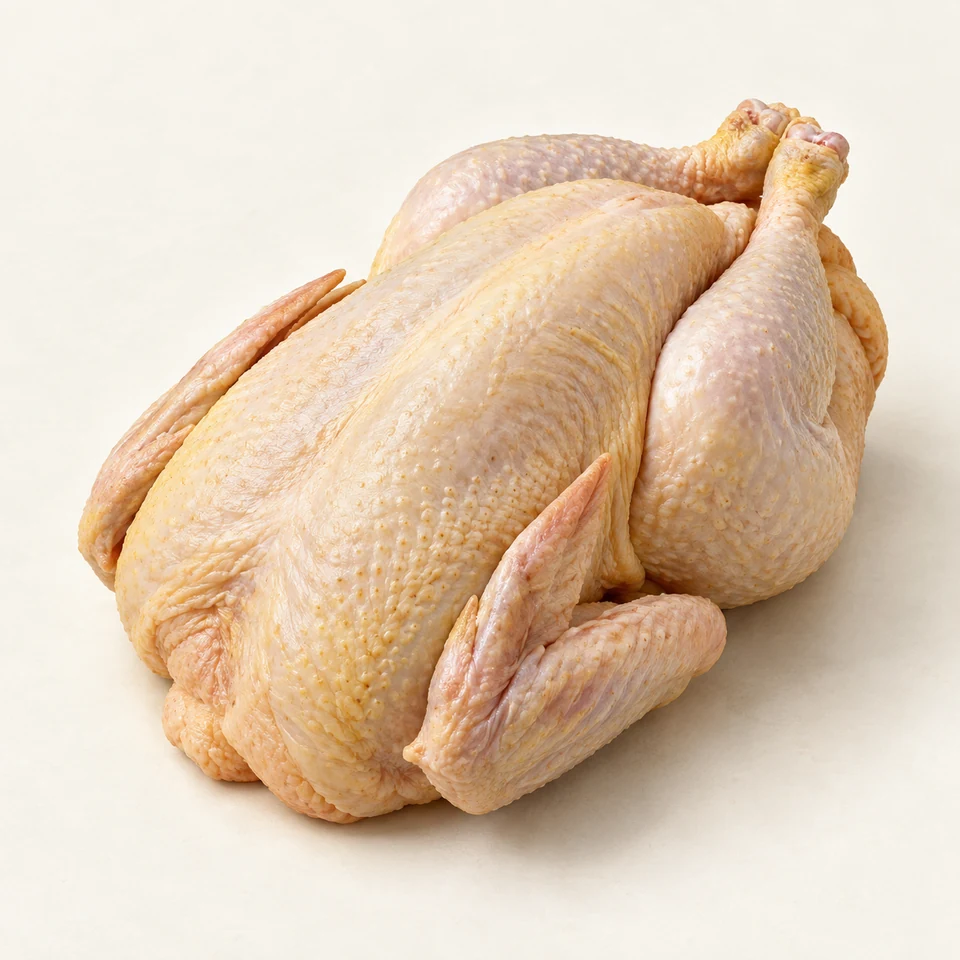
About Rooster
A rooster is an adult male domestic chicken used as food after its productive life or selected for meat in some systems. It is commonly used in braises, soups, stews, broths, curries, and other slow-cooked dishes.
Compared with meat from younger chickens, rooster meat is commonly firmer and more strongly flavored. Its skin and connective tissue suit longer cooking, while bones and skin may contribute body to a stock or sauce.
Rooster may be sold whole, in pieces, or with bones and skin attached. Gentle simmering or extended braising helps soften the meat. Age, breed, conditioning, and butchering method affect tenderness, fat distribution, and cooking time.
- Ingredient type
- whole food
FOLLOW IT TO THE PLATE
Where will you meet it?
Explore the dishes that use this ingredient and their country and cuisine connections.
Explore linked dishesON A MENU OR LABEL
Find local names and written forms to help recognise this ingredient.
See local namesWhere rooster appears
1 linked foodsFind foods to recognise by country and type. Recipes and products vary; these are recorded ingredient connections.
Showing 1–1 of 1
Main dishes
Ingredient connections awaiting review · Coverage is still growing, including packaged snacks.
Name examples awaiting language review. Confirm the specific food or product.
Local names for rooster
Names and romanised forms to recognise on menus and labels.
coq
gallo
gallo
मुर्गा
murga
Rooster
rooster
Hahn
haan
galo
gall
cocoș
kogut
kohout
kohút
петух
petukh
півень
piven’
петел
petel
петао
petao
pijetao
pijetao
petelin
kakas
κόκορας
kókoras
horoz
ديك
dīk
خروس
khorus
תרנגול
tarnegol
مرغا
murgha
মোরগ
morog
भाले
bhāle
ਕੁੱਕੜ
kukkar
કૂકડો
kūkḍo
कोंबडा
kombḍā
சேவல்
sēval
కోడిపుంజు
kōḍipunju
കോഴൻ
kōḻan
ಹುಂಜ
hunja
公鸡
gōngjī
雄鶏
ondori
수탉
sutak
ไก่ตัวผู้
kai tua phu
gà trống
ayam jantan
ayam jantan
jogoo
bhāle
Romanised form
kókoras
Romanised form
hunja
Romanised form
ondori
Romanised form
sēval
Romanised form
dīk
Romanised form
piven’
Romanised form
sutak
Romanised form
morog
Romanised form
gōngjī
Romanised form
murga
Romanised form
kōḻan
Romanised form
murgha
Romanised form
petukh
Romanised form
petel
Romanised form
tarnegol
Romanised form
khorus
Romanised form
petao
Romanised form
kūkḍo
Romanised form
kombḍā
Romanised form
kai tua phu
Romanised form
kukkar
Romanised form
kōḍipunju
Romanised form
Available names only. Languages may be spoken in other countries; a name alone does not identify every ingredient in a dish.
Name not available yet.
A name in English has not been added for rooster. Choose another language to see its available names.
Rooster nutrition & diet
Rooster nutritional value
Reference: Chicken, meat, average, raw
Per 100 g of 100 g edible portion in the named official reference form.
- Calories
- 108kcal
- Protein
- 22.3g
- Carbs
- 0.0g
- Fat
- 2.1g
Official national food-composition reference. The displayed food form is part of the estimate; cultivar, recipe, brand, processing and preparation can change values.
Portions & preparation
Use edible rooster meat and identify whether skin, bone, and visible fat remain. Adult male chicken may be prepared by braising, boiling, roasting, or stewing, with texture and cooking losses differing by method. Assess stock, gravy, oil, batter, and accompanying ingredients as part of the finished dish when eaten.
Compare the right form: Reference adult male chicken meat, raw or cooked, specifying cut, skin, bone, fat, and inclusion of broth, gravy, coating, or oil.
Diet considerations
Rooster is animal-derived poultry. Plain meat differs from preparations using skin, animal fat, dairy, eggs, cereal coatings, noodles, dumplings, or sweet sauces. Slow-cooked dishes may include vegetables and stock that alter compatibility and carbohydrate patterns. Species, adult status, edible cut, and finished recipe should remain explicit.
AI-authored reading notes · Awaiting editorial review. Measured values, where available, have a separate source above.
Dietary compatibility
- VeganTypically incompatible
- VegetarianTypically incompatible
- PescatarianTypically incompatible
- KetoMay be compatible
- PaleoMay be compatible
- Low-carbMay be compatible
- HalalNot established
- KosherNot established
What these diet assessments mean
- Vegan · Typically incompatible
- The ingredient profile identifies an animal-derived food or derivative.
- Vegetarian · Typically incompatible
- The profile identifies animal flesh, seafood or a derivative excluded by a vegetarian diet.
- Pescatarian · Typically incompatible
- The profile identifies land-animal meat or a derivative, which is excluded by this pescatarian definition.
- Keto · May be compatible
- The plain form may fit a carbohydrate-restricted diet. Check the portion, added sugar, coatings and sauces against the nutrition values above.
- Paleo · May be compatible
- May fit a paleo pattern, depending on the cut or form, processing and added ingredients.
- Low-carb · May be compatible
- The plain form may fit a carbohydrate-restricted diet. Check the portion, added sugar, coatings and sauces against the nutrition values above.
- Halal · Not established
- Sourcing, processing and any applicable certification have not been verified. A food name alone does not establish halal status.
- Kosher · Not established
- Sourcing, processing and any applicable certification have not been verified. A food name alone does not establish kosher status.
For the plain ingredient · Awaiting review. Diet compatibility is not allergy suitability or halal/kosher certification. Keto and low-carb depend on the portion.
AI-generated illustration for visual context. It does not identify a particular product or establish allergen content.
Sources & review
Nutrition reference: Composition of foods integrated dataset (CoFID), 2021 — 18-488 ↗. Values are scaled from 100 g of the recorded edible form. Individual portions have no assumed fixed weight.
Expanded overview, name examples and nutrition notes are database drafts awaiting editorial review. Numeric nutrition values, where shown, have their own source and food-form reference.
The ingredient description and dish connections come from the draft catalogue and may change after review.
Last recorded verification: .