
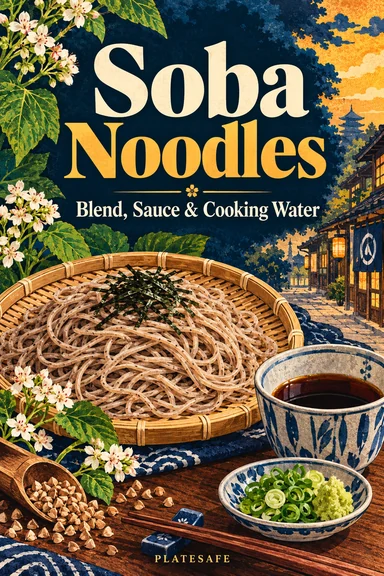
The noodle blend is the first question
Japan's agriculture ministry describes soba noodles as made with buckwheat flour and sometimes binding agents such as wheat flour or egg. The blend varies: nihachi refers to an approximately 80/20 buckwheat-to-wheat style, while juwari refers to buckwheat-only noodles. A menu saying only ‘soba’ therefore cannot confirm whether wheat or egg is present. [1]
Ask: ‘What flours and binders are in these exact soba noodles?’ If you avoid wheat or gluten, a high buckwheat percentage is not the same as a wheat-free recipe. If you have a buckwheat allergy, a wheat-free answer does not make soba suitable.
Check substitutions and bought-in noodles too. A restaurant may use a different product from the one shown in a photo or from the one served on a previous visit.
Treat sauce and toppings as new ingredient lists
A ministry account of Echizen soba describes tsuyu and toppings such as katsuobushi, or dried bonito flakes. Another ministry account of Iya soba shows a buckwheat-only noodle served in dashi that can include fish paste or fried tofu. These examples demonstrate variation; they do not define every bowl of soba. [2, 3]
Ask whether the dipping sauce or broth contains soy sauce and what that sauce is made from. Ask whether the stock or garnish includes bonito or another fish ingredient. Confirm each topping, including egg or tofu, against your own allergens.
For a cold serving such as zaru soba, ask about the separate dipping sauce as carefully as the noodles. For a warm bowl, ask about the broth and any fried topping. The Japan destination guide offers broader dining context.
Ask how this order is prepared
The recipe is only part of a food-allergy conversation. Ask whether the noodles share boiling water, strainers, cutting surfaces or serving utensils with noodles containing your allergen. FARE documents allergen transfer through shared equipment and cooking water; a separate order is not automatically separate preparation. [4, 5]
A useful question is: ‘For this exact soba, can you confirm the noodle flours, the sauce and toppings, and whether cooking water and utensils are shared?’ If staff cannot verify one of these, choose according to your clinical plan rather than assuming a traditional name guarantees the ingredients.
The restaurant questions guide provides a short format for asking and confirming the answer.
Sources & references
Source pages checked 18 October 2026. Confirm the exact current recipe and preparation with the venue.