
Cognac
Cognac is a French grape brandy used as a beverage and in sauces, desserts, and other cooked dishes.
About Cognac
Cognac is a grape brandy produced in the Cognac appellation of France and sold as a distilled alcoholic beverage. It is served neat or mixed into drinks, and it is used in sauces, pan preparations, desserts, soaked fruit, and other cooked dishes. Its culinary role may be either a seasoning or a principal liquid.
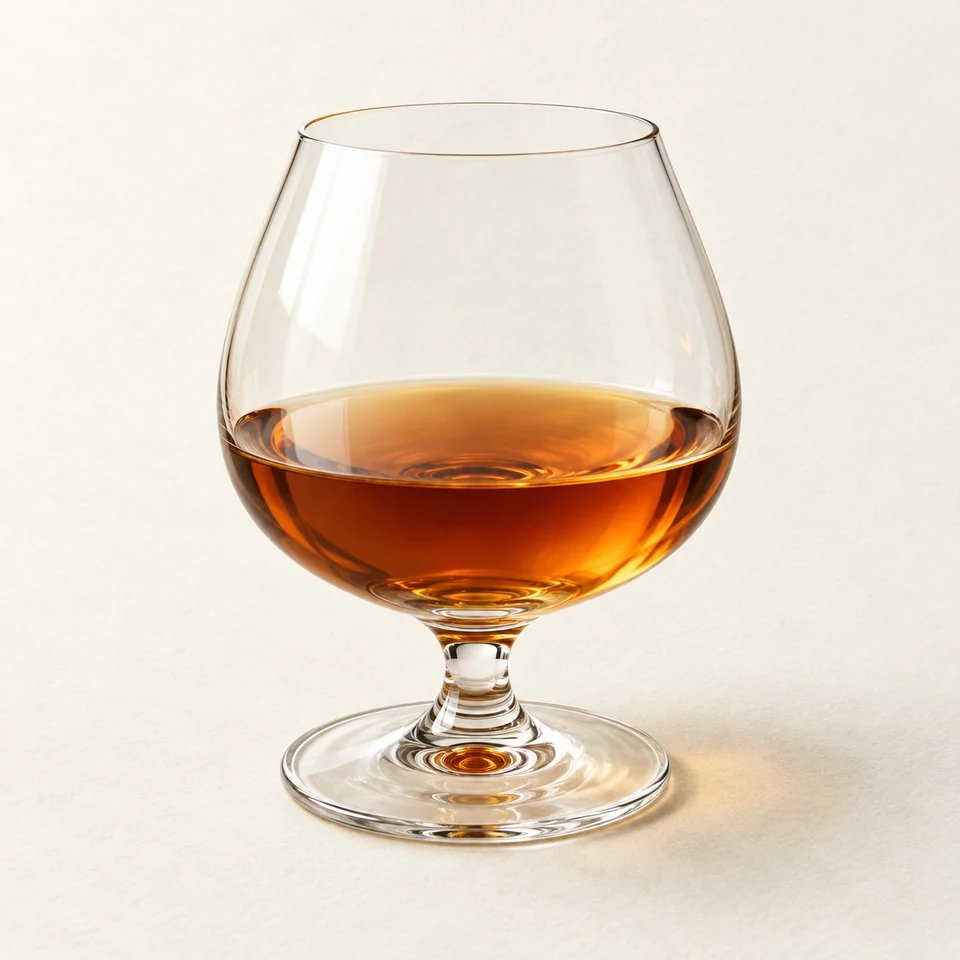
It is usually clear to amber or deeper brown, with a smooth to warming texture and aromas that may include fruit, spice, oak, vanilla, and toasted notes. Age, blending, strength, and colouring influence the sensory profile. In cooking, its spirit character can remain pronounced or become gentler as it reduces.
Cognac may be bottled for drinking, poured into a pan sauce, or incorporated into batter, syrup, cream, or dessert mixtures. It is a free-flowing liquid at room temperature. Reduction concentrates flavour and removes some alcohol, while mixing with other ingredients changes its colour, body, and intensity.
- Ingredient type
- derived ingredient
Forms & related ingredients
FOLLOW IT TO THE PLATE
Where will you meet it?
Explore the dishes that use this ingredient and their country and cuisine connections.
Explore linked dishesON A MENU OR LABEL
Find local names and written forms to help recognise this ingredient.
See local namesWhere cognac appears
2 linked foodsFind foods to recognise by country and type. Recipes and products vary; these are recorded ingredient connections.
Showing 1–2 of 2
Main dishes

Ingredient connections awaiting review · Coverage is still growing, including packaged snacks.
Name examples awaiting language review. Confirm the specific food or product.
Local names for cognac
Names and romanised forms to recognise on menus and labels.
Cognac
Cognac
Cognac
Coñac
Cognac
Conhaque
Cognac
Cognac
Cognac
Cognac
Konjakki
Koniak
Koňak
Koňak
Konyak
Coniac
Κονιάκ
Koniák
Konyak
Коньяк
Konyak
Коньяк
Koniak
Коняк
Konyak
Коњак
Konjak
Konjak
Konjak
Konjak
コニャック
Konyakku
코냑
Konyak
干邑白兰地
Gānyì báilándì
كونياك
Konyak
کنیاک
Konyak
קוניאק
Konyak
Konyak
Konyak
Koniák
Romanised form
Konyakku
Romanised form
Konyak
Romanised form
Koniak
Romanised form
Konyak
Romanised form
Gānyì báilándì
Romanised form
Konyak
Romanised form
Konyak
Romanised form
Konyak
Romanised form
Konyak
Romanised form
Konjak
Romanised form
Available names only. Languages may be spoken in other countries; a name alone does not identify every ingredient in a dish.
Name not available yet.
A name in English has not been added for cognac. Choose another language to see its available names.
Cognac nutrition & diet
Cognac nutritional value
Reference: Wine spirit, Armagnac or Cognac
Per 100 g of the edible portion of the explicitly named reference food.
- Calories
- 222kcal
- Protein
- 0.0g
- Carbs
- 0.8g
- Fat
- 0.0g
Per 100 g edible portion. ANSES Ciqual 2025; energy and protein follow EU Regulation 1169/2011 (protein = nitrogen × 6.25); carbohydrate excludes fibre. Values describe this food form, not every brand or recipe. Reused under the Etalab Open Licence 2.0: https://www.etalab.gouv.fr/licence-ouverte-open-licence/.
Portions & preparation
Use a reference for Cognac as a distilled grape spirit, distinguishing neat beverage use from a measured cooking addition. Sauces, desserts, marinades, and flambéed dishes may contain sugar, butter, cream, stock, or other ingredients; cooking does not by itself establish complete alcohol removal.
Compare the right form: Match genuine Cognac by beverage or cooking use, identifying the finished recipe, serving state, and any branded or flavored formulation.
Diet considerations
Cognac is grape-derived and alcoholic. Compatibility changes when it is combined with dairy, egg, sugar, cereal-based desserts, stock, or coatings. A cooked dish may still require recipe-specific review because alcohol reduction varies with method and time. Brand and flavoring details can also matter.
AI-authored reading notes · Awaiting editorial review. Measured values, where available, have a separate source above.
Dietary compatibility
- VeganDepends on the version
- VegetarianDepends on the version
- PescatarianDepends on the version
- KetoNot established
- PaleoMay be compatible
- Low-carbNot established
- HalalTypically incompatible
- KosherNot established
What these diet assessments mean
- Vegan · Depends on the version
- Production can involve animal-derived fining agents or other additions; check the producer and formulation.
- Vegetarian · Depends on the version
- Production can involve animal-derived fining agents or other additions; check the producer and formulation.
- Pescatarian · Depends on the version
- Production can involve animal-derived fining agents or other additions; check the producer and formulation.
- Keto · Not established
- A defined serving and sourced carbohydrate data are needed before assessing this dietary pattern.
- Paleo · May be compatible
- The recorded ingredients may fit this pattern. This is not a complete recipe or manufacturing specification; check additions and preparation.
- Low-carb · Not established
- A defined serving and sourced carbohydrate data are needed before assessing this dietary pattern.
- Halal · Typically incompatible
- This profile identifies an alcoholic ingredient. Check the actual formulation and preparation against your halal requirements.
- Kosher · Not established
- Sourcing, processing and any applicable certification have not been verified. A food name alone does not establish kosher status.
For the plain ingredient · Awaiting review. Diet compatibility is not allergy suitability or halal/kosher certification. Keto and low-carb depend on the portion.
AI-generated illustration for visual context. It does not identify a particular product or establish allergen content.
Sources & review
Nutrition reference: ANSES Ciqual 2025 — Eau de vie de vin type armagnac ou cognac ↗. Values are scaled from 100 g of the recorded edible form. Individual portions have no assumed fixed weight.
Expanded overview, name examples and nutrition notes are database drafts awaiting editorial review. Numeric nutrition values, where shown, have their own source and food-form reference.
The ingredient description and dish connections come from the draft catalogue and may change after review.
Last recorded verification: .