
Duck Blood
Duck blood is used as a cooked ingredient in soups, stews, and blood-based dishes.
About Duck Blood
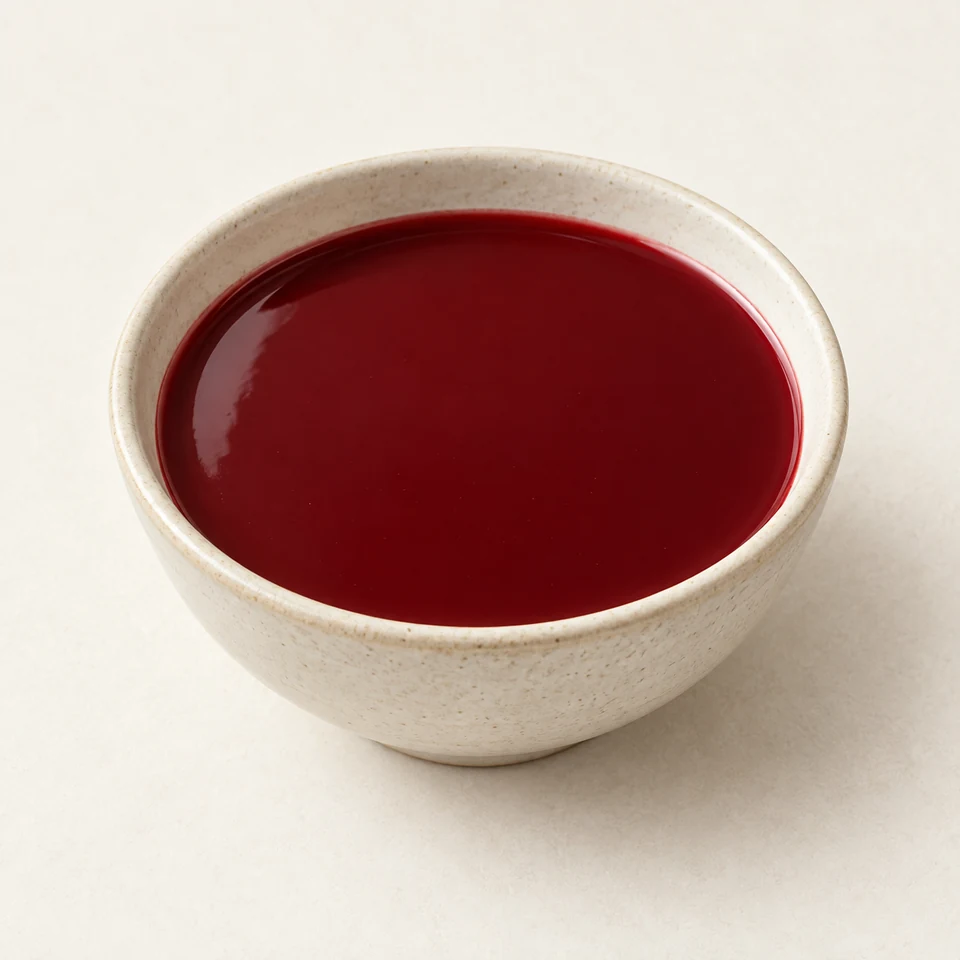
Duck blood is the blood collected from ducks and used as a cooked food ingredient. It may be incorporated into soups, stews, sauces, or blood-based dishes, where heat causes it to thicken or set.
Its flavour is savoury and pronounced, while texture can range from tender and custard-like to dense and springy. The sensory result depends on whether the blood is used as a liquid, allowed to coagulate, or already cooked before being added to a dish.
Duck blood may appear as a dark red liquid, a soft coagulated block, or firm slices prepared for cooking. It may be sold fresh, coagulated, or already cooked. In some preparations it is added directly to a hot dish; in others it is set first and cut into pieces, and these forms are not interchangeable in every recipe.
- Ingredient type
- whole food
FOLLOW IT TO THE PLATE
Where will you meet it?
Explore the dishes that use this ingredient and their country and cuisine connections.
Explore linked dishesON A MENU OR LABEL
Find local names and written forms to help recognise this ingredient.
See local namesWhere duck blood appears
3 linked foodsFind foods to recognise by country and type. Recipes and products vary; these are recorded ingredient connections.
Showing 1–3 of 3
Main dishes
Soups


Ingredient connections awaiting review · Coverage is still growing, including packaged snacks.
Name examples awaiting language review. Confirm the specific food or product.
Local names for duck blood
Names and romanised forms to recognise on menus and labels.
duck blood
鸭血
yā xuè
tiết vịt
sang de canard
sangre de pato
Entenblut
sangue d'anatra
sangue de pato
鴨血
kamo chi
오리 피
ori pi
เลือดเป็ด
lʉ̂at pèt
darah bebek
darah itik
kamo chi
Romanised form
ori pi
Romanised form
yā xuè
Romanised form
lʉ̂at pèt
Romanised form
Available names only. Languages may be spoken in other countries; a name alone does not identify every ingredient in a dish.
Name not available yet.
A name in English has not been added for duck blood. Choose another language to see its available names.
Duck Blood nutrition & diet
Duck Blood nutritional value
Reference: Ducks: blood
Per 100 g of 100 g edible portion in the named official reference form.
- Calories
- 29kcal
- Protein
- 6.0g
- Carbs
- 0.0g
- Fat
- 0.3g
Official national food-composition reference. The displayed food form is part of the estimate; cultivar, recipe, brand, processing and preparation can change values.
Portions & preparation
Match cooked duck blood as the edible ingredient, distinguishing set blood cakes, liquid blood added to soup, and blood combined with starch or seasoning. Preparation affects texture and portioning. Record any accompanying broth, salt, fat, spices, or thickener rather than treating the blood preparation as plain.
Compare the right form: Reference should match duck blood in its exact cooked form, including liquid or set texture, added starch, seasoning, and serving context.
Diet considerations
Duck blood is animal-derived. Compatibility changes with starch, flour, rice, noodles, broth, meat, dairy, or animal fat added during preparation. Confirm that the product is specifically duck blood rather than mixed poultry or a blood sausage, because recipe composition determines dietary interpretation.
AI-authored reading notes · Awaiting editorial review. Measured values, where available, have a separate source above.
Dietary compatibility
- VeganTypically incompatible
- VegetarianTypically incompatible
- PescatarianTypically incompatible
- KetoMay be compatible
- PaleoMay be compatible
- Low-carbMay be compatible
- HalalNot established
- KosherNot established
What these diet assessments mean
- Vegan · Typically incompatible
- The ingredient profile identifies an animal-derived food or derivative.
- Vegetarian · Typically incompatible
- The profile identifies animal flesh, seafood or a derivative excluded by a vegetarian diet.
- Pescatarian · Typically incompatible
- The profile identifies land-animal meat or a derivative, which is excluded by this pescatarian definition.
- Keto · May be compatible
- The plain form may fit a carbohydrate-restricted diet. Check the portion, added sugar, coatings and sauces against the nutrition values above.
- Paleo · May be compatible
- May fit a paleo pattern, depending on the cut or form, processing and added ingredients.
- Low-carb · May be compatible
- The plain form may fit a carbohydrate-restricted diet. Check the portion, added sugar, coatings and sauces against the nutrition values above.
- Halal · Not established
- Sourcing, processing and any applicable certification have not been verified. A food name alone does not establish halal status.
- Kosher · Not established
- Sourcing, processing and any applicable certification have not been verified. A food name alone does not establish kosher status.
For the plain ingredient · Awaiting review. Diet compatibility is not allergy suitability or halal/kosher certification. Keto and low-carb depend on the portion.
AI-generated illustration for visual context. It does not identify a particular product or establish allergen content.
Sources & review
Nutrition reference: Taiwan FDA Nutrition Information Database — I0520101 ↗. Values are scaled from 100 g of the recorded edible form. Individual portions have no assumed fixed weight.
Expanded overview, name examples and nutrition notes are database drafts awaiting editorial review. Numeric nutrition values, where shown, have their own source and food-form reference.
The ingredient description and dish connections come from the draft catalogue and may change after review.
Last recorded verification: .