
Ginger root
Ginger root is an aromatic rhizome used to add warm, pungent flavor to savory dishes, sweets, and beverages.
About Ginger root
Ginger root is the common culinary name for the ginger rhizome, used as a whole or cut ingredient in curries, stir-fries, soups, sauces, marinades, baked foods, sweets, and beverages. It may be peeled or left unpeeled before use.
The rhizome has a fresh, pungent, warm aroma with peppery and citrus-like notes. Its pale yellow flesh can be crisp and juicy in younger pieces or firmer and more fibrous in mature ones; crushing or heating intensifies its aromatic expression.
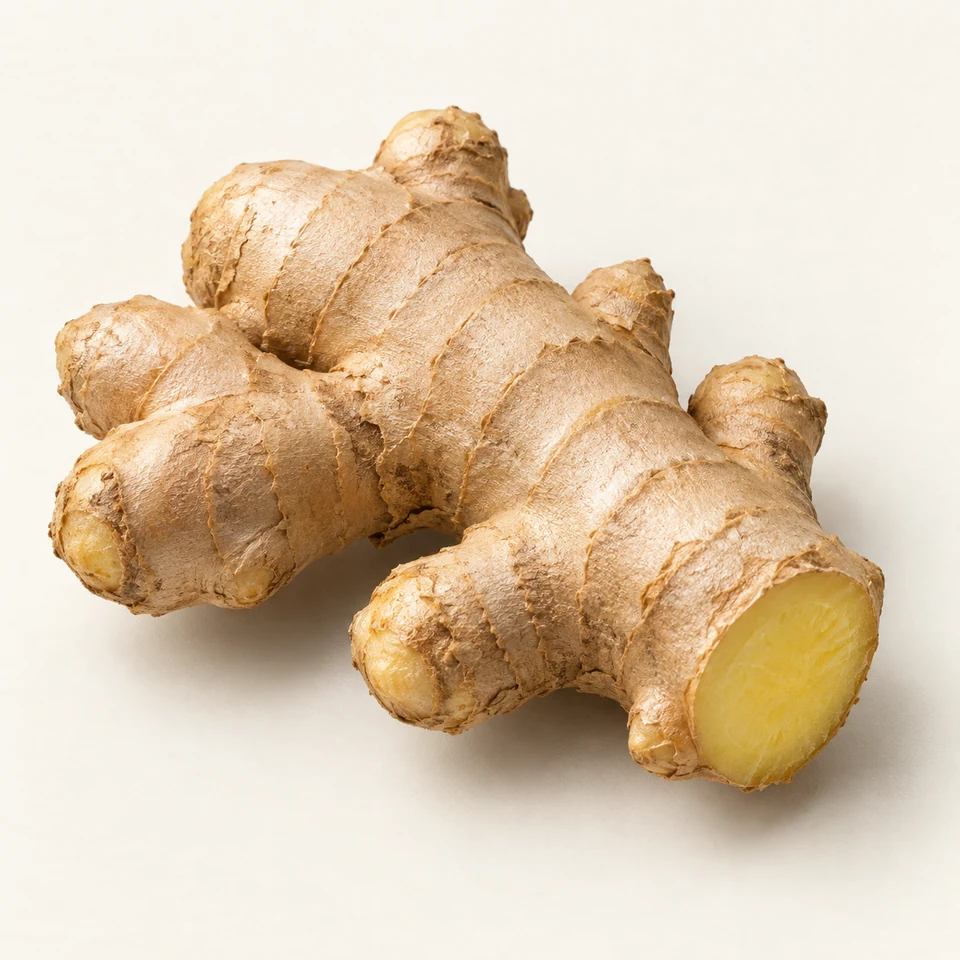
Ginger root is sold as a knobbly, branching piece with thin tan skin and pale flesh. It may be sliced, grated, minced, pounded, or juiced, and is also available dried or preserved; these forms change moisture, texture, concentration, and flavour.
- Ingredient type
- whole food
FOLLOW IT TO THE PLATE
Where will you meet it?
Explore the dishes that use this ingredient and their country and cuisine connections.
Explore linked dishesON A MENU OR LABEL
Find local names and written forms to help recognise this ingredient.
See local namesWhere ginger root appears
3 linked foodsFind foods to recognise by country and type. Recipes and products vary; these are recorded ingredient connections.
Showing 1–3 of 3
Main dishes
Desserts
Drinks
Ingredient connections awaiting review · Coverage is still growing, including packaged snacks.
Name examples awaiting language review. Confirm the specific food or product.
Local names for ginger root
Names and romanised forms to recognise on menus and labels.
ginger root
生姜
shēngjiāng
しょうが
shōga
अदरक
adarak
racine de gingembre
raíz de jengibre
raiz de gengibre
Ingwerwurzel
radice di zenzero
gemberwortel
korzeń imbiru
корень имбиря
koren’ imbирya
zencefil kökü
جذر الزنجبيل
jذر al-zanjabīl
अदरक की जड़
adarak kī jaṛ
আদার মূল
ādār mūl
இஞ்சிக் கிழங்கு
iñcik kiḻaṅku
生姜
shōga
생강 뿌리
saenggang ppuri
củ gừng
รากขิง
rāk khing
akar jahe
akar halia
shōga
Romanised form
iñcik kiḻaṅku
Romanised form
jذر al-zanjabīl
Romanised form
saenggang ppuri
Romanised form
ādār mūl
Romanised form
shēngjiāng
Romanised form
adarak kī jaṛ
Romanised form
koren’ imbирya
Romanised form
rāk khing
Romanised form
Available names only. Languages may be spoken in other countries; a name alone does not identify every ingredient in a dish.
Name not available yet.
A name in English has not been added for ginger root. Choose another language to see its available names.
Ginger root nutrition & diet
Ginger root nutritional value
Ginger root, raw
Per 100 g of the edible portion in the recorded food form.
- Calories
- 80kcal
- Protein
- 1.8g
- Carbs
- 17.8g
- Fat
- 0.8g
Reference values for the specific food form shown. Other varieties, brands and preparations can differ.
Portions & preparation
Confirm that “ginger root” refers to the fresh edible rhizome, not dried powder, preserved ginger, or a beverage concentrate. Match peeled or unpeeled use and the preparation method. Record additions such as syrup, vinegar, oil, salt, or sugar, since preserved and cooked forms are distinct catalogue items.
Compare the right form: Match a reference to fresh ginger rhizome and its edible portion, distinguishing raw, peeled, cooked, pickled, dried, or preserved forms.
Diet considerations
Fresh ginger root is plant-origin rhizome. Plain use differs from pickled, candied, syruped, or bottled preparations that may contain sugar, honey, alcohol, or other additives. Ginger-containing sauces, baked goods, and drinks may include dairy, eggs, cereal ingredients, or coatings. Portion and the surrounding recipe determine dietary context.
AI-authored reading notes · Awaiting editorial review. Measured values, where available, have a separate source above.
Dietary compatibility
- VeganTypically compatible
- VegetarianTypically compatible
- PescatarianTypically compatible
- KetoDepends on the version
- PaleoTypically compatible
- Low-carbDepends on the version
- HalalNot established
- KosherNot established
What these diet assessments mean
- Vegan · Typically compatible
- The plain ingredient profile is plant, fungal or mineral based. Added ingredients in a prepared product need a separate check.
- Vegetarian · Typically compatible
- The plain ingredient profile is plant, fungal or mineral based. Added ingredients in a prepared product need a separate check.
- Pescatarian · Typically compatible
- The plain ingredient profile is plant, fungal or mineral based. Added ingredients in a prepared product need a separate check.
- Keto · Depends on the version
- Compatibility depends on the portion and preparation. A sourced carbohydrate amount for a defined serving is not available.
- Paleo · Typically compatible
- The plain form fits the conventional paleo food groups. Added ingredients and individual interpretations can differ.
- Low-carb · Depends on the version
- Compatibility depends on the portion and preparation. A sourced carbohydrate amount for a defined serving is not available.
- Halal · Not established
- Sourcing, processing and any applicable certification have not been verified. A food name alone does not establish halal status.
- Kosher · Not established
- Sourcing, processing and any applicable certification have not been verified. A food name alone does not establish kosher status.
For the plain ingredient · Awaiting review. Diet compatibility is not allergy suitability or halal/kosher certification. Keto and low-carb depend on the portion.
AI-generated illustration for visual context. It does not identify a particular product or establish allergen content.
Sources & review
Nutrition reference: USDA FoodData Central — Ginger root, raw ↗. Values are scaled from 100 g of the recorded edible form. Individual portions have no assumed fixed weight.
Expanded overview, name examples and nutrition notes are database drafts awaiting editorial review. Numeric nutrition values, where shown, have their own source and food-form reference.
The ingredient description and dish connections come from the draft catalogue and may change after review.
Last recorded verification: .