
Mare Milk
Mare milk is milk produced by mares and is consumed as a beverage or fermented in some food traditions.
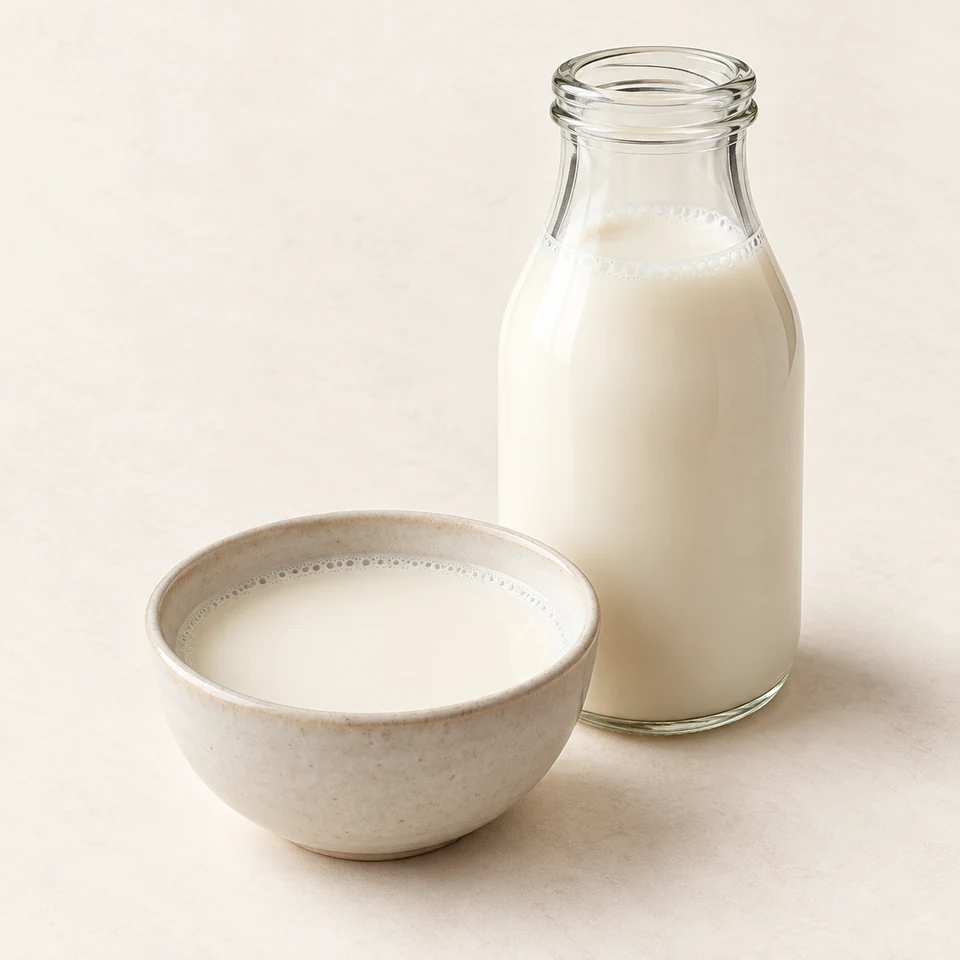
About Mare Milk
Mare milk is the milk produced by female horses and consumed as a liquid or used as the base for fermented dairy beverages. It is used as a beverage in food traditions where it is available and may be handled fresh, chilled, dried, or fermented. These forms are not interchangeable in culinary use.
Fresh mare milk is generally thin and fluid, with a mild, lightly sweet dairy flavour. Fermented versions develop a tangier flavour and may become lightly effervescent or more viscous, depending on the culture and process. The exact sensory result therefore depends on whether the ingredient is fresh or fermented.
Mare milk may appear as fresh or chilled liquid, dried milk, or a fermented beverage. Fermentation changes its acidity, carbonation, and thickness, while drying and reconstitution change its physical form. The term refers specifically to horse milk, not to cow, goat, or camel milk.
- Ingredient type
- whole food
FOLLOW IT TO THE PLATE
Where will you meet it?
Explore the dishes that use this ingredient and their country and cuisine connections.
Explore linked dishesON A MENU OR LABEL
Find local names and written forms to help recognise this ingredient.
See local namesWhere mare milk appears
5 linked foodsFind foods to recognise by country and type. Recipes and products vary; these are recorded ingredient connections.
Showing 1–5 of 5
Drinks


Ingredient connections awaiting review · Coverage is still growing, including packaged snacks.
Name examples awaiting language review. Confirm the specific food or product.
Local names for mare milk
Names and romanised forms to recognise on menus and labels.
гүүний сүү
günii süü
Mare Milk
mare's milk
lait de jument
leche de yegua
leite de égua
Stutenmilch
latte di giumenta
кобылье молоко
kobyl'ye moloko
кобиляче молоко
kobyliače moloko
бие сүті
biye süti
бээнин сүтү
beenin sütü
kısrak sütü
马奶
mǎnǎi
馬乳
banyeū
말젖
maljeot
حليب الفرس
ḥalīb al-faras
شیر مادیان
šir-e mādyān
banyeū
Romanised form
Banyū
Romanised form
Lait de jument, entier
Search alias · Not a confirmed translation
Whole mare's milk
Search alias · Not a confirmed translation
beenin sütü
Romanised form
Beenin sütü
Romanised form
Бээнин сүтү
ḥalīb al-faras
Romanised form
Ḥalīb al-faras
Romanised form
kobyliače moloko
Romanised form
Kobyliache moloko
Romanised form
Кобиляче молоко
maljeot
Romanised form
Bie süti
Romanised form
biye süti
Romanised form
Бие сүті
Mleko klaczy
mǎnǎi
Romanised form
Mǎnǎi
Romanised form
günii süü
Romanised form
Günii süü
Romanised form
Гүүний сүү
Lait de jument
Kısrak sütü
kobyl'ye moloko
Romanised form
Kobyl'ye moloko
Romanised form
Кобылье молоко
Latte di giumenta
Šir-e mādiān
Romanised form
šir-e mādyān
Romanised form
Leite de égua
Leche de yegua
Mares Milk
Search alias · Not a confirmed translation
Available names only. Languages may be spoken in other countries; a name alone does not identify every ingredient in a dish.
Name not available yet.
A name in English has not been added for mare milk. Choose another language to see its available names.
Mare Milk nutrition & diet
Mare Milk nutritional value
Mare milk · unfermented · FAO reference average
Per 100 g of mare milk, per 100 g.
- Calories
- 48kcal
- Protein
- 2.0g
- Carbs
- 6.6g
- Fat
- 1.6g
FAO reference average for unfermented mare milk. The observed ranges are retained because lactation stage and animals materially affect milk composition.
Portions & preparation
Confirm that the product is milk from mares and distinguish fresh liquid milk from fermented preparations, dried powder, or mixed dairy beverages. Record the served liquid or product portion, including added sugar, flavorings, cultures, or other milks. Preparation and formulation should remain explicit.
Compare the right form: Match a reference to fresh mare’s milk or the exact fermented, powdered, or blended product, with additives and edible portion specified.
Diet considerations
Mare’s milk is animal-derived and comes from mares. Compatibility changes when fermented, powdered, sweetened, blended with other milks, or combined with cereal ingredients. Added dairy components and recipe ingredients matter, so plain liquid milk should not be treated as equivalent to a cultured beverage or prepared product.
AI-authored reading notes · Awaiting editorial review. Measured values, where available, have a separate source above.
Dietary compatibility
- VeganTypically incompatible
- VegetarianTypically compatible
- PescatarianTypically compatible
- KetoDepends on the version
- PaleoTypically incompatible
- Low-carbDepends on the version
- HalalNot established
- KosherNot established
What these diet assessments mean
- Vegan · Typically incompatible
- The ingredient profile identifies an animal-derived food or derivative.
- Vegetarian · Typically compatible
- Permitted by the lacto-ovo vegetarian pattern used here, in its plain form.
- Pescatarian · Typically compatible
- Permitted by the pescatarian pattern used here, in its plain form.
- Keto · Depends on the version
- Compatibility depends on the portion and preparation. A sourced carbohydrate amount for a defined serving is not available.
- Paleo · Typically incompatible
- This profile falls outside the conventional paleo pattern used here (grains and pseudograins, legumes, dairy or refined sugar).
- Low-carb · Depends on the version
- Compatibility depends on the portion and preparation. A sourced carbohydrate amount for a defined serving is not available.
- Halal · Not established
- Sourcing, processing and any applicable certification have not been verified. A food name alone does not establish halal status.
- Kosher · Not established
- Sourcing, processing and any applicable certification have not been verified. A food name alone does not establish kosher status.
For the plain ingredient · Awaiting review. Diet compatibility is not allergy suitability or halal/kosher certification. Keto and low-carb depend on the portion.
AI-generated illustration for visual context. It does not identify a particular product or establish allergen content.
Sources & review
Nutrition reference: FAO (2013), Milk and dairy products in human nutrition — Table 3.3, proximate composition of milk from minor dairy animals ↗. Values are scaled from 100 g of the recorded edible form. Individual portions have no assumed fixed weight.
Expanded overview, name examples and nutrition notes are database drafts awaiting editorial review. Numeric nutrition values, where shown, have their own source and food-form reference.
The ingredient description and dish connections come from the draft catalogue and may change after review.
Last recorded verification: .